
Philippine Selection Night is on Sunday. Ten songs, one ticket to Bangkok, and a vote that three-fifths of the internet can take part in. Pili, Pinas!: Philippine Selection Night airs from the New Frontier Theater in Quezon City at 21:45 Philippine time on 30 August 2026, hosted by Vice Ganda, and it streams worldwide.

18+ | New customers only | T&Cs apply | Please gamble responsibly
This is the third Eurovision Asia ticket to be decided and the first with a full ten-song field that anyone outside the country can actually vote on. Here is everything you need before it starts.

How to watch, and how to vote from anywhere
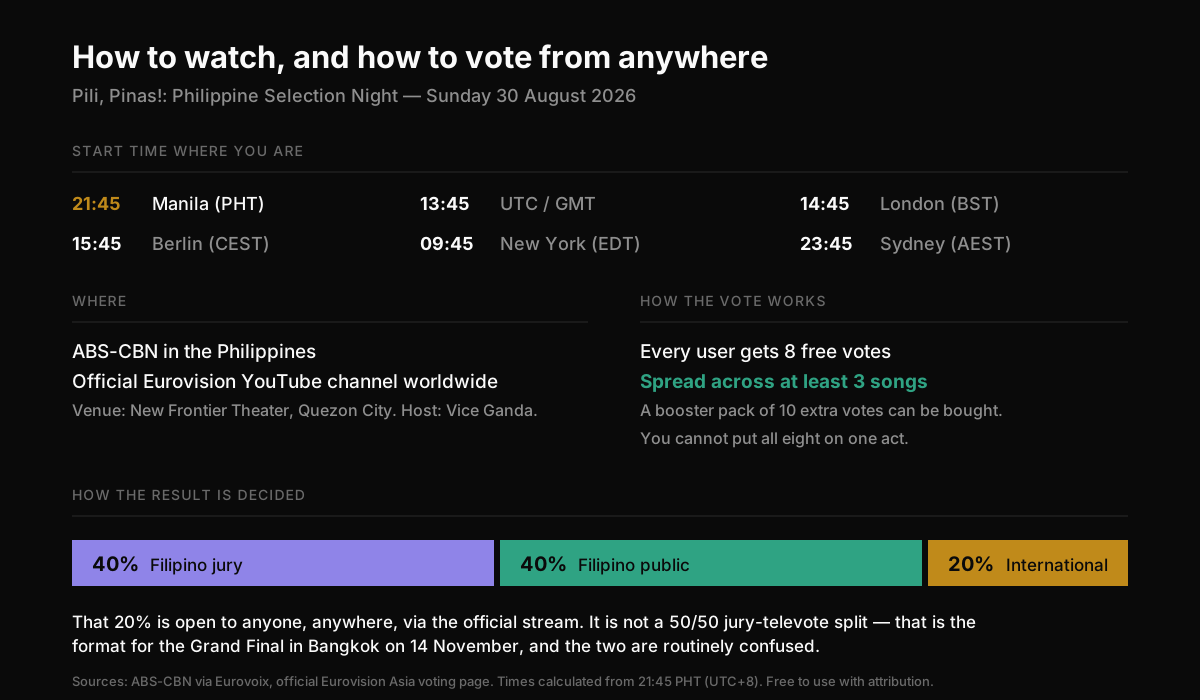
The show goes out on ABS-CBN in the Philippines and on the official Eurovision YouTube channel everywhere else. That is 13:45 UTC, 14:45 in London, 15:45 in Berlin, 09:45 in New York and 23:45 in Sydney.
The voting mechanic is the part most people get wrong, and it is genuinely unusual. Every user gets eight free votes, and they must be spread across at least three songs. You cannot pile all eight onto one act. A booster pack of ten extra votes is available to buy.
If that sounds familiar, it should: it is the exact mechanism the EBU is proposing to bring to Eurovision in Europe for 2027, and Asia is already running it.
The result is 40/40/20, not 50/50
Worth stating plainly because it is the single most repeated error about this show, ours included until we corrected it.
The winner is decided 40% Filipino jury, 40% Filipino public vote, 20% international public vote. The 50/50 jury-televote split you will see quoted in a lot of coverage is the format for the Grand Final in Bangkok on 14 November, and several outlets append it to national-final articles in a way that reads as though it applies here. It does not.
The practical consequence is that a fifth of Sunday's result is decided by people with no stake in the Philippines at all — and, given the size and online mobilisation of the Filipino diaspora, a good deal of that fifth will be Filipino anyway. Treat the effective weighting as roughly 40% jury and 60% Filipino-aligned public.
The ten songs
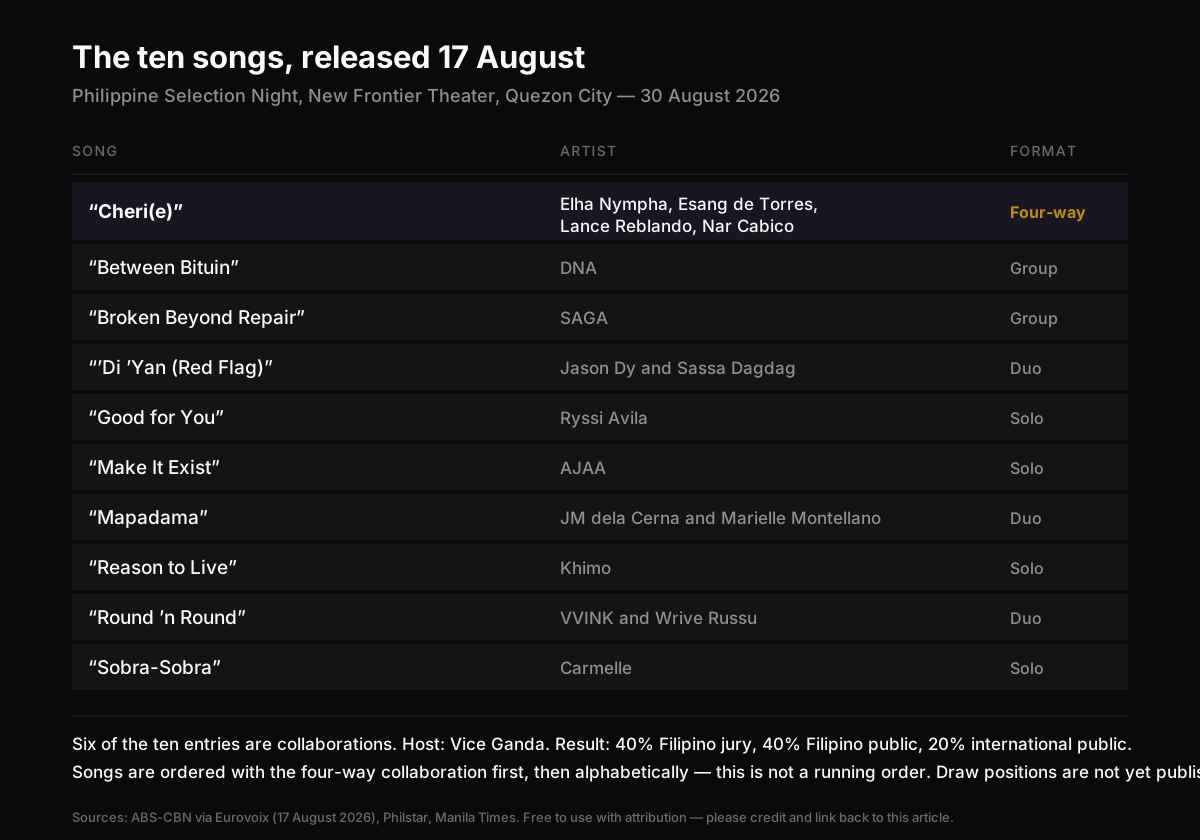
All ten entries have been on streaming platforms since 17 August, so unlike Bhutan or Malaysia this one can actually be assessed before it airs. Six of the ten are collaborations.
What we would watch for. “Cheri(e)” puts Elha Nympha, Esang de Torres, Lance Reblando and Nar Cabico on one entry — four established audiences stacked on one song, which is precisely the asset a 60%-public result rewards. Eurovision rules cap the stage at six performers, so it is legal. The standing risk with supergroups is that a song built to give four vocalists a moment ends up without a shape.
The four solo entries — Ryssi Avila, AJAA, Khimo and Carmelle — cannot out-mobilise that on fanbase. Their route is the jury's 40% plus a staging that reframes the song on the night.
And that is the real caveat: the stagings are unknown and the running order has not been published. In a ten-song field a late draw is worth real points, and Eurovision-format selections are decided disproportionately in the three minutes on the night. Anyone confidently calling this from the studio recordings is guessing.
Our fuller breakdown of the field is in the song-by-song preview.
What the search data says about this contest
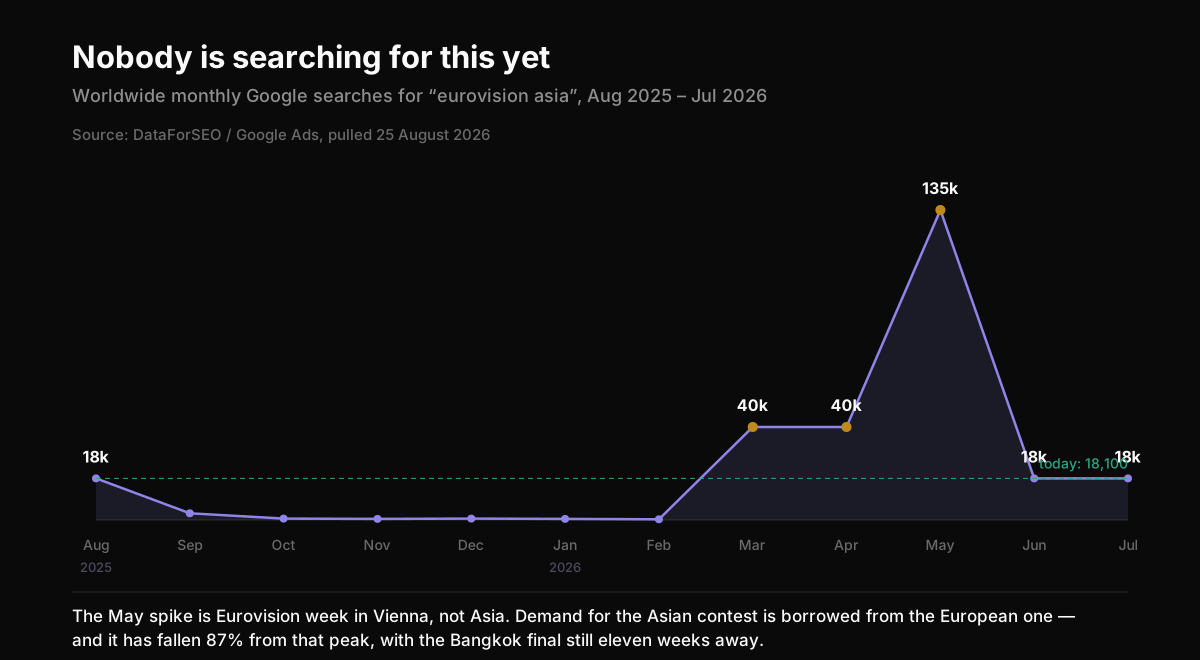
We pulled the actual numbers rather than guessing, and they are sobering for a contest eleven weeks from its final.
Worldwide searches for “eurovision asia” sat between 320 and 2,900 a month through late 2025. They jumped to 40,500 in March and April 2026, peaked at 135,000 in May — Eurovision week in Vienna — and have since fallen back to 18,100 in June and July.
Two things follow. First, demand for the Asian contest is borrowed from the European one. The spike is not Asian interest; it is people watching Eurovision in Vienna and searching for the new spin-off. Second, it is down 87% from that peak with the Bangkok final still ahead, which means the contest has not yet built an audience of its own.
The national-final terms are emptier still. “Philippine selection night” registers zero measurable monthly search volume worldwide. So do “how to vote eurovision asia”, “eurovision asia results” and “eurovision asia live stream”. The Filipino-market picture is the same shape: “eurovision asia” peaked at 5,400 in April and was down to 880 by July.
One trap worth flagging for anyone else doing this research: the show's branding, “Pili, Pinas!”, looks like a 40,500-a-month keyword in the Philippines — and it is not this show. “Pili Pinas” is a song by the band Gravity, with steady volume going back to before Eurovision Asia was named, and the search results for it are lyrics pages. Chasing that number would deliver an audience looking for something else entirely.
The betting position
There is still no market on this. No bookmaker has opened a book on Eurovision Asia or on any of its national finals, and Polymarket carries no Eurovision Asia contracts — the fourteen live Eurovision markets there are all on which countries compete at Eurovision 2027 in Burgas.
We would rather say that plainly than imply a market exists. If you want something tradeable this week, the 2027 participation board is where the action is, and we have written it up in full — including Ireland and Iceland, where we have calls on the record.
The search data above also explains why no book has opened. Operators price where they expect turnover, and a contest running at 18,100 global searches a month with zero measurable demand on its result terms does not clear that bar yet. Our expectation remains that books open once the Bangkok field completes in mid-October, which leaves about four weeks of trading before the final — a short window in which prices will be formed fast and, initially, badly. That is the opportunity, and the work has to be done now.
Quick answers
When is Philippine Selection Night? Sunday 30 August 2026, 21:45 Philippine time (13:45 UTC), at the New Frontier Theater, Quezon City.
Where can I watch it? ABS-CBN in the Philippines, and the official Eurovision Song Contest YouTube channel worldwide.
Can I vote from outside the Philippines? Yes. The international public vote is worth 20%. You get eight free votes and must spread them across at least three songs.
How is the winner decided? 40% Filipino jury, 40% Filipino public, 20% international public. Not 50/50 — that is the Bangkok Grand Final format.
Who is hosting? Vice Ganda.
Who is the favourite? No market exists. On the structure of the vote, the four-way “Cheri(e)” collaboration has the largest mobilisable audience, but stagings and running order are unpublished and both matter more than the studio recordings.
What happens to the winner? They represent the Philippines at the Eurovision Song Contest Asia Grand Final at IdeaLive in Bangkok on 14 November 2026, joining Bhutan's Nyendra and Malaysia's Aina Abdul.
Correction, 1 October 2026: this article said no prediction market had listed a Eurovision Asia market. That was true on the day it was published and is not true now. Kalshi, the CFTC-regulated US exchange, opened an eleven-country Eurovision Asia winner market on 14 September 2026. It is thin and should not be read as odds: on 1 October the last trades summed to 143% of the field, eight of the eleven contracts had no bid at all, the whole board recorded no trades in 24 hours, and Laos accounts for about three-quarters of every contract ever traded. Our full coverage of the first Eurovision Asia market →