The Philippines has its field. On 11 August, ABS-CBN revealed the ten acts that will compete at Philippine Selection Night on 30 August 2026 for the right to represent the country at the first Eurovision Song Contest Asia. Song titles and composers had already been trailed; this reveal attached the names.

18+ | New customers only | T&Cs apply | Please gamble responsibly
It is the deepest field announced so far in the Eurovision Asia calendar, and it arrives in the same week that Bhutan named the contest’s first-ever entry.
The ten acts
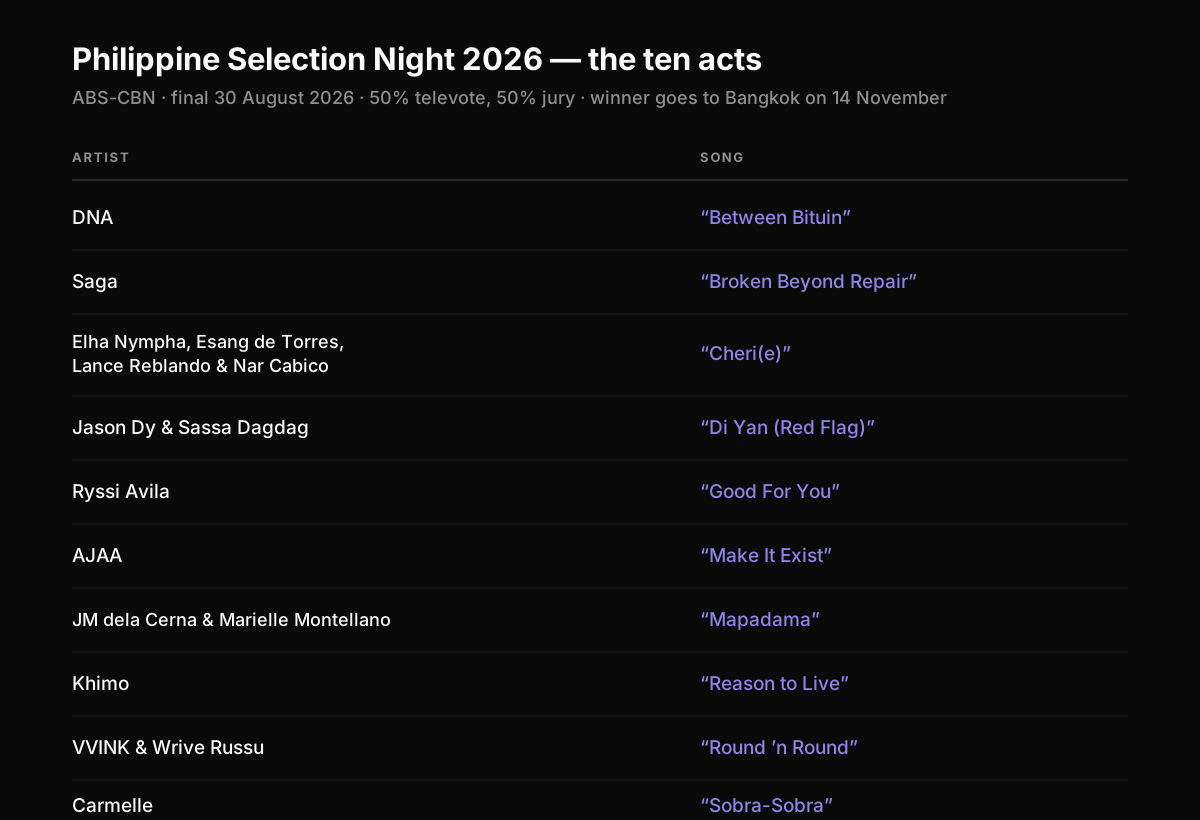
Two things stand out immediately.
The four-way collaboration. “Cheri(e)” is performed by Elha Nympha, Esang de Torres, Lance Reblando and Nar Cabico together — four established names on one entry. Eurovision rules cap the stage at six performers, so this is legal, but it is an unusual amount of vocal firepower to put behind a single song, and it will be the most recognisable act in the room before a note is sung.
Three more duos. Jason Dy and Sassa Dagdag, JM dela Cerna and Marielle Montellano, and VVINK with Wrive Russu. Six of the ten entries are collaborations of some kind. For a field assembled by a broadcaster with a large talent roster, that is a deliberate-looking choice: pairings generate more promotional surface than solo acts across a three-week rollout.
The release schedule is the story this week
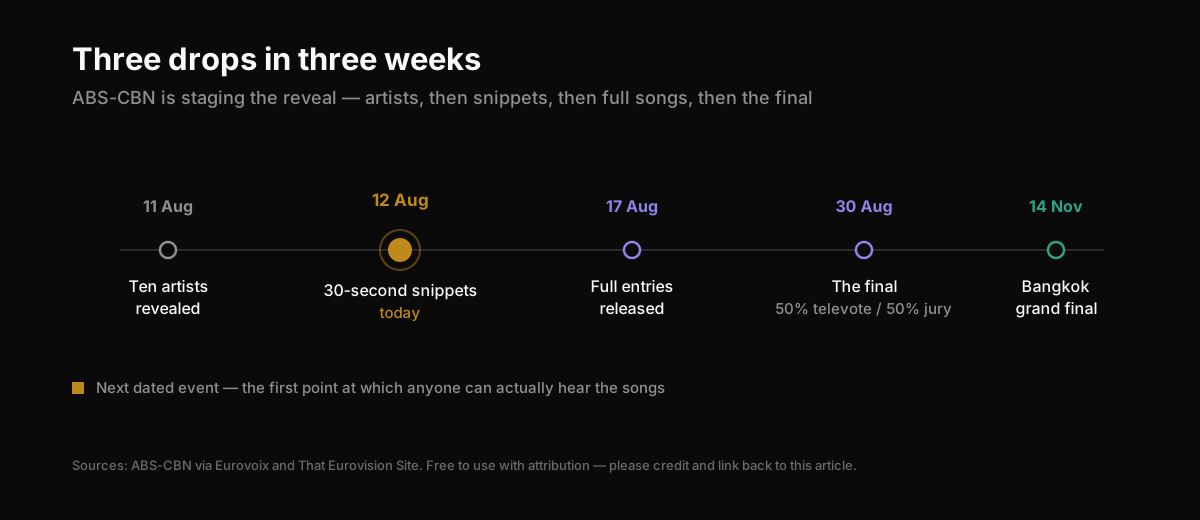
ABS-CBN is staging this rather than dumping it. 30-second snippets of all ten entries land on 12 August — today — with the full entries on 17 August and the final on 30 August. That is a thirteen-day window between hearing complete songs and voting on them.
For anyone tracking the contest, 17 August is the date that matters. Snippets are a marketing artefact; you cannot judge a three-minute Eurovision entry from thirty seconds, and acts routinely back-load their best material. The 17th is the first point at which the Philippine field can be assessed properly.
The format, and the betting angle
Philippine Selection Night runs to Eurovision Song Contest rules: entries capped at three minutes, a maximum of six performers on stage, and a result decided 40% Filipino jury, 40% Filipino public vote and 20% international public vote.
Correction, 24 August 2026: this article originally said the result was decided 50% televote and 50% jury. That is the format for the Grand Final in Bangkok, not for the national final. ABS-CBN confirmed 40/40/20 alongside the song release on 17 August, matching Bhutan and, since 23 August, Mongolia. The paragraph below has been rewritten accordingly; our updated Philippine Selection Night preview works through what the correct split actually implies.
So the Philippines uses the same weighting as Thimphu, not a more jury-heavy one. The jury holds two-fifths rather than half, and a fifth of the result sits outside the country entirely. That is a lower jury influence than we first reported, which moves the advantage toward whichever act can mobilise the largest audience rather than toward the cleanest vocal — a meaningful difference in a field containing a four-way collaboration of established names.
The other factor is scale. The Philippines brings a large, highly online music audience and a substantial global diaspora to a contest where every national final carries a Rest of the World public vote. Filipino acts are likely to be structurally advantaged in that component across the whole calendar, not only their own show.
Market status: no operator has opened Eurovision Asia books as of 12 August 2026. Our Eurovision Asia hub tracks market status daily.
Quick answers
When is Philippine Selection Night? 30 August 2026, broadcast by ABS-CBN. The winner represents the Philippines at Eurovision Asia in Bangkok on 14 November.
When can I hear the songs? 30-second snippets on 12 August; full entries on 17 August.
How is the winner decided? 40% Filipino jury, 40% Filipino public vote, 20% international public vote. (Corrected 24 August 2026 — this originally said 50/50, which is the Bangkok Grand Final format.)
Who are the favourites? Too early — the full songs are not out until 17 August. The four-way “Cheri(e)” collaboration has the highest name recognition in the field, but recognition and a winning three minutes are different things.
How many countries are in Eurovision Asia 2026? Eleven, since Mongolia was added on 14 August 2026. The Grand Final is at IdeaLive in Bangkok on 14 November 2026.