
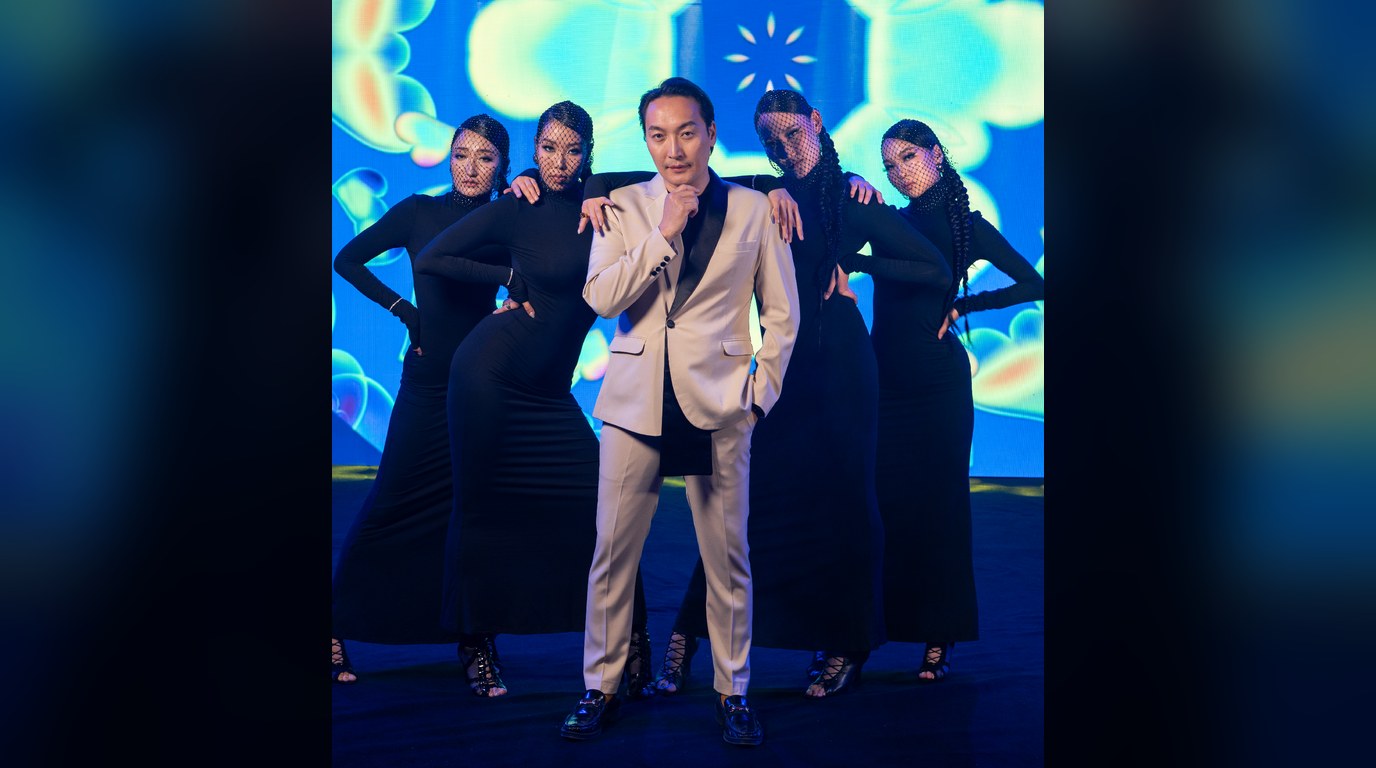
Beck will sing “Light” for Mongolia at Eurovision Asia 2026. The song won Mongolia’s Chosen One in Ulaanbaatar on Saturday 10 October, ahead of “Chamguigeer (Without You)”, “One of a Kind” and “Winner” — four songs Beck performed himself — under the contest’s 40% jury / 40% domestic public / 20% rest-of-world split. It takes the field to ten complete entries of eleven, and leaves Cambodia on 17 October as the only country still without an act.

18+ | New customers only | T&Cs apply | Please gamble responsibly
Photo: Eurovision Song Contest Asia — Beck, Mongolia’s Chosen One, 10 October 2026.
Key takeaways
- Winner: “Light”, written by Tseren Ganbaatar and Narangerel.P, performed by Beck (Beck Munkhbayar).
- Mongolia published every placing and not one number. All four songs were ranked in public. No points, no percentages, no split between the jury pool and the two public pools.
- That makes it the most transparent of the three song-only selections — Laos and Vietnam both published a winner and nothing else.
- Decided 40/40/20, not 50/50. The 50/50 figure appearing in some coverage is the Bangkok Grand Final rule, not the national-final rule.
- Five weeks and one day between Mongolia settling its song and performing it in Bangkok — the shortest runway in the field.
- There is still no studio recording. “Light” exists as one national-final performance, which is less than any other complete entry carries.
- The market did not move. Nothing traded on Kalshi’s eleven-country board on selection day, or on any day since 5 October.
What’s on this page
What happened in Ulaanbaatar · The result, and the numbers nobody published · Where Mongolia sits on the transparency table · Beck, and what “Light” has to overcome · The 40/40/20 rule · What is left to decide · The betting position · Sources
What happened in Ulaanbaatar
Mongolia’s Chosen One went out on the evening of Saturday 10 October, at 21:00 local time (15:00 CEST), staged by CNBC Mongolia and streamed worldwide on the official Eurovision Song Contest YouTube channel like every Eurovision Asia national selection.
There was no contest between artists. MNC had named Beck internally on 1 October, with no public vote on the act at all, so the only question on the night was which of four songs he would take to Bangkok. He performed all four himself — the same format Vietnam used for Tóc Tiên on 3 October and Laos used for Thinla in September, and the third time this season a country has split the artist decision from the song decision.
A four-member jury sat alongside the public vote: Bayartsetseg Altangerel, an actress and producer; Lkhagva-Ochir Erdene-Ochir, a circus contortionist; Munkh-Erdene Chulunnbat, a musician and yatga player; and Ganbold Chuluun, chairman of the board of the Arts Council of Mongolia. It is a broader panel than most of this season’s juries, which have leaned almost entirely on recording-industry names.
One note worth keeping straight, because the naming has been muddled all season. The organisers and Eurovoix both give Mongolia’s broadcaster as MNC, while the organisers’ own coverage names CNBC Mongolia as the channel staging the show. Nobody has published the relationship between the two, so this site does not assert one. Beck himself hosts on CNBC Mongolia, which means the broadcaster took its representative from its own schedule — worth stating plainly rather than burying.
The result, and the numbers nobody published
The organisers published the finishing order in full:
| Place | Song | Published score |
|---|---|---|
| 1 | “Light” | None |
| 2 | “Chamguigeer (Without You)” | None |
| 3 | “One of a Kind” | None |
| 4 | “Winner” | None |
Every song placed, and not one of them carries a figure. There is no points total, no percentage, and no breakdown of how the 40% jury pool, the 40% Mongolian public pool and the 20% rest-of-world pool each ranked the four. For a selection in which the same performer sang every entry — so the only variable being judged was the song — the margin would have been the most informative number of the night, and it does not exist.
That is now the settled pattern of this contest rather than an exception. Across ten national selections, exactly one has released anything resembling a full scoreboard.
Where Mongolia sits on the transparency table
Three countries have run the song-only format, where the artist was fixed in advance and the public picked the material. They have disclosed strikingly different amounts:
| Country | Show | What was published |
|---|---|---|
| Laos | Sieng Lao: The One, 23–24 Sep | Winner only — no placings or totals for the two losing songs |
| Vietnam | The Sound of Vietnam, 3 Oct | Winner only — no scoreboard at all, not even a top three |
| Mongolia | Mongolia’s Chosen One, 10 Oct | Complete finishing order of all four songs, no numbers |
Read against its own group, Mongolia is the most forthcoming of the three: it is the only song-only selection to say where every entry finished. Read against the whole season it is mid-table, because South Korea remains the only country to have released a genuine scoreboard, and the rest have stopped at a top three.
None of this is a scandal, and the contest has never promised national-final transparency. It matters here for one practical reason: a betting market cannot calibrate on results it cannot see. Ten selections have now produced one usable dataset between them, which is why every price on this contest is still a price on reputation rather than on form.
Beck, and what “Light” has to overcome
Beck — Beck Munkhbayar — debuted as a singer in 2007 and has worked across music, acting, hosting, modelling and production for close to two decades. He studied economics at the University of Mongolia. When MNC named him on 1 October he said he had wanted to stand on a Eurovision stage since first watching the contest 26 years ago. Our profile of him from that week goes further into the biography.
What has not changed since 1 October is the central problem for anyone trying to form a view: he has no internationally released catalogue. There is nothing to stream, nothing to compare, and — as of this writing — no studio version of “Light”. The song exists as a single televised performance. Every other complete entry in the field has at least a released recording; eight of the ten have had one for a month or more.
Set against that is a real structural asset. Mongolia has one of the most immediately identifiable musical signatures of any country in this field — throat singing and the morin khuur are recognisable to audiences who know nothing else about the country’s music — and Eurovision audiences have historically rewarded acts that sound like nowhere else. Whether “Light” draws on any of that is unknown, because nobody outside the broadcast has heard it.
The counterweight is arithmetic. Mongolia’s diaspora is small next to the Philippines or South Korea, and the Bangkok Grand Final is half public vote, spread across eleven territories plus a Rest of the World pool. A country with a small voting population abroad needs the jury half to carry it.
The 40/40/20 rule
Mongolia’s result was calculated under §8.1 of the official Eurovision Asia Voting Terms, updated 28 August 2026: 40% domestic public vote, 40% jury, 20% rest of world, each pool ranked separately. MNC confirmed that format for Mongolia back on 23 August.
It is worth restating because the error recurs. Coverage of these national finals regularly reports them as 50% jury and 50% televote. That is §8.2 — the rule for the Grand Final in Bangkok on 14 November, where the two halves are weighted equally for each participating territory, viewers in non-participating territories vote public-only as an extra Rest of the World vote, and nobody may vote for their own territory’s entry. The national finals have never used it.
In both formats every voter gets eight free votes that must be spread across at least three different entries — votes that are not spread are not counted — with up to ten paid votes available per show.
What is left to decide
One country. Cambodia’s Finest Voice on 17 October closes the calendar, and Cambodia is the only participant that has named neither an artist nor a song. It was the last selection to be dated, confirmed on 3 September, and it will be streamed on the official Eurovision YouTube channel like the rest.
After that the field is closed and the contest has four weeks of promotion before the Grand Final at the One Bangkok Forum on 14 November. For the record, a line this site ran earlier was wrong on this point and has been corrected: Mongolia’s was not the final national selection of the calendar. Cambodia’s is.
The betting position
No fixed-odds bookmaker prices Eurovision Asia. Not one of the operators listed on our bookmakers page has opened a market on the contest or on any of its national finals, and Polymarket has listed nothing for Asia on our fifteenth consecutive check. If you are looking for a price on Mongolia at a traditional sportsbook, there isn’t one, and nobody should imply otherwise.
One venue does price it. Kalshi, the CFTC-regulated US exchange, has run an eleven-country winner market since 14 September. Read on 10 October 2026, Mongolia last traded at 6c and is offered at 16c.
That ask is the one genuine curiosity on the board. Every other contract in the field is offered somewhere between 81c and 95c; Mongolia is the only one a seller has priced under 80c. On a board this thin that is far more likely to be a single resting order than a considered view, but it does mean Mongolia is the one country where a buyer could get filled at something other than an absurd price.
Everything else about the board argues for ignoring it. Nothing traded on any of the eleven contracts on selection day — a country completing its entry moved precisely nothing — and nothing has traded since 5 October. Last prices across the eleven sum to 227% of a field in which exactly one country can win, ten of the eleven contracts show no bid at all, and Laos accounts for roughly 71% of all volume ever transacted. Those are the symptoms of a market with almost no participants, and prices from it should be quoted with all of that attached or not quoted at all.
The honest summary for Mongolia: a complete entry, a shorter runway than anyone else, no recording to assess, and a market too thin to tell you anything. Our winner odds page tracks where real prices exist, and the Mongolia country page carries the full entry detail as it firms up.
Sources
- Eurovision Song Contest Asia, official site — Mongolia and the 10 October result announcement.
- Eurovoix, 10 October 2026 — songwriters, jury and the finishing order.
- Eurovision Asia Voting Terms, updated 28 August 2026, §8.1 and §8.2.
- Kalshi public market data for
KXEUROVISIONASIA-26, read 10 October 2026.