
Three of the eleven Eurovision Asia 2026 songs will not sound the same in Bangkok as they did when they won. On 15 October Vietnam, Laos and Bhutan all confirmed that their entries are being revamped, the Philippines and Malaysia revealed new staging plans, Cambodia finally released snippets of the seven songs it chooses between tomorrow, and Australia’s SBS confirmed it will broadcast the show. It is the busiest single day of news the contest has had since the selections began, and it lands four weeks before the Grand Final on 14 November.

18+ | New customers only | T&Cs apply | Please gamble responsibly
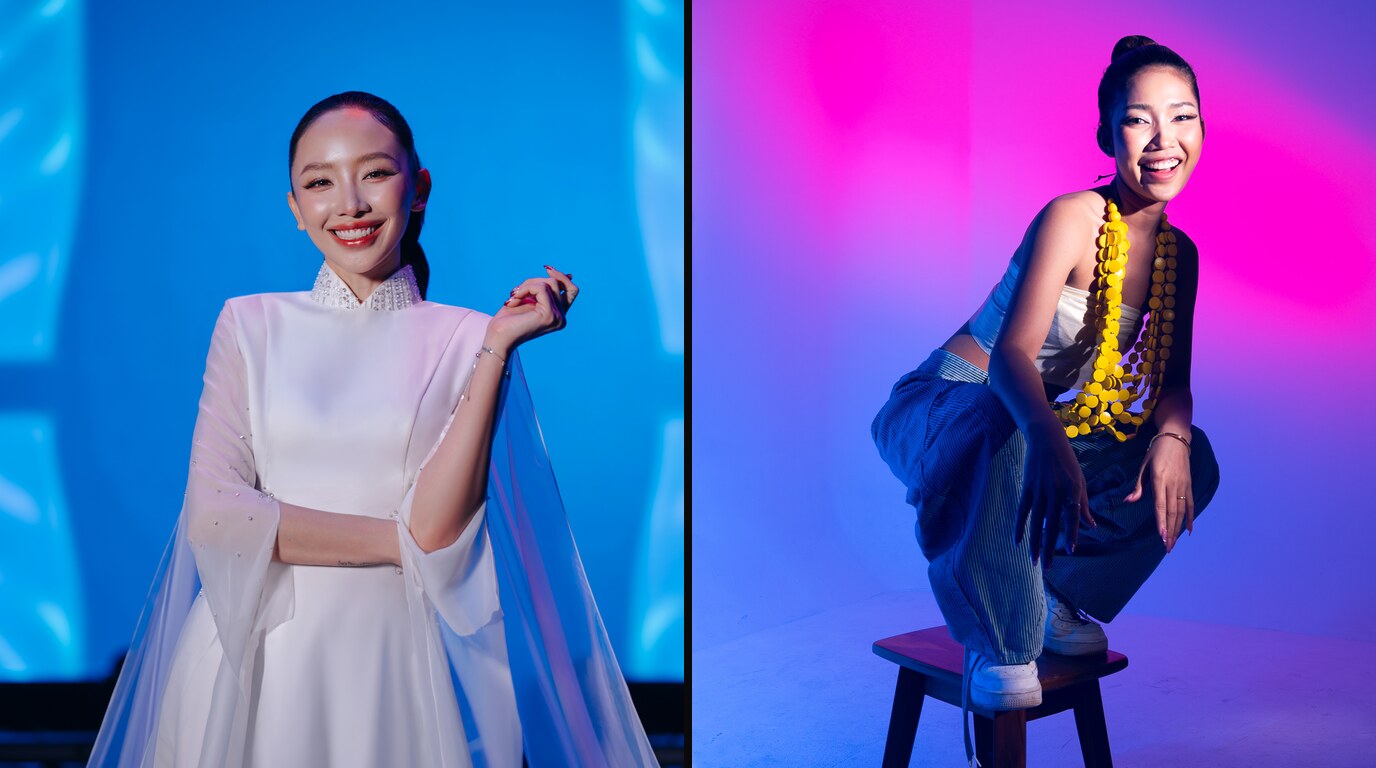
Photos: Eurovision Song Contest Asia — Tóc Tiên at The Sound of Vietnam (left) and Thinla (right), both cropped side by side.
Key takeaways
- Vietnam’s “Em Tiên” is being reworked “for a more global appeal”, including its climactic techno drop. It is our pick to win, and the market’s second favourite.
- Laos’s “Bae” is only a demo, Thinla said on a TikTok livestream. A new version is coming; no date.
- Bhutan is going more traditional, not less: Nyendra’s “Lhayi Semo” is getting new flute parts from a traditional flautist.
- The Philippines is keeping the song and rebuilding the show, with new choreography and Carmelle in vocal stamina training. The kulintang stays.
- Malaysia is bringing its own crew. Aina Abdul is taking core staging and lighting staff from Anugerah Juara Lagu to work alongside the Eurovision production team.
- Cambodia decides tomorrow, and its seven songs were heard in public for the first time on 15 October, two days before the final.
- Australia will watch. SBS is broadcasting the Grand Final, with Courtney Act commentating, the first broadcaster outside the eleven to confirm.
What’s on this page
Vietnam: “more global” · Laos: “only a demo” · Bhutan: more flute · The Philippines: same song, new show · Malaysia: the sky, not too literally · Cambodia: last entry, tomorrow · Australia’s SBS · The whole field, as of today · What it means for the betting
Vietnam: “more global”
Tóc Tiên confirmed the revamp in an interview with DAO Music Entertainment, the company producing Vietnam’s Eurovision Asia project. Two things are changing. The song is being reworked to aim at “a more global appeal”, and certain elements are being “elevated” — she named the climactic techno drop in the final minute. On staging she said plans are still under discussion, and that she wants to “pull out all the stops” in Bangkok.
That is the news with the most riding on it. When we made Vietnam our pick to win on 6 October, the argument rested on what made “Em Tiên” different: percussion-first, traditional colouring in the rhythm section rather than painted on top, and a Vietnamese title that is also the singer’s own name. Two English-language fan panels ranked it first out of five for exactly that reason, before the domestic vote agreed.
“More global appeal” can mean two very different things. It can mean a cleaner mix, a bigger final minute and a sharper drop — the same song, better produced. Or it can mean sanding off the parts that made it sound like nothing else in the field, which is the usual way a distinctive national-final winner becomes an anonymous contest entry. We will not know which until the new version is out, and we would rather say plainly that our call is now exposed to a recording nobody has heard.
Laos: “only a demo”
Thinla went further. During a TikTok livestream she said the version of “Bae” released after Sieng Lao: The One is only a demo, and that a revamp is in the works. No release date has been given.
That reframes how anyone should have been judging Laos so far. Thinla, formerly known as Thinlamphone, mixes traditional Morlum with pop, R&B and dance, and has performed at the ASEAN Summit and toured South Korea and the United States. If the released “Bae” was a demo, every ranking of it — ours included — was a ranking of a sketch. Laos is also, oddly, the most-traded country on the only betting market for this contest, which makes the gap between what people have been trading and what will actually be performed wider for Laos than for anyone.
Bhutan: more flute
Nyendra and his songwriter-producer, Lungten Wangchuk Karma, told BBS that “Lhayi Semo” (The Angel) will be reworked to include more traditional Bhutanese elements, with traditional instrumentation the focus and a traditional flautist brought into the studio to record new flute parts.
It is the opposite direction to Vietnam’s. Bhutan is betting that what sets it apart is the thing to amplify, not the thing to smooth. Nyendra was the first artist confirmed for the whole contest, and this is the song he posted about in September:
View this post on Instagram (@nyendra.official)
The Philippines: same song, new show
The Philippines is not changing “Sobra-Sobra”. It is changing everything around it. Carmelle is rehearsing a new choreography routine built with input from her mother, Jessa, the song’s composers and ABS-CBN Music, and is in stamina training for her vocals as well as working on her facial expressions on stage. The staging will tell a story — in her words, “I will tell you what it means to be Filipina” — and the kulintang, the traditional instrument from her national-final performance, will be on stage again.
Stamina training is the detail that matters most. “Sobra-Sobra” is dance-pop with a rap section, sung while dancing, and three minutes of that live is where good studio vocalists come unstuck. The Philippines is working on the one weakness its strongest asset could have.
Malaysia: the sky, not too literally
Aina Abdul told Buzz Malaysia she is taking several core production members from Anugerah Juara Lagu — Malaysia’s biggest music award show, where she was revealed as the entrant — including her staging manager and lighting crew, to work alongside the core Eurovision production team. The concept will play with the “sky” in “Bluest Sky”, with the principle that it stays “out-of-the-box and not too literal”.
She wrote and composed the song herself, in English and Malay, with Mac Chew producing. Bringing a trusted domestic crew is a sensible way to reduce the risk of a first-time contest production misreading her; it is also a reminder that each delegation is effectively staging its own show on a shared set.
Cambodia: last entry, tomorrow
Two days before its final, Cambodia’s Finest Voice released snippets of the seven competing songs and their rehearsals on social media — the first time any of the music has been public. The final is on Saturday 17 October at the AEON Mall Sen Sok Event Hall in Phnom Penh on TV5 Cambodia, from 18:00 local time (13:00 CET). The seven acts are GOOFY, KESORRR, MC PICH, Monetrey, Nov Dana, Sam Rocker and Satiya.
When it is done, all eleven entries will be known. The winner will have the shortest run-in of anyone, 28 days, and will be the only act arriving in Bangkok with a song the public first heard less than a week earlier. We set out the field and the timing in our run-in to the last selections.
Australia’s SBS
SBS confirmed it will broadcast the first Eurovision Song Contest Asia, making it the first broadcaster from outside the eleven participating countries to do so. It will stream live on SBS On Demand from midnight Australian time on 14 November, with a replay on SBS2 on 15 November, and Courtney Act returns as commentator.
There is a history here. According to SBS, the original proposal for an Asia-Pacific version of the contest was driven by SBS itself; the first edition was planned for 2017, and SBS stepped away in 2021 citing the pandemic. It is now carrying the show it started, without an entry in it. More than 3.27 million Australians watched Eurovision on SBS this year, which makes Australia potentially one of the larger audiences for a contest it is not competing in.
The whole field, as of today
| Country | Act | Song | Change announced |
|---|---|---|---|
| Vietnam | Tóc Tiên | Em Tiên | Song revamp — “more global”, bigger drop |
| Laos | Thinla | Bae | Song revamp — released version was a demo |
| Bhutan | Nyendra | Lhayi Semo | Song revamp — more traditional, new flute |
| Philippines | Carmelle | Sobra-Sobra | New staging and choreography; kulintang stays |
| Malaysia | Aina Abdul | Bluest Sky | Own staging and lighting crew from AJL |
| Thailand | MANG x DAOU | Aroma | None announced |
| South Korea | JUNHEE | Deep Dive | None announced |
| Bangladesh | Beatmosphere | Tumi Ele | None announced |
| Nepal | Pratik Himal Rai | Ananta Maya | None announced |
| Mongolia | Beck | Light | None announced |
| Cambodia | Decided 17 October | Snippets released 15 October | |
Three songs changing is not unusual by European standards — revamps between a national final and the contest are routine there. What is unusual is the timing: four weeks out, with none of the three new versions released yet. The Eurovision Asia hub carries the live state of every entry.
What it means for the betting
There is still no fixed-odds bookmaker pricing Eurovision Asia, and Polymarket has never listed it. The only venue is Kalshi’s eleven-country winner board, which we explained when the Philippines jumped to 95¢. Read at 01:27 UTC today, nothing has traded since 11 October:
| Country | Last mark | Normalised | Bid | Today’s news |
|---|---|---|---|---|
| Philippines | 95¢ | 35.3% | none | New staging |
| Vietnam | 84¢ | 31.2% | none | Song revamp |
| South Korea | 22¢ | 8.2% | none | — |
| Thailand | 18¢ | 6.7% | 5¢ | — |
| Bhutan | 15¢ | 5.6% | none | Song revamp |
| Laos | 8¢ | 3.0% | 11¢ | Song revamp |
The marks sum to 269% of a field in which one country wins, so we divide each by 269 to make them comparable. On that reading the market’s top two are the Philippines and Vietnam — and both of them announced changes today. That is the betting story. The board has priced two entries as near-certain on the strength of recordings and national-final performances that are about to be replaced: a new arrangement for Vietnam, a new show for the Philippines.
Of the two, the Philippines’ change is the lower-risk one. A new choreography and stamina work are aimed squarely at the thing most likely to go wrong on the night; the song itself is untouched. Vietnam’s is the higher-variance one, because it changes the recording that won the two fan panels over. If the revamp keeps the percussion and the Vietnamese hook, it is upside. If it trades them for a generic global sound, the main argument for Vietnam weakens. We are keeping Vietnam as our pick until we hear it, and we will say so if the new version changes our mind.
For a sense of what liquid Eurovision pricing looks like, see our winner odds coverage; this board has traded 3,517 contracts in total, about 70% of them on Laos.
Sources
- Eurovoix, 15 October 2026 — the Vietnam, Laos, Bhutan, Philippines, Malaysia and Cambodia reports.
- SBS, 14 October 2026 — the Australian broadcast, viewing times and SBS’s history with the project.
- Market figures read from Kalshi’s public API at 01:27 UTC on 16 October 2026. Polymarket’s API, read the same morning, lists no Eurovision Asia market.
Prices move. Check any figure here before acting on it.