
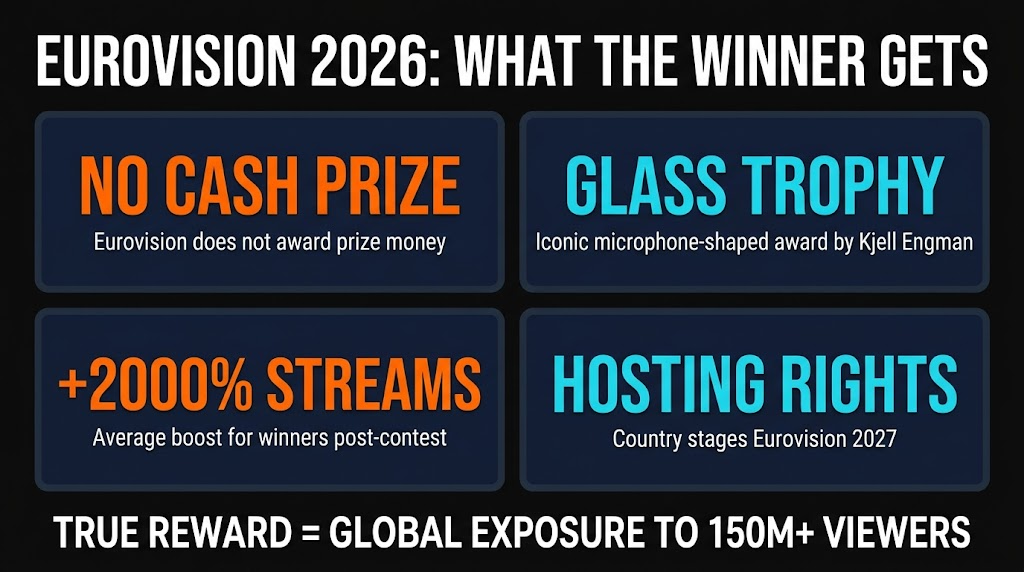
One of the most common questions asked about Eurovision is also one of the most surprising when you learn the answer: How much money does the Eurovision winner get?

18+ | New customers only | T&Cs apply | Please gamble responsibly
The answer is zero. There is no cash prize. But before you dismiss that as a loss, consider what the winner actually receives — and why it is worth far more than any direct payout could ever be.
The Short Answer: No Cash Prize
Eurovision does not award prize money. The winning artist and winning country do not receive a cheque, a trust fund, or a cash transfer from the European Broadcasting Union.
This is a deliberate choice. Eurovision positions itself as a celebration of European music and unity — not a commercial prize competition. The contest's financial model is based on broadcasting fees paid by participating nations, not prize pools funded by sponsors. Every euro the EBU raises from participating broadcasters goes into producing the contest itself.
What the Winner Actually Gets
Zero cash does not mean zero reward. Winning Eurovision is one of the most valuable career-defining moments any artist can experience. Here is what winners actually walk away with:
1. The Glass Microphone Trophy
The Eurovision trophy is an iconic piece of design. The current trophy — in use since 2008 — is a glass microphone designed by Swedish glass artist Kjell Engman.
It is approximately 32cm tall, weighs around 1.5kg, and is produced in Sweden by the prestigious Kosta Boda glassworks. Each trophy is hand-crafted and unique — no two are identical.
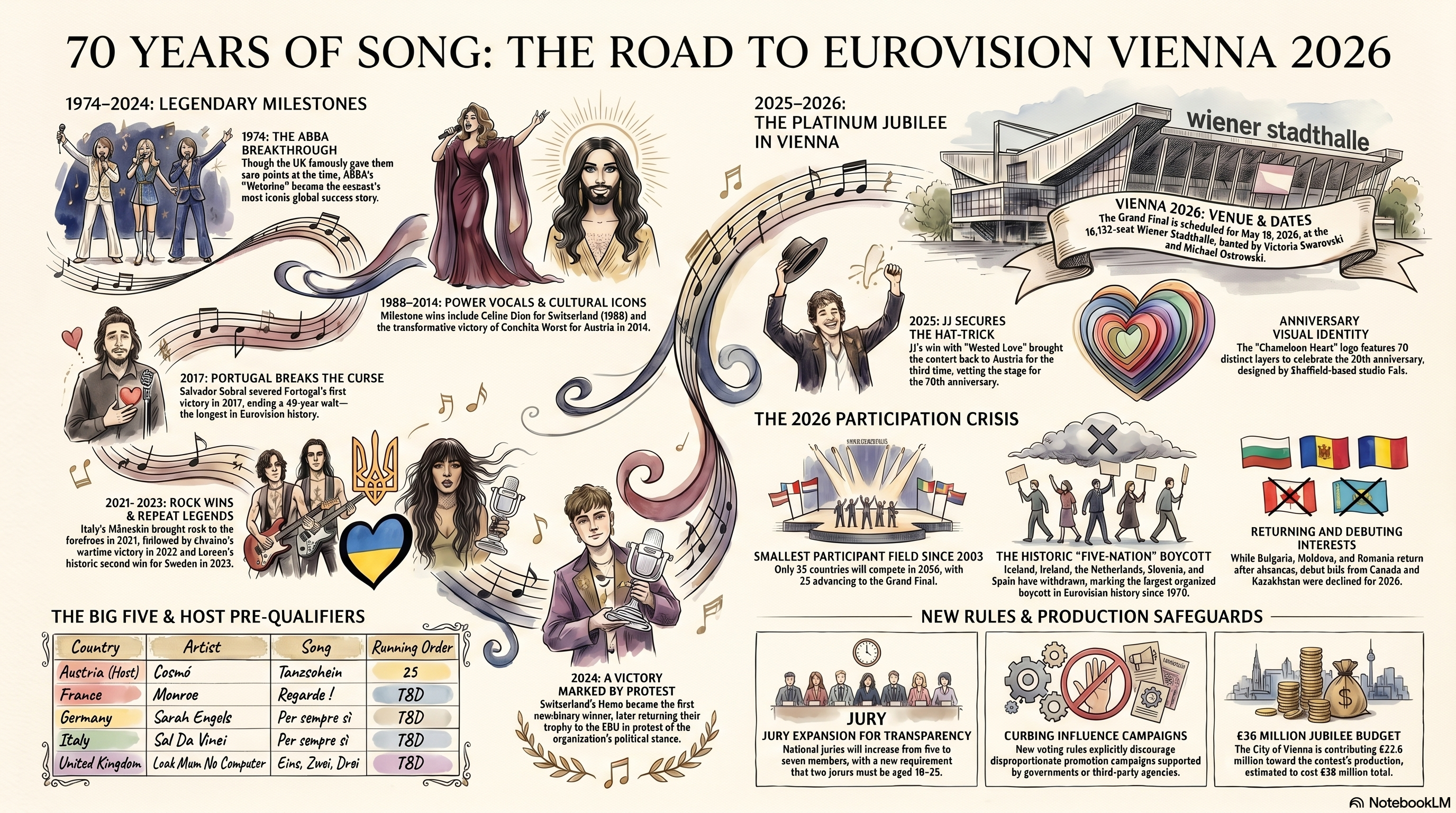
The trophy has been the subject of drama recently. Nemo, who won Eurovision 2024 for Switzerland, returned their trophy to the EBU in protest at Israel's continued participation in Eurovision 2026. Reports suggest the trophy was damaged during transit. Charlie McGettigan, Ireland's 1994 co-winner, has also pledged to return his trophy in solidarity.
2. Hosting Rights for the Following Year
The most commercially valuable prize Eurovision awards is the right to host the following year's contest. Whichever country's broadcaster submits the winning entry becomes the host broadcaster for the next Eurovision.
Hosting Eurovision is a massive economic boost. The host city typically sees:
- €50-100 million in direct tourism revenue during contest week
- Tens of thousands of visitors — accredited delegates, press, and fans
- Hundreds of millions in global TV and streaming advertising value
- Tourism board marketing that continues for years after hosting
Vienna 2026 is estimated to generate over €100 million in economic impact for the Austrian capital. Whichever country wins Eurovision 2026 will host Eurovision 2027 — unless there are exceptional circumstances (as happened when Ukraine won in 2022 but the UK hosted 2023 due to the war).
3. Streaming & Sales Boost
The commercial boost for the winning song and artist is enormous. Analysis of winning entries shows:
- Average +2,000% boost in Spotify streams in the week after victory
- Multi-week presence on national and international charts
- Album sales increases of 500-1,000% for established artists
- Radio play across European markets where the song may have been unknown
Loreen's 'Tattoo' (Sweden, 2023) went platinum in multiple European countries. Nemo's 'The Code' (Switzerland, 2024) reached the UK top 10 and streamed hundreds of millions of times. JJ's 'Wasted Love' (Austria, 2025) became a streaming sensation across the German-speaking world.
4. Career Transformation
The most valuable prize is intangible but life-changing: instant international recognition for the winning artist. Eurovision reaches over 150 million live viewers across Europe, Australia, and increasingly the rest of the world via streaming.
Winners who built careers on their Eurovision platform include:
- ABBA — Won 1974, went on to sell 400+ million records
- Céline Dion — Won for Switzerland in 1988, launched one of the biggest solo careers ever
- Loreen — Two-time Eurovision winner, sustained international touring career
- Måneskin — Won 2021 for Italy, became one of the biggest rock bands of the 2020s
- Salvador Sobral — Won 2017 for Portugal, became a critically acclaimed international jazz artist
- Conchita Wurst — Won 2014 for Austria, became a global LGBTQ+ icon
What the Runners-Up Get
Only the winner receives a trophy and hosting rights. Runners-up receive:
- A certificate of participation
- Global exposure via the broadcast itself
- Streaming and sales boosts (smaller than the winner but still significant)
- A permanent place in Eurovision history
Many runners-up have had bigger post-Eurovision careers than winners. Måneskin actually finished first for Italy in 2021, but bands like Pastora Soler, Barbara Pravi (2021 runner-up for France), and Käärijä (2023 runner-up for Finland) all parlayed high finishes into major international careers.
The Cost of Hosting: The Hidden 'Prize' Liability
Hosting rights are not entirely a reward — they come with significant cost. A host broadcaster typically spends:
- €20-40 million on production costs
- €5-10 million on venue preparation
- €3-5 million on security (much more for 2026 due to enhanced threat levels)
- Staff costs across a ~12-month preparation period
Most host countries recoup these costs through tourism revenue, sponsorship deals, and the prestige boost — but smaller nations like San Marino or Luxembourg typically cannot afford the full hosting infrastructure. If a small nation wins, hosting arrangements are sometimes negotiated with larger partner broadcasters.
How Participating Countries Fund the Contest
Since there is no prize money, the question arises: where does Eurovision's budget come from? The answer is participation fees paid by each competing broadcaster, plus a host broadcaster contribution.
Participation fees are tiered:
- Big 5 countries (France, Germany, Italy, Spain, UK) pay the largest fees
- Smaller nations pay reduced fees
- The total participation fee pool covers the EBU's contest organisation costs
Host broadcasters additionally commit their own production budget, typically with government tourism board support.
Winner Betting: Where the Real Money Moves
While Eurovision does not pay its winner, the betting market generates enormous activity around the contest. At Betfred, Eurovision 2026 markets include:
- Outright winner — Finland currently leads at 6/4
- Top 10 finish — for every participating country
- Jury winner and televote winner — separate markets
- Semi-final qualification — yes/no for each semi-final participant
- Head-to-head — direct comparisons between entries
Betting volume on Eurovision has grown every year. The 2025 contest saw record betting activity, and 2026 is expected to exceed that given the heightened attention around the contest.
Is Eurovision Worth It Without Prize Money?
The answer from every Eurovision winner ever asked is the same: absolutely yes. The trophy is iconic, the hosting rights are valuable, the streaming boost is transformative, and the career opportunities that follow are worth far more than any prize pool could offer.
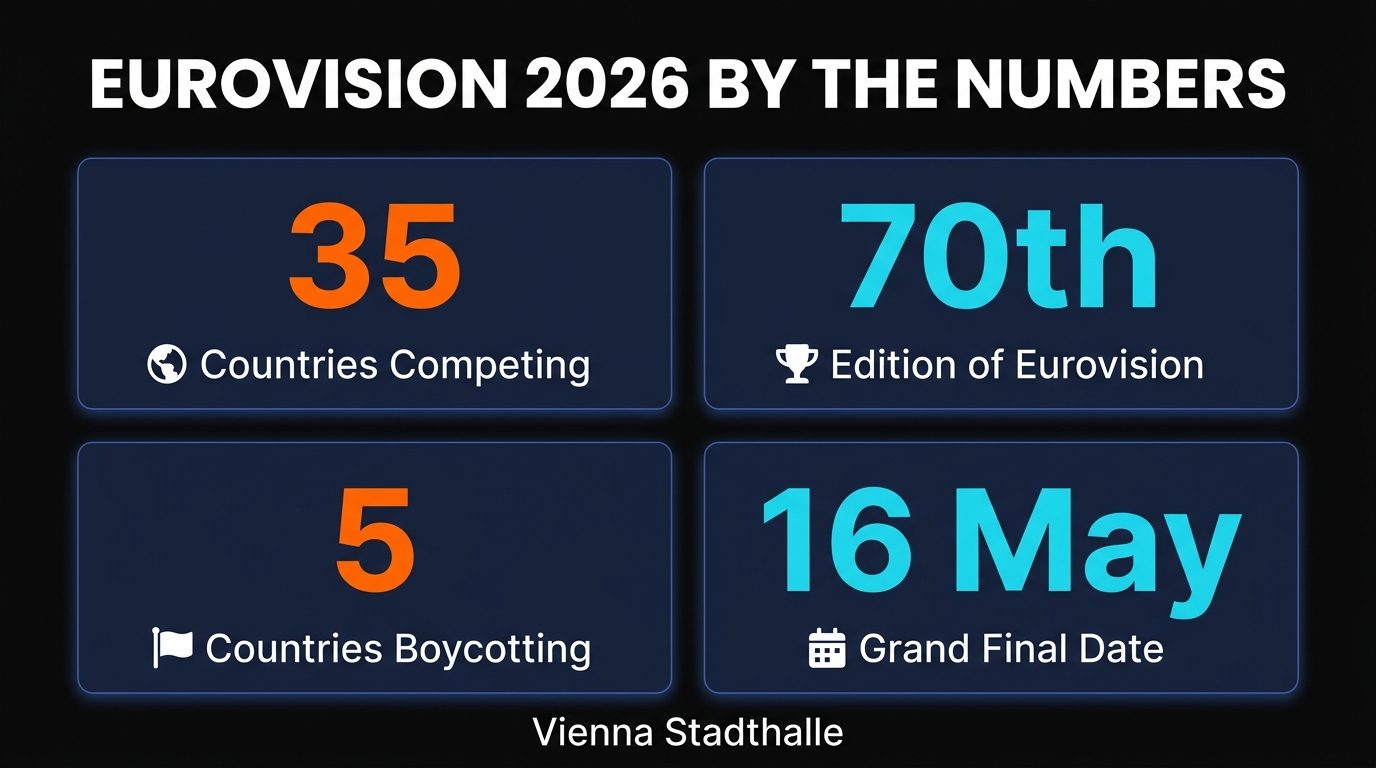
Winning Eurovision is one of the few musical achievements that genuinely changes an artist's life overnight. That is why 35 countries compete every year despite knowing there is no cash reward. That is why Eurovision 2026 in Vienna will be watched by 150 million people.
For those watching along and placing bets on the outcome, the real prize pool is at Betfred. Check current odds on winner, qualifiers, and all Eurovision 2026 markets.
18+. Please gamble responsibly. BeGambleAware.org
Related Articles
- 10 Biggest Eurovision Shocks in History
- Every Eurovision Winner 1956-2025
- Big 5 + Austria Auto Qualifiers
- Does the Favourite Win?
Frequently Asked Questions
How much money does the Eurovision winner get?
Zero. Eurovision does not award prize money. Winners receive the glass microphone trophy and the right for their country to host the next year's contest.
What is the Eurovision trophy made of?
A glass microphone hand-crafted by Swedish artist Kjell Engman at the Kosta Boda glassworks, approximately 32cm tall.
Does winning Eurovision boost streams?
Yes — winners typically see a +2,000% average boost in Spotify streams in the week following victory, with multi-week chart presence across European markets.
What does it cost to host Eurovision?
Host broadcasters typically spend €25-50 million on production, venue, and security. Most recoup this through tourism revenue and sponsorship deals.