
Delta Goodrem doesn't need Eurovision. She has 12 million records sold, seven ARIA awards, and a career that has outlasted most of her competitors' entire existences. So when Australia announced she would represent them at Eurovision 2026 with Eclipse, the question wasn't whether she belonged on the Eurovision stage. It was whether the Eurovision stage was ready for her.

18+ | New customers only | T&Cs apply | Please gamble responsibly
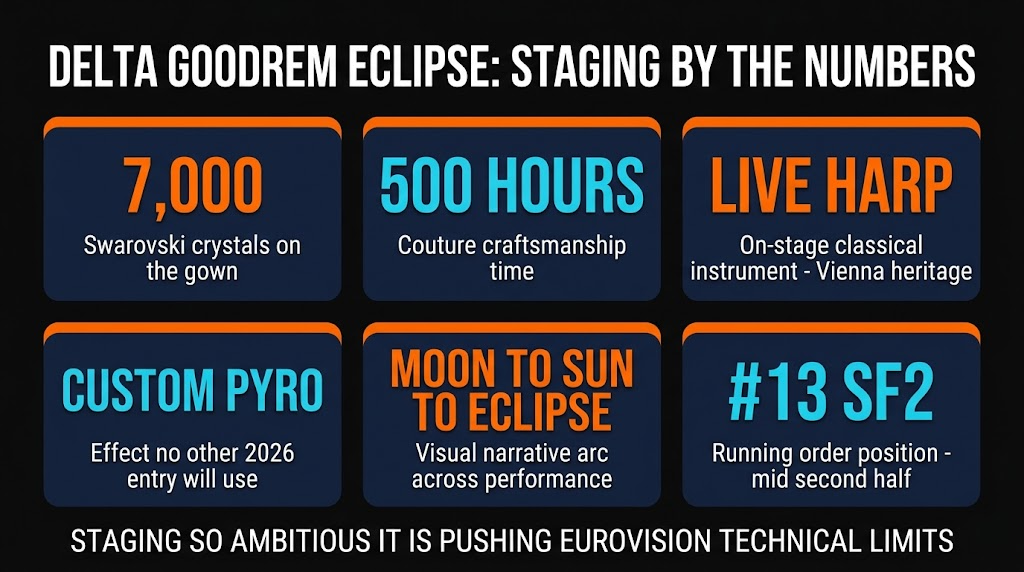
The first rehearsal answered that question with a 7,000-crystal Swarovski gown, a custom mic stand with light-and-shadow graphics, a classically trained harpist on stage, and a pyrotechnic effect that the Australian delegation says no other country at Vienna 2026 will have. The performance is so ambitious it's reportedly pushing the limits of what the Eurovision health-and-safety team will allow.
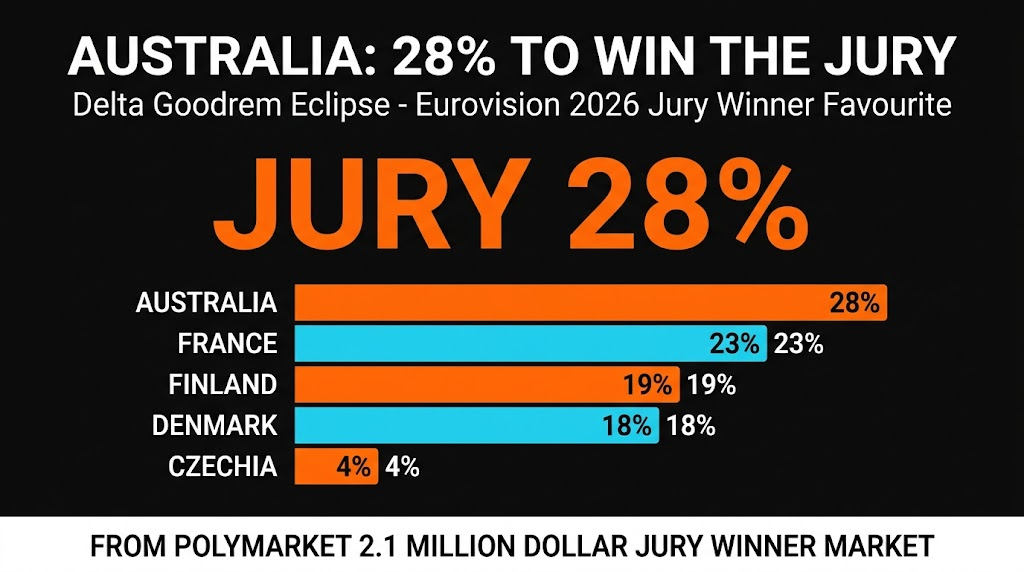
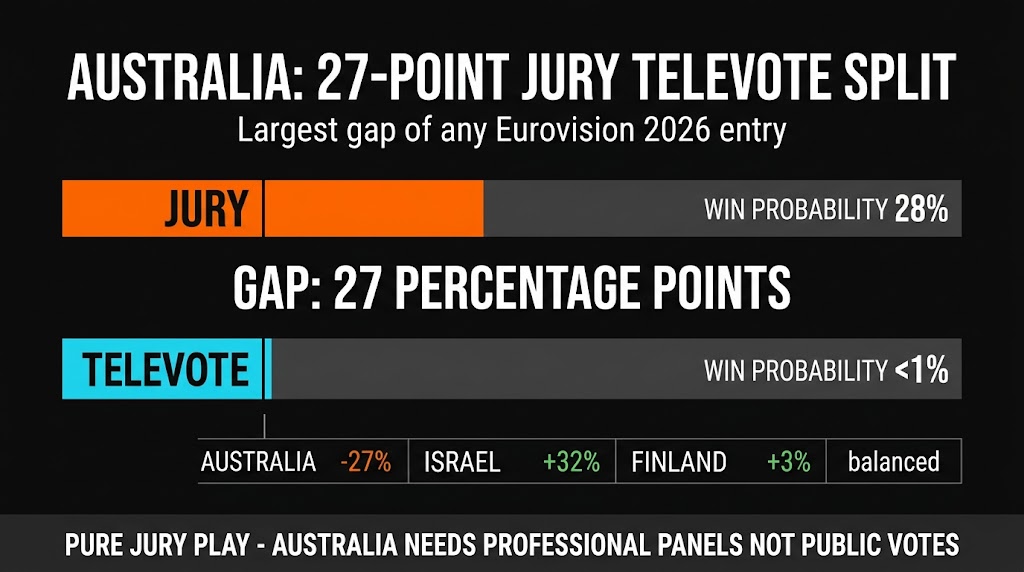
The betting markets have responded accordingly. Delta sits at 28% in the Polymarket jury winner market — the highest of any 2026 entry. But she sits below 1% in the televote. The 27-point gap between her jury and televote probabilities is the largest split of any country in Eurovision 2026, and it defines the entire betting strategy for Australia.
This article is the complete breakdown of Eclipse: what the rehearsal revealed, why the jury market loves it, why the televote ignores it, and how to bet an entry whose fate is entirely in the hands of five-person professional panels.
Betfred — Bet £10 Get £50 in Free Bets on Eurovision Jury Market
The Numbers: Australia's Jury vs Televote Split
Let's begin with the data that defines Australia's 2026 betting profile.
| Market | Australia Probability | Polymarket Volume | Implied Position |
|---|---|---|---|
| Jury Winner | 28% | $2.1M | 1st (favourite) |
| Televote Winner | <1% | $6.5M | 15th+ |
| Overall Winner | 6% | $132.8M | 5th |
| SF2 Qualifier | 94% (+1%) | $1.8M | Joint-1st with Denmark |
| Top 10 Grand Final | 62% | — | 4th |
Data: Polymarket and Eurovoix betting tracker, verified May 7 2026.
The asymmetry is the entire story. Australia is the most extreme jury-tilted entry in Eurovision 2026. The 28% jury figure isn't just leading — it's leading by a clear margin over France (23%), Finland (19%), and Denmark (18%). When the professional panels of music industry experts cast their votes on May 16, they are statistically more likely to award Australia 12 points than any other country.
And yet Delta's overall winner price sits at 6% (around 11.00 at Eurovisionworld). The gap between "highest jury probability" and "6% overall" tells you exactly how much the market believes Australia's televote weakness will drag down the total. Even leading the jury vote isn't enough if you score zero in the televote.
What Delta Showed in the First Rehearsal
Australia's first rehearsal at the Wiener Stadthalle delivered specific elements that justify the 28% jury probability. Each one is a lever that pushes professional panel scores upward.
The Swarovski Gown — 7,000 Crystals, 500 Hours of Work
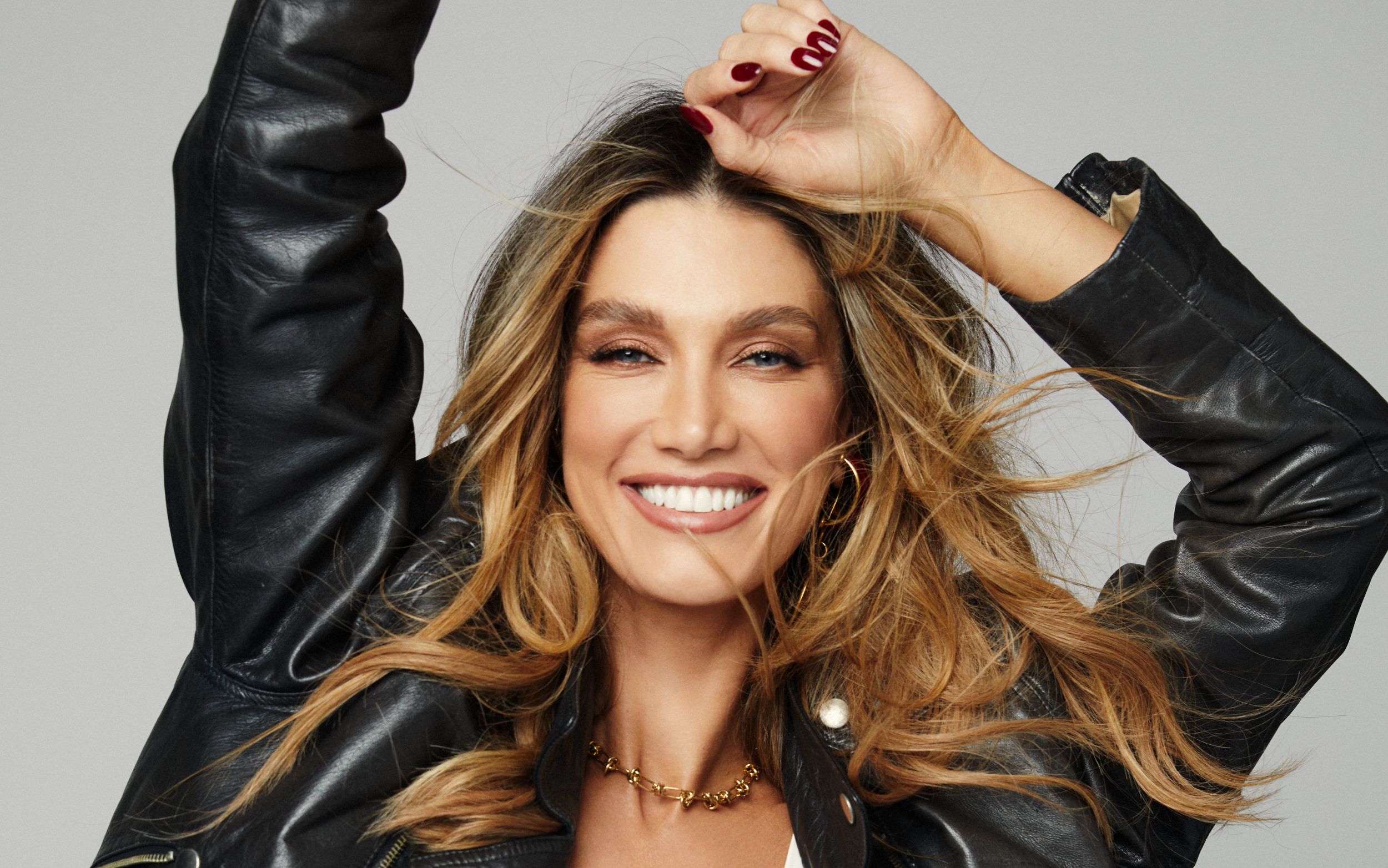
Delta wears a custom couture chiffon gown adorned with approximately 7,000 Swarovski crystals. The garment took an estimated 500 hours of craftsmanship and is described by the delegation as a homage to Vienna's signature sparkle. Swarovski is, of course, an Austrian brand — and the choice to wear an Austrian luxury crystal house's product on the Vienna stage is a deliberate diplomatic compliment to the host city.
For jury impact: costume design is one of the criteria implicit in the "performance" and "overall impression" jury scoring categories. A 7,000-crystal gown reads as investment, intention, and respect for the medium. Juries reward production values that demonstrate professional standards. Delta's gown signals that her team treats Eurovision as a serious artistic event, not a career stunt.
The Live Harp and Classical Piano Heritage
This is the staging element with the highest jury-impact ceiling. Delta is a classically trained pianist, and her team has invited a harpist to join her on stage during the performance. Live instrumentation at Eurovision is rare — most backing tracks are pre-recorded, and live performance is largely limited to the lead vocal.
A live harp accompanying live vocals is technically demanding. It requires a performer who can sing accurately while another musician plays in real time, with no studio safety net. For a jury panel of music industry professionals, this is a clear signal of musical seriousness. The harp also resonates with Vienna's musical heritage — the city is the historical home of Austrian classical music, and Eurovision juries (especially Western European panels) appreciate this kind of cultural reverence.
For comparison: in 2024, Switzerland's Nemo won Eurovision partly on the strength of opera-meets-pop vocal complexity that juries rewarded heavily. Delta's harp-meets-pop approach occupies similar territory — technical difficulty in service of artistic statement.
The Eclipse Concept — Moon to Sun
The staging concept evolves visually from a moon world to a sun world, culminating in an eclipse moment. Stage graphics on the floor and rear screen play with light-and-shadow themes. The mic stand itself is custom-designed with eclipse imagery. Beam lights create isolated columns during quiet moments, opening to full-stage washes during the climactic eclipse reveal.
This narrative arc — darkness to light to darkness — is the kind of storytelling structure jury panels respect. It demonstrates conceptual coherence between song lyrics, staging design, lighting, and costume. Eurovision juries reward entries where every visual element serves the song's central idea, rather than competing for attention.
The Pyro Effect No Other Country Will Have
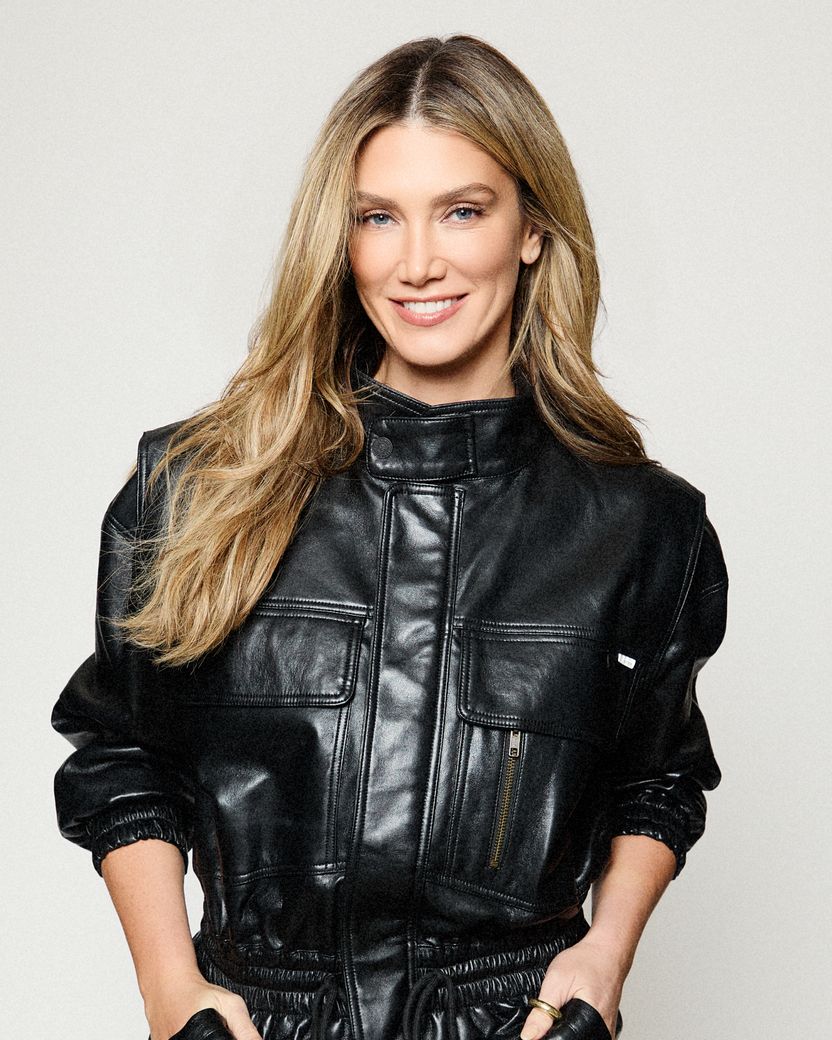
The Australian delegation has confirmed that Delta's performance includes a specific pyrotechnic effect that no other Eurovision 2026 entry will use. The exact nature of the effect has not been publicly disclosed, but reports indicate it is ambitious enough that Eurovision health-and-safety officials have been actively involved in its execution.
For betting impact, exclusive pyro provides two benefits. First, it creates a unique visual moment that distinguishes Delta's performance from the dozens of other entries fighting for attention. Second, it generates media coverage in the post-rehearsal news cycle — exactly the kind of coverage that consolidates jury reputation before they cast their votes.
Stake — Crypto Betting with Instant Payouts on Eurovision Markets
Why the Jury Loves It (And the Televote Doesn't)
The split between Delta's jury and televote probabilities isn't random. It reflects fundamental differences in how the two electorates evaluate Eurovision performances.
The Jury Case
Eurovision juries consist of five-person panels in each country, comprised of music industry professionals — songwriters, producers, performers, music journalists. They watch the dress rehearsal before the live broadcast and score each entry on five criteria: vocal capacity, performance, composition, originality, and overall impression.
Delta scores favourably on every criterion:
- Vocal capacity: Delta is one of the most vocally accomplished performers in the Eurovision 2026 field. Two decades of professional touring give her the technical control juries reward.
- Performance: The 7,000-crystal gown, harpist, and Eclipse staging concept demonstrate professional production values.
- Composition: Eclipse is structurally sophisticated — verses, bridge, modulation, build to climactic eclipse moment. It's the kind of song juries grade well.
- Originality: The harp-pop combination is not common at Eurovision. The Swarovski-meets-pyro production design distinguishes the entry visually.
- Overall impression: The polish, the experience, the cultural intentionality (Vienna, Swarovski, classical heritage) reads as jury-targeted by design.
Each of these factors compounds. A jury panel deciding between Delta and a competitor sees an entry that meets every criterion at a high level. Even if Delta isn't a panel's top choice, she's hard to leave off the top 5. That floor — high minimum scores from most juries — is what generates the 28% probability of an outright jury win.
The Televote Problem
The televote is fundamentally different. Public viewers vote based on a single 3-minute exposure, often while distracted, often via smartphone app while doing something else. The televote rewards memorable moments, emotional gut-punches, diaspora loyalty, and viral shareability.
Delta scores poorly on every televote driver:
- Memorable moment: The eclipse reveal is conceptually sophisticated but may not generate the visceral "I have to vote" reaction that wins televote points. Compare to Israel's diamond reveal or Greece's video-game prop transformation.
- Emotional impact: Eclipse is a polished pop-rock ballad rather than a cathartic emotional release like Duncan Laurence's Arcade or Salvador Sobral's Amar Pelos Dois.
- Diaspora vote: Australia has no significant European diaspora. Australian-born expats in Europe number perhaps 100,000 across the entire continent — too small to deliver meaningful televote points.
- Viral shareability: The Swarovski-and-harp aesthetic is elegant but not meme-able. TikTok and Instagram clip culture rewards bolder, weirder, more provocative content.
This isn't an accusation of weakness. It's a structural observation. Australia's entry was designed for jury impact — and it succeeds at that goal — but the design choices that win juries are the same choices that lose televote attention.
The Historical Parallels: When Jury Favourites Lose Overall
Eurovision history offers clear case studies of what happens to entries with Australia's profile.
| Year | Country/Artist | Jury Position | Televote Position | Overall Position | Outcome |
|---|---|---|---|---|---|
| 2017 | Australia (Isaiah Firebrace) | 1st (jury winner) | 25th | 9th | Jury saved a televote disaster |
| 2019 | N. Macedonia (Tamara Todevska) | 1st (jury winner) | 12th | 7th | Jury win, mid-table overall |
| 2018 | Austria (Cesar Sampson) | 1st (jury winner) | 13th | 3rd | Strong jury, decent televote = podium |
| 2017 | Portugal (Salvador Sobral) | 1st (jury winner) | 1st (televote winner) | 1st | Bridged both votes — won |
The pattern: winning the jury alone doesn't win Eurovision. The only modern jury winner who took the overall prize was Salvador Sobral, and he won the televote too. North Macedonia 2019 won the jury and finished 7th overall. Australia 2017 won the jury and finished 9th. Austria 2018 came closest with 3rd, but only because they had a respectable 13th-place televote — far better than Delta's projected sub-30 finish.
Apply this to Delta. If she wins the jury (28% probability) and finishes 25th in the televote (consistent with the <1% televote winner probability), her total points position likely lands in the 8th-12th range overall. To finish in the top 5, she would need a top-10 televote (which the market currently puts at near-zero probability). To win overall, she would need a top-5 televote (essentially zero probability).
This is why Delta's overall winner price (11.00) makes sense even with her 28% jury probability. The math just doesn't work without significant televote support.
The Betting Strategy: Three Bets to Consider, Three to Avoid
Australia's profile creates very specific betting opportunities. Here's the recommended strategy ranked by confidence.
HIGH CONFIDENCE — DO THIS
Australia to win the jury at 3.50-4.00. The Polymarket 28% probability translates to fair odds around 3.50. Most bookmakers offering jury-specific markets price Delta in the 3.50-4.50 range. At 4.00, you have positive expected value if the second rehearsal continues to land. This is the cornerstone Australia bet.
Australia to qualify from SF2 at 1.05-1.10. At 94% qualification probability, this is essentially insurance — the price is short, but it's effectively a sure thing. Useful as a stake-multiplier in accumulator bets or as a way to lock in a small return while waiting for jury market movement.
Australia top-10 finish in Grand Final at 1.60-1.80. The 62% top-10 probability translates to fair odds around 1.60. Most bookmakers price this at 1.70-1.85, providing slight positive expected value. The jury vote alone should comfortably deliver a top-10 result; the only scenarios where Delta misses top-10 require a vocal disaster on the night.
MEDIUM CONFIDENCE — CONSIDER
Australia top-5 finish in Grand Final at 4.00-5.00. Top-5 requires a strong jury performance plus modest televote points (probably 50+ televote points needed). Delta's jury floor is high enough to make this viable, but it requires the televote to deliver more than the <1% winner probability suggests. At 5.00, this represents fair to slightly positive expected value.
Australia in jury winner market each-way (top 3 jury) at 1.50-1.80. Even if Delta doesn't win the jury outright, top 3 in the jury vote is highly probable given her 28% win probability and high score floor. At 1.50-1.80 each-way odds, this is one of the higher-confidence bets in the Australia portfolio.
AVOID — DON'T DO THIS
Australia to win Eurovision overall at 11.00. The math doesn't work. Even leading the jury, Delta's televote weakness creates a structural ceiling that puts the realistic overall probability at 5-7%, not the 9% implied by 11.00. The price reflects optimism about her jury chances without fully accounting for the televote drag. Negative expected value.
Australia to win the televote at 100.00+. Below 1% probability. The price is not generous enough relative to the actual risk. Even at 200/1, this is essentially throwing money away.
Australia top-3 finish in Grand Final at 6.00-7.00. Requires both a strong jury (probable) AND a respectable televote (improbable). The combined probability is closer to 8-10%, making 6.00-7.00 fair-to-marginally-positive value, but the volatility is high. Better risk-adjusted bets exist.
Thunderpick — 100% First Deposit Bonus on Eurovision Sub-Markets
SF2 Context: Why Australia Is the Safest Qualifier
Australia performs in Semi-Final 2 on Thursday May 14, 2026 from running order position 13. Of the 15 competing countries in SF2 (excluding the non-competing France, UK, and host Austria), Australia is tied with Denmark at 94% qualification probability — the joint-highest in the semi-final.
Here's the SF2 qualification picture as it stands:
| Country | Qualification % | Tier |
|---|---|---|
| Denmark | 94% | Lock |
| Australia | 94% | Lock |
| Ukraine | 92% | Lock |
| Albania | 68% | Strong |
| Switzerland | 46% | Bubble |
| Armenia | 43% | Bubble |
| Norway | ~38% | Bubble |
The 94% qualification probability essentially eliminates risk on the SF2 stage. Delta's path to the Grand Final is more secure than nearly any other country in the contest. The only questions are: 1) how strong is her jury win on Saturday, and 2) does her televote come in better than the dire 1% prediction.
What the Second Rehearsal Could Reveal
Delta's second rehearsal will be the next major information event. Three things could shift her market position.
Scenario 1: Vocal Confirmation
Most likely outcome (60% probability). Delta's first rehearsal vocal was strong; the second rehearsal will confirm consistency. The jury market stays at 28% or climbs slightly to 30%. Overall winner price stays at 11.00 or shortens to 10.00.
Scenario 2: Camera Adjustment Reveals New Visual Layer
Possible (25% probability). The first rehearsal is often shot with cameras in suboptimal positions. The second rehearsal allows for camera blocking refinement, which can dramatically improve how the staging translates to broadcast. If the eclipse reveal moment is captured better in the second rehearsal footage, the jury market could climb to 32%+ and the televote market — currently below 1% — could nudge upward to 2-3%.
Scenario 3: Pyro or Harp Issue Emerges
Lower probability (15%). The pyrotechnic effect requires precise timing. If the second rehearsal reveals execution difficulties, jury confidence drops slightly. The market could pull back from 28% to 24-26%, with overall winner price drifting from 11.00 to 14.00.
The asymmetry is roughly neutral. Two of three scenarios maintain or strengthen Australia's market position; one weakens it modestly. For betting decisions, this argues for holding existing positions through the second rehearsal rather than adding until evidence is clearer.
The Bottom Line: Should You Bet on Delta?
Yes — but only on the right markets. Australia is the purest jury play of Eurovision 2026, and the jury winner sub-market at 3.50-4.00 is the cornerstone bet. Top-10 finish at 1.70 is solid insurance value. SF2 qualification at 1.05-1.10 is sure-thing money.
The mistake most casual bettors make is backing Delta to win Eurovision overall at 11.00. The price feels generous given her jury favourite status. It isn't. Eurovision history shows jury favourites with weak televote rarely finish higher than top-5 overall. Delta's 27-point jury/televote split is the largest in the contest — and the structural math means even a dominant jury performance probably translates to 8th-12th place overall, not the podium.
Delta is here to win the jury. Bet her on the jury market. Anything else is a gamble that the structural televote weakness won't bite — and history suggests it will.
Cloudbet — Up to 5 BTC Welcome Bonus on Eurovision 2026 Jury Markets
Frequently Asked Questions
What are Delta Goodrem's Eurovision 2026 odds?
Delta Goodrem's Eclipse for Australia leads the Polymarket jury winner market at 28% ($2.1M volume), making her the favourite to win the professional panel vote. Her overall winner price sits at 6% (around 11.00 at Eurovisionworld). Her televote winner probability is below 1%. SF2 qualification probability is 94%.
Why is Australia leading the jury market but only 6% to win overall?
Eurovision uses a 50/50 scoring system combining jury and televote points. Australia's jury strength is offset by structural televote weakness — geographic distance from Europe means no diaspora vote, and the elegant Swarovski-and-harp aesthetic doesn't generate the viral shareability that drives televote behaviour. Even leading the jury, Delta is unlikely to score higher than 25th-30th in the televote, which structurally caps her overall finish at 8th-12th most likely.
What did Delta Goodrem show in her Eurovision 2026 first rehearsal?
Delta's first rehearsal revealed: a 7,000-crystal Swarovski couture gown (500 hours of work), a live harpist accompanying her on stage, an eclipse-themed staging concept (moon-to-sun-to-eclipse visual narrative), a custom mic stand with light-and-shadow graphics, and a pyrotechnic effect that no other Eurovision 2026 entry will use. The staging is reportedly so ambitious it's testing the limits of what Eurovision health-and-safety teams will permit.
When does Australia perform at Eurovision 2026?
Australia performs in Semi-Final 2 on Thursday May 14, 2026 at the Wiener Stadthalle in Vienna, in running order position 13 (out of 18 entries in SF2). With 94% qualification probability, Delta is virtually guaranteed a spot in the Grand Final on Saturday May 17. The Grand Final running order will be drawn after SF2, with Austria already confirmed as the closing performer.
What's the best bet on Delta Goodrem?
Australia to win the jury at 3.50-4.00 odds is the best Delta bet. The Polymarket 28% probability aligns with these prices, and the second rehearsal is more likely to maintain or improve her jury position than damage it. Avoid the overall winner market at 11.00 — the math doesn't support overall victory given the televote weakness. Top-10 finish at 1.70 is solid insurance value. SF2 qualification at 1.05-1.10 is essentially sure-thing money.
Related Articles
- Eurovision 2026 Jury vs Televote Predictions: Country Breakdown After Rehearsals
- Eurovision 2026 Semi-Final 2: Who Qualifies? Post-Rehearsal Predictions
- Why Finland Will Win Eurovision 2026: Full Betting Analysis
- Can Greece Win Eurovision 2026? Akylas 'Ferto' Odds Analysis
- Eurovision 2026 Winner Predictions: Grand Final Top 10 After Rehearsals
- Eurovision 2026 Dark Horses After Rehearsals: 5 Countries the Odds Are Wrong About
All odds sourced from Eurovisionworld.com and Polymarket, verified May 7 2026. 18+. Please gamble responsibly. BeGambleAware.org