Eurovision Song Contest director Martin Green has made his most direct public comments yet on the boycott crisis surrounding Eurovision 2026. In an interview with Austrian news outlet Der Standard, Green argued that the contest's 70-year track record of outlasting international friction means the current boycotts will ultimately be a minor historical footnote.

18+ | New customers only | T&Cs apply | Please gamble responsibly
Green's Key Statements
Speaking ahead of the contest's arrival in Vienna, Green addressed the political turbulence head-on. His central argument is that Eurovision has survived previous political crises and will survive this one too.
Green stated that while the contest is "never completely immune" to the geopolitical realities of the day, it has a proven ability to endure. He suggested that the public is capable of "distinguishing between a public service broadcaster and the government of the country it represents" — a direct response to the argument that Israel's participation implies endorsement of Israeli government policy.
Perhaps his most quoted line was: "Eurovision can show how the world could be, rather than how it is." Green argued that "the more people come together, the stronger the symbol becomes", framing the contest as a force for unity that is strengthened, not weakened, by participation even amid disagreement.
The Reaction
Green's comments have drawn a sharply divided reaction. Supporters of his position argue that Eurovision's value lies precisely in its ability to bring countries together regardless of political tensions, and that boycotts ultimately punish artists and fans rather than governments.
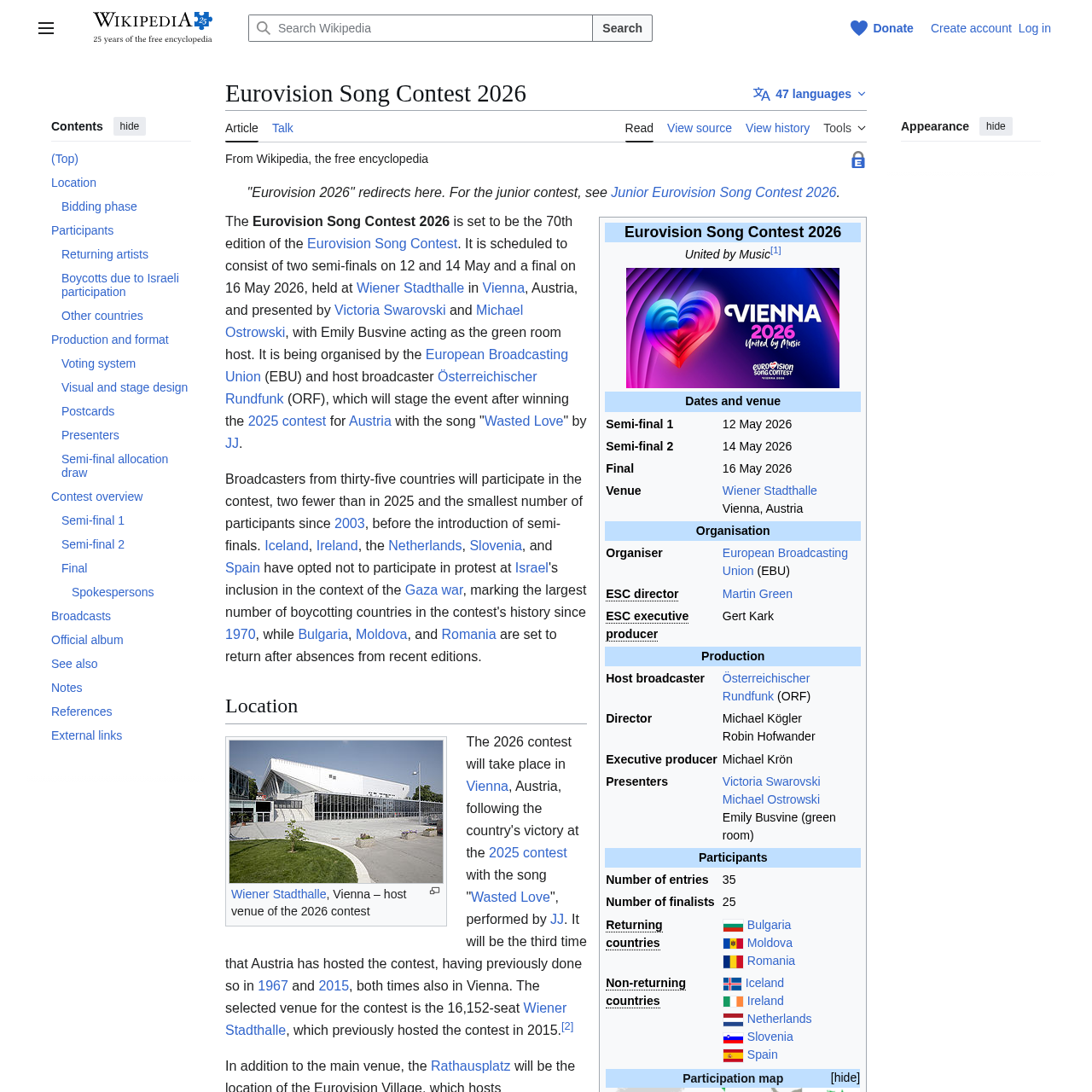
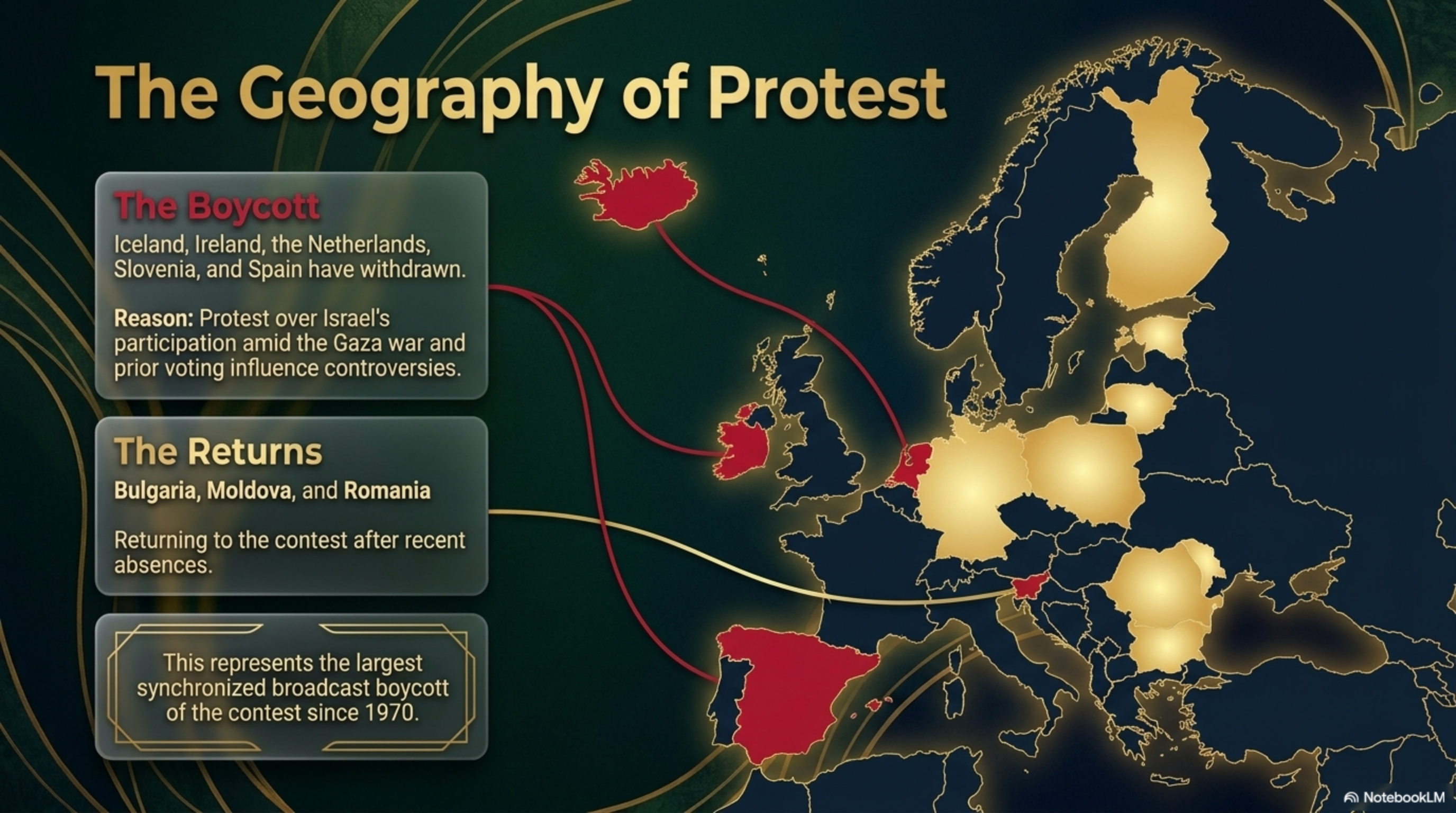
Critics, however, have been vocal in their opposition. The "footnote" characterisation has been described as dismissive of the concerns raised by the five boycotting nations — Iceland, Ireland, the Netherlands, Slovenia, and Spain. Fan communities on social media have debated the comments intensely, with many arguing that Green is underestimating the significance of the largest mass withdrawal since 1970.
The boycotting broadcasters have not issued formal responses to Green's interview, but several have previously stated that their decisions were taken after careful deliberation and reflect the values of their audiences.
Historical Context: Has Eurovision Survived Boycotts Before?
Green's confidence is not without historical basis. Eurovision has weathered political storms throughout its history:
- 1969 — Austria, Norway, Sweden, Finland, and Portugal boycotted the following year's contest after a controversial four-way tie
- 1970 — The same boycotting countries stayed away, reducing the field significantly
- 1979-1980 — Turkey withdrew over political tensions
- 2003 — Only 26 countries participated, the lowest number in the modern era until now
- Russia's exclusion since 2022 — Removed by the EBU following the invasion of Ukraine
In each case, the contest continued and eventually recovered its participant numbers. The 2026 boycott, however, is qualitatively different. This is the first time multiple countries have coordinated a withdrawal over the participation of another specific country, and the first time it has happened amid such widespread public and media attention.
The Felicia Controversy
Green has also had to address the controversy surrounding Sweden's FELICIA. Reports emerged that FELICIA had made comments about Israeli participation in Eurovision, and Green was asked to respond. He navigated the situation carefully, emphasising that artists are entitled to their personal views but that the contest itself must remain a space for musical competition rather than political statements.
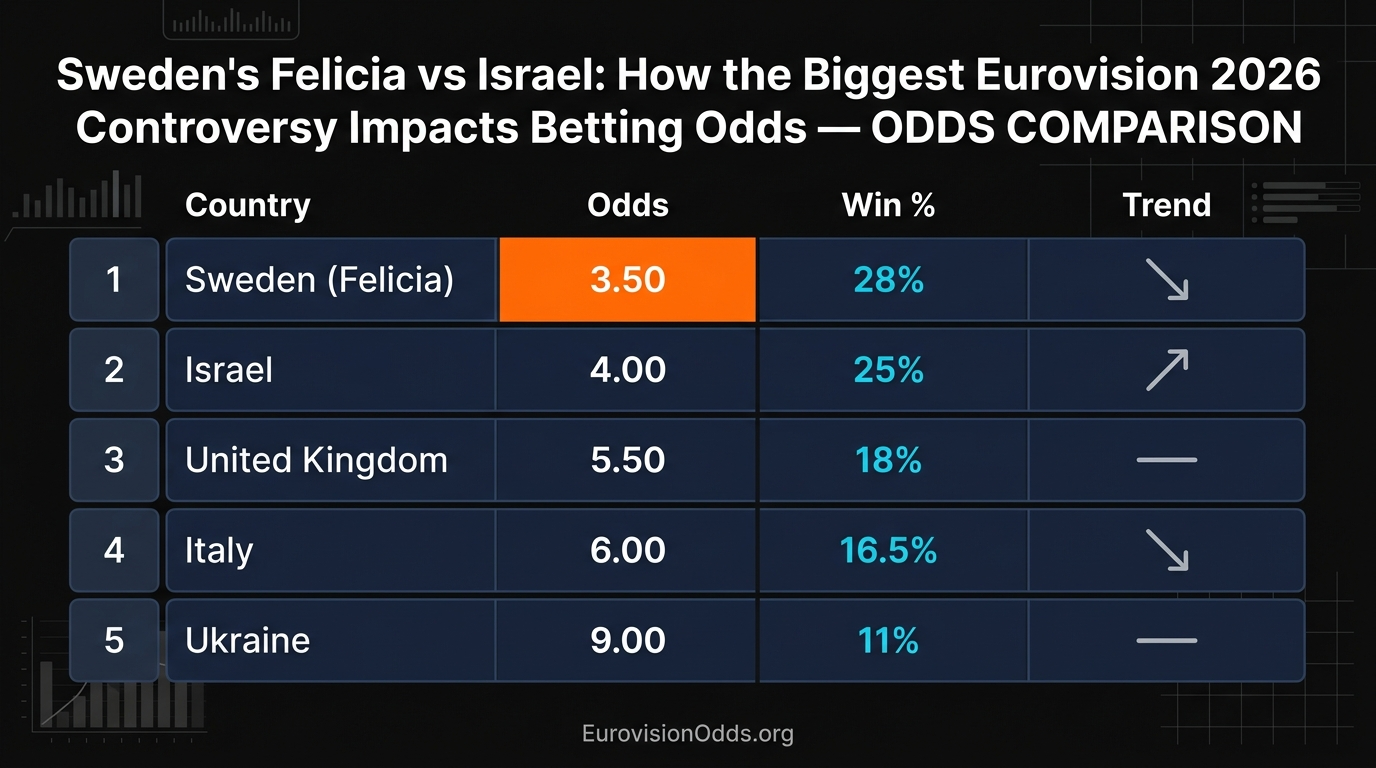
Sweden's FELICIA remains one of the top contenders in the betting, currently sitting around 4th place at Betfred. The controversy does not appear to have damaged Sweden's chances in the betting market, and may have actually increased awareness of the Swedish entry.
What Happens Next?
With the contest now just five weeks away, the political debate is unlikely to subside. Protests are planned near the Wiener Stadthalle during show weeks, and the Austrian authorities have prepared comprehensive security measures to manage them.
The question of whether Green is right — whether the boycotts will indeed be a footnote — will only be answered by history. If Eurovision 2026 delivers a memorable show with strong ratings and passionate performances, Green's argument will be vindicated. If the controversy overshadows the music and leads to further withdrawals in future years, it will look like a misjudgement.
For now, the 35 remaining countries are preparing for Vienna, the odds are moving daily, and Eurovision fans around the world are counting down to what promises to be one of the most dramatic contests in the event's history.
Check Betfred for the latest Eurovision 2026 odds on all markets.
18+. Please gamble responsibly. BeGambleAware.org

Related Articles
- Nemo Returns Eurovision Trophy to EBU
- How the Boycott Changes Betting
- 15 Most Controversial Eurovision Moments
- Sweden's FELICIA vs Israel
Frequently Asked Questions
What did Martin Green say about the Eurovision 2026 boycotts?
Eurovision director Martin Green called the five-country boycott 'just a footnote' in Eurovision's 70-year history during an interview with Der Standard in April 2026.
Which countries are boycotting Eurovision 2026?
Iceland, Ireland, the Netherlands, Slovenia, and Spain withdrew over Israel's continued participation — the largest mass withdrawal since 1970.
Has Eurovision survived boycotts before?
Yes — multiple previous boycotts occurred in 1969, 1970, the late 1970s, and 2003. Russia was also excluded in 2022 following its invasion of Ukraine.