
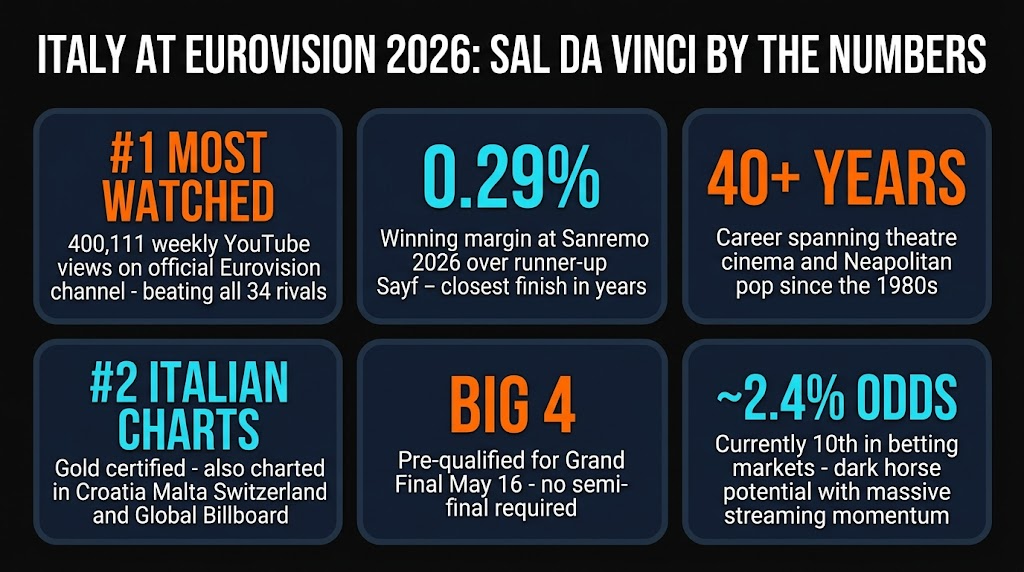
Italy is sending a genuine living legend to Eurovision 2026. Sal Da Vinci — born Salvatore Michael Sorrentino in New York City in 1969 — has been performing for over four decades. He has released 14 studio albums, starred in theatre and cinema, and become one of the most beloved voices in Neapolitan pop music. And now, at 56 years old, he is bringing his Sanremo-winning song "Per sempre si" to the Wiener Stadthalle in Vienna with a mission to remind Europe why Italy remains one of the great Eurovision powerhouses.

18+ | New customers only | T&Cs apply | Please gamble responsibly
The bookmakers have him at approximately 2.4% implied probability, sitting around 10th in the overall market. But the streaming numbers tell a completely different story — and in a contest where the televote makes up 50% of the final score, streams matter more than most pundits acknowledge.
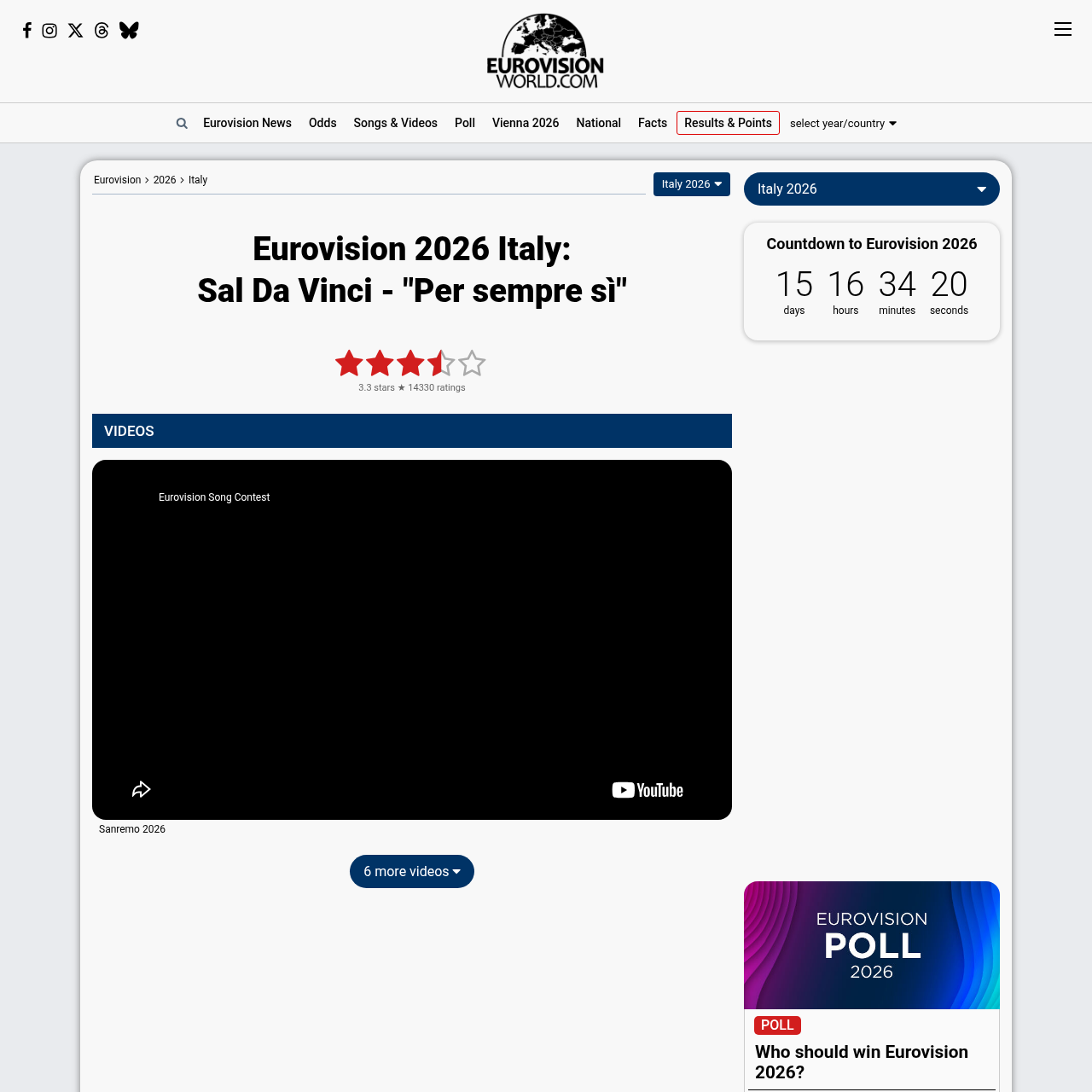
Who Is Sal Da Vinci?
The story begins in New York. Salvatore Michael Sorrentino was born in 1969 to Mario Da Vinci, an Italian singer and actor from Naples who was touring the United States at the time. The family connection to music runs deep — Mario Da Vinci was a prominent figure in the Neapolitan music scene, and young Salvatore grew up surrounded by performers, musicians, and the theatrical traditions of southern Italy.
Taking the stage name Sal Da Vinci in honour of his father's artistic legacy, he launched a career that would span over 40 years and cross virtually every entertainment medium Italy has to offer:
- 14 studio albums across a career that blends Neapolitan pop, contemporary Italian music, and theatrical composition
- Multiple theatre productions — Da Vinci is a respected stage actor as well as a singer, with leading roles in Neapolitan musical theatre that have earned critical acclaim across southern Italy
- Cinema and television appearances that have cemented his status as a household name throughout Italy, particularly in the Naples region where he holds near-legendary status
- First Sanremo appearance in 2009 — he finished 3rd, establishing himself on the national stage beyond his Neapolitan heartland
What makes Da Vinci exceptional — and what separates him from most Eurovision competitors — is the sheer depth of performance experience. This is not a young artist on the rise or a social media sensation translating online fame to the stage. This is a man who has spent 40 years learning how to hold an audience in the palm of his hand. In a competition where the live performance is everything, that kind of experience is worth its weight in gold.
Winning Sanremo 2026: 0.29% That Changed Everything
The Sanremo Music Festival is Italy's national selection process for Eurovision, and it is a cultural event of enormous magnitude in its own right. Five nights of performances across an entire week, viewed by tens of millions of Italians, and covered by every media outlet in the country. Winning Sanremo does not just earn you a ticket to Eurovision — it makes you a national talking point.
Sal Da Vinci's victory in February 2026 was one of the closest in Sanremo history. The final margin was just 0.29% over Sayf, decided by a combined vote of:
- 33% press jury — professional music journalists and critics
- 33% radio jury — representatives from Italian radio stations
- 34% televote — the Italian public voting by phone
That razor-thin margin tells you something important: "Per sempre si" did not dominate — it earned its victory through across-the-board strength. It was strong enough with professional critics, radio programmers, and the general public to edge out the competition on every front. At Eurovision, where the scoring combines a professional jury (50%) and televote (50%), that broad appeal is exactly the profile that tends to overperform expectations.
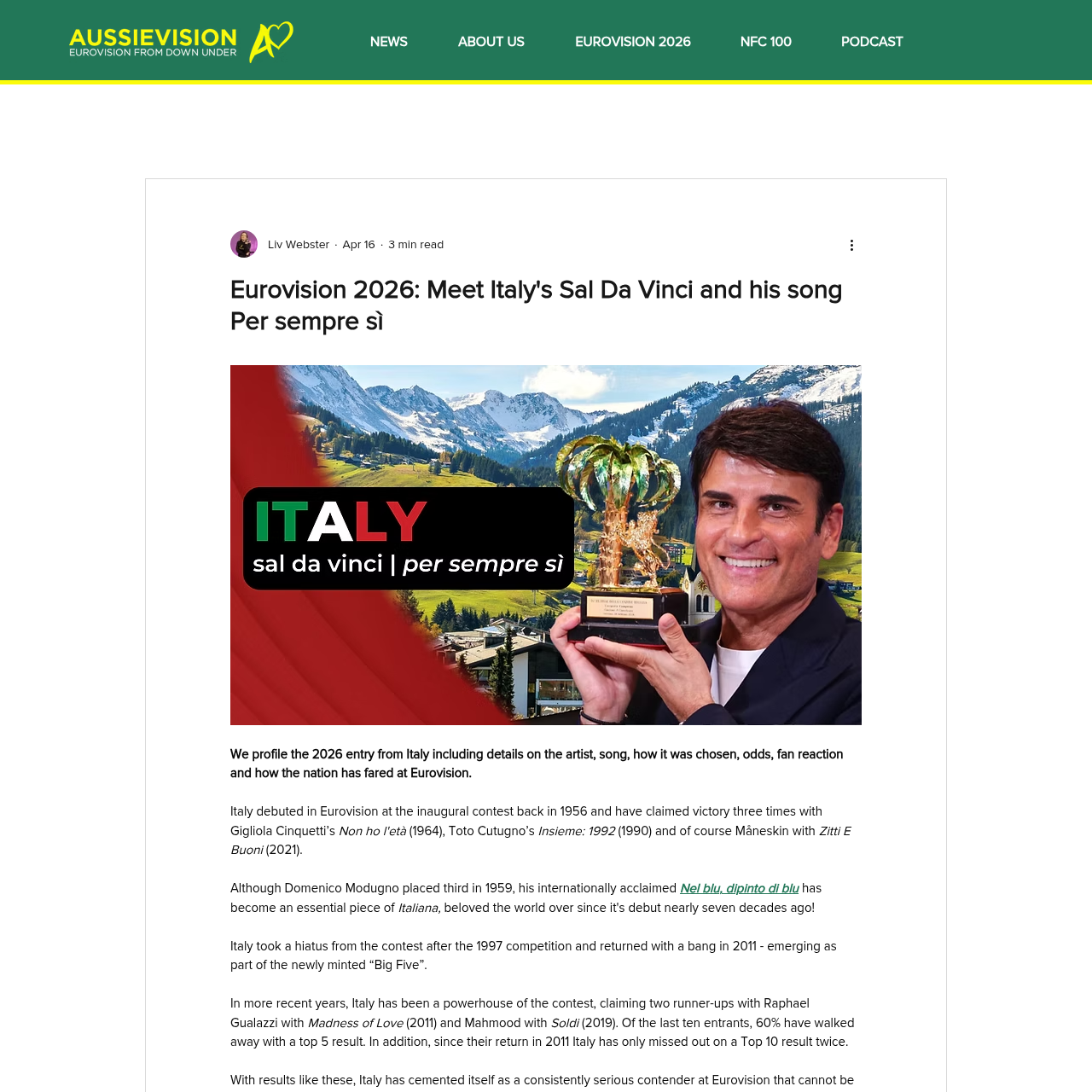
"Per Sempre Si" — The Song
"Per sempre si" translates to "Forever Yes" — a celebration of enduring love, commitment, and the daily choice to keep saying yes to a relationship through decades of shared life. It is not a youthful infatuation song or a breakup anthem. It is a mature, warm, deeply sincere declaration of permanent devotion.
The emotional weight is amplified by Da Vinci's personal life. He has been married to Paola Pugliese since 1992 — over 34 years — and they have two children together. When he sings about forever, he means it. And when he points to his wedding ring during the performance, as he has done consistently since Sanremo, the audience knows this is not a performance technique — it is a man singing about his actual life.
That authenticity is one of Eurovision's most powerful weapons. The contest's history is littered with entries that connected because the audience could sense something real behind the performance. Salvador Sobral's "Amar pelos dois" in 2017. Duncan Laurence's "Arcade" in 2019. Conchita Wurst's "Rise Like a Phoenix" in 2014. The common thread: genuine emotional truth that transcends language barriers.
"Per sempre si" sits in that tradition. It is performed in Italian — not English — which could limit some casual viewers' immediate connection. But Italian has historically performed well at Eurovision, and the emotional register of the performance communicates clearly regardless of whether you understand every word.
Streaming Numbers: #1 on YouTube, #1 on Spotify
Here is where the Italy-as-dark-horse argument becomes genuinely compelling. The streaming data for "Per sempre si" is extraordinary:
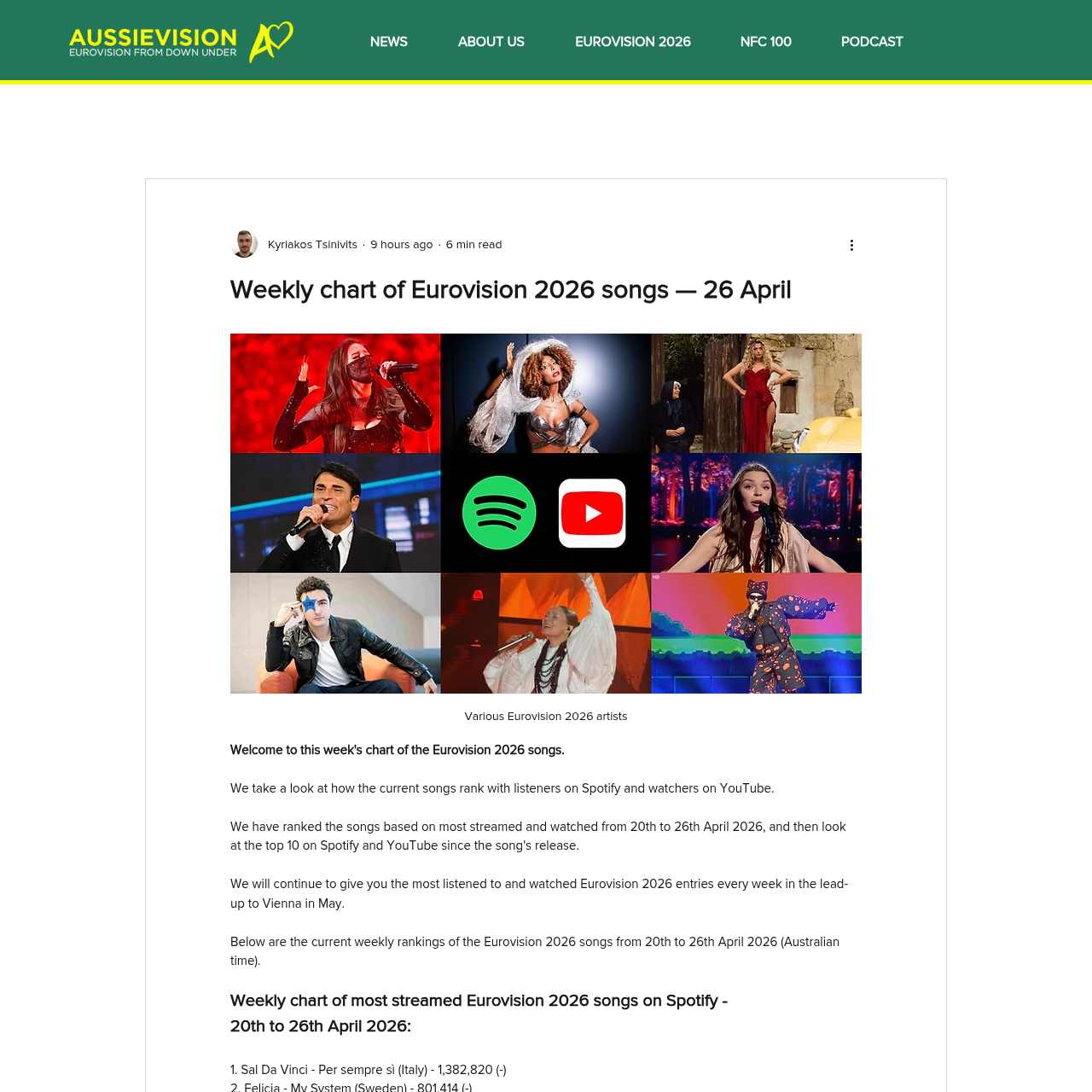
- #1 most-watched Eurovision 2026 song on YouTube — 400,111 weekly views for the week of April 20–26, ahead of Greece (317,005) and Finland (222,108)
- #1 on total Spotify streams with approximately 1.38 million cumulative streams
- #2 on the Italian charts (certified Gold)
- Charted internationally: Croatia (#11), Malta (#16), Switzerland (#21), Global Billboard (#115)
Let that YouTube figure sink in. The song that the betting market prices at just 2.4% implied probability — 10th in the overall rankings — is generating nearly double the weekly YouTube views of the betting favourite Finland. It is out-streaming Greece, which sits 5th in the betting. It is out-streaming Denmark, France, and Australia, all of which are priced significantly shorter.
There are legitimate reasons why streams do not directly translate to Eurovision results — YouTube views skew toward the artist's home country and diaspora, while Eurovision televoting is distributed across all participating nations. But the sheer scale of the gap between Italy's streaming position (#1) and its betting position (~10th) suggests the market may be undervaluing Da Vinci's appeal.
Italy at Eurovision: A Track Record of Excellence
Italy's Eurovision history provides important context for assessing Sal Da Vinci's chances:
- Maneskin — 2021 winners ("Zitti e buoni") — The rock band's explosive victory proved that Italian-language entries with raw energy can dominate both the jury and televote
- Mahmood — 2019, 2nd place ("Soldi") — Won the televote outright with an Arabic-Italian fusion that shattered cultural boundaries
- Il Volo — 2015, 3rd place ("Grande Amore") — The operatic trio won the jury vote and proved that classical Italian vocal tradition remains a force at Eurovision
- Mahmood & Blanco — 2022, 6th place ("Brividi") — Another strong result in a deeply competitive year
Italy has been consistently competitive since returning to Eurovision in 2011 after a 14-year absence. They have finished in the top 10 in the majority of their appearances, and their entries are regularly among the most-streamed songs in the competition. The Italian broadcasting infrastructure — RAI — takes Eurovision seriously, investing in high-quality staging and production.
As a Big Four member (alongside France, Germany, and the UK, with Spain boycotting in 2026), Italy is pre-qualified for the Grand Final. This means Sal Da Vinci bypasses the semi-final gauntlet entirely, performing directly on the biggest stage to the largest audience. The Big Four advantage is real: no risk of semi-final elimination, no need to peak twice, and the ability to save the full staging reveal for the night that matters.
The Dark Horse Case
Here is the argument for why Italy at approximately 40/1 (2.4% implied) represents genuine value:
- Streaming dominance. #1 on both YouTube and Spotify. No other entry in the competition is generating this level of organic audience engagement. Streams correlate imperfectly with results, but they are a leading indicator of public interest — and the televote is fundamentally a measure of public interest.
- Sanremo validation. Won Italy's national selection against an elite field, validated by professional critics, radio programmers, and the public simultaneously. The 0.29% margin means the song was tested in the most competitive possible environment and emerged victorious.
- Performance experience. 40+ years of live performance. Da Vinci will not be nervous. He will not crack under the pressure of 150+ million viewers. He has been performing in front of large audiences since before most of his competitors were born.
- Emotional authenticity. The wedding ring moment. The real marriage. The real family. Eurovision audiences reward performers they believe. Da Vinci's sincerity is not an act.
- Italian diaspora. Approximately 80 million people worldwide claim Italian heritage. That is an enormous potential televote base spanning virtually every European country. When the song is in Italian and the performer is a beloved Italian star, those diaspora votes mobilise.
- Big Four advantage. No semi-final risk. Direct Grand Final qualification. One performance to nail, on the night that determines everything.
The counterargument is straightforward: the song is not edgy, not surprising, and not the kind of uptempo banger that typically dominates the televote. It is a warm, mid-tempo love ballad performed in Italian by a 56-year-old. In a contest where Finland's violin-fire spectacle and Greece's techno-infused energy are capturing headlines, "Per sempre si" could be overlooked simply because it does not demand attention the same way.
But overlooked is precisely the condition that creates value in betting markets. If the bookmakers and prediction markets are underpricing Italy's chances, the payout at 40/1 through Betfred or similar licensed bookmakers makes even a small-stake punt worthwhile. A top 10 finish — which Italy's streaming numbers, performance quality, and diaspora support make entirely plausible — would still represent a strong result for an entry the market has largely dismissed.
The Bottom Line
Sal Da Vinci is not the kind of Eurovision entry that generates viral TikTok moments or headline-grabbing controversy. He is something rarer: a world-class performer with an authentic story, a beautifully crafted song, and a four-decade career's worth of stage experience. "Per sempre si" is the #1 most-watched Eurovision 2026 song on YouTube, the #1 most-streamed on Spotify, and it sits at just 10th in the betting.
That disconnect between streaming performance and market pricing is either a rational reflection of the song's limited upside in a televote dominated by uptempo entries — or it is an opportunity. At 40/1, Italy does not need to win for the bet to feel justified. A top 5 finish would be a triumph against expectations, and the raw numbers suggest Sal Da Vinci has more support than the odds suggest.
When a man who has been performing for 40 years takes the stage in Vienna, points to his wedding ring, and sings "Forever Yes" to an audience of 150 million — do not bet against the power of genuine emotion.
18+. Please gamble responsibly. BeGambleAware.org
Related Articles
- All 35 Eurovision 2026 Songs Ranked: From Best to Worst with Betting Odds
- Best Bookmakers for Eurovision 2026 Compared
- Eurovision 2026 Dark Horses: Value Bets & Best Odds
- Eurovision 2026 Complete Guide: Betting Odds & Predictions
- France at Eurovision 2026: Monroe's 'Regarde!' — Odds Analysis
Frequently Asked Questions
Who is representing Italy at Eurovision 2026?
Sal Da Vinci represents Italy with the song "Per sempre si" ("Forever Yes"). Born Salvatore Michael Sorrentino in New York City in 1969, Da Vinci is a veteran Italian performer with a 40+ year career spanning theatre, cinema, and Neapolitan pop. He won Sanremo 2026 by just 0.29% over Sayf.
Does Italy have to qualify through the semi-finals?
No. Italy is a Big Four member (alongside France, Germany, and the United Kingdom) and is automatically pre-qualified for the Grand Final on May 16. With Spain boycotting in 2026, the usual Big Five has been reduced to the Big Four. Italy will perform directly in the Grand Final without competing in either semi-final.
What are Italy's current betting odds for Eurovision 2026?
Italy is priced at approximately 40/1 (2.4% implied probability) across major bookmakers, placing Sal Da Vinci around 10th in the overall market. Despite these long odds, "Per sempre si" is the #1 most-watched Eurovision 2026 song on YouTube (400,111 weekly views) and #1 on total Spotify streams (~1.38 million), making Italy a potential dark horse for a top 10 finish.
How has Italy performed at recent Eurovision contests?
Italy has been consistently competitive since returning to Eurovision in 2011: Maneskin won in 2021, Mahmood finished 2nd in 2019, Il Volo finished 3rd in 2015, and Mahmood & Blanco placed 6th in 2022. Italy's entries are regularly among the most-streamed songs in the competition and the country benefits from a massive global diaspora for televote support.