
Sarah Engels walked into the Wiener Stadthalle on the morning of 9 May 2026 — the final day of Eurovision rehearsals — and delivered exactly what the German delegation had planned: a full, polished execution of "Fire" with every staging element confirmed. The cube prop reappeared. The gold bodysuit with its flame-inspired corset and rhinestone embers caught the arena lighting as designed. Four gold-clad dancers completed the picture. And the performance ended in a flaming pyrotechnic display that, according to delegation briefings, is precisely as spectacular as it sounds.

18+ | New customers only | T&Cs apply | Please gamble responsibly
Germany doesn't need to qualify. As one of the Big 5 automatic finalists, Sarah Engels is guaranteed a spot in the Grand Final on 17 May regardless of how the semi-finals play out. Her dress rehearsal is scheduled for Monday 11 May, giving the delegation two full days to refine camera work and timing before the live broadcast.
The betting market places Germany at 201–300 odds to win Eurovision overall — a probability of less than 1%. That price reflects both structural realities about the Big 5 in modern Eurovision and Germany's specific profile in a contest dominated by Finland (36%), Greece (13%), and Denmark (11%). But within those constraints, there are specific bets with genuine expected value — particularly in sub-markets that the casual bettor overlooks.
This analysis covers what Day 8 confirmed, the historical context of Germany at Eurovision, the Big 5 betting landscape, and the precise strategy for anyone with exposure to the German entry.
Betfred — Bet £10 Get £50 in Free Bets on Eurovision Grand Final Markets

The Numbers: Germany's Market Position After Day 8
Germany's odds reflect a clear market assessment: spectacular staging combined with structural Big 5 disadvantages in the modern Eurovision points system.
| Market | Germany Status | Odds | Assessment |
|---|---|---|---|
| Grand Final | AUTOMATIC QUALIFIER | N/A (guaranteed) | Big 5 — no semi-final |
| Overall Winner | <1% | 201–300 | Extreme outsider |
| Top 10 Grand Final | ~15% | 5.00–8.00 | Possible, historically unusual for Big-5 |
| Best Big-5 Country | ~20% | 4.00–7.00 | Behind France (50%+), Italy (30%+) |
| Last Place Grand Final | ~8% | 8–15 | Moderate risk given recent German finishes |
Data: Eurovisionworld.com bookmaker aggregator, verified 9 May 2026.
The 201–300 winner odds are not a market inefficiency. They are a precise reflection of what Germany faces in a 2026 field where Finland has 36% of the probability space. But the sub-market picture — particularly Best Big-5 Country — is where Germany's rehearsal confirmation matters more than the headline winner odds.
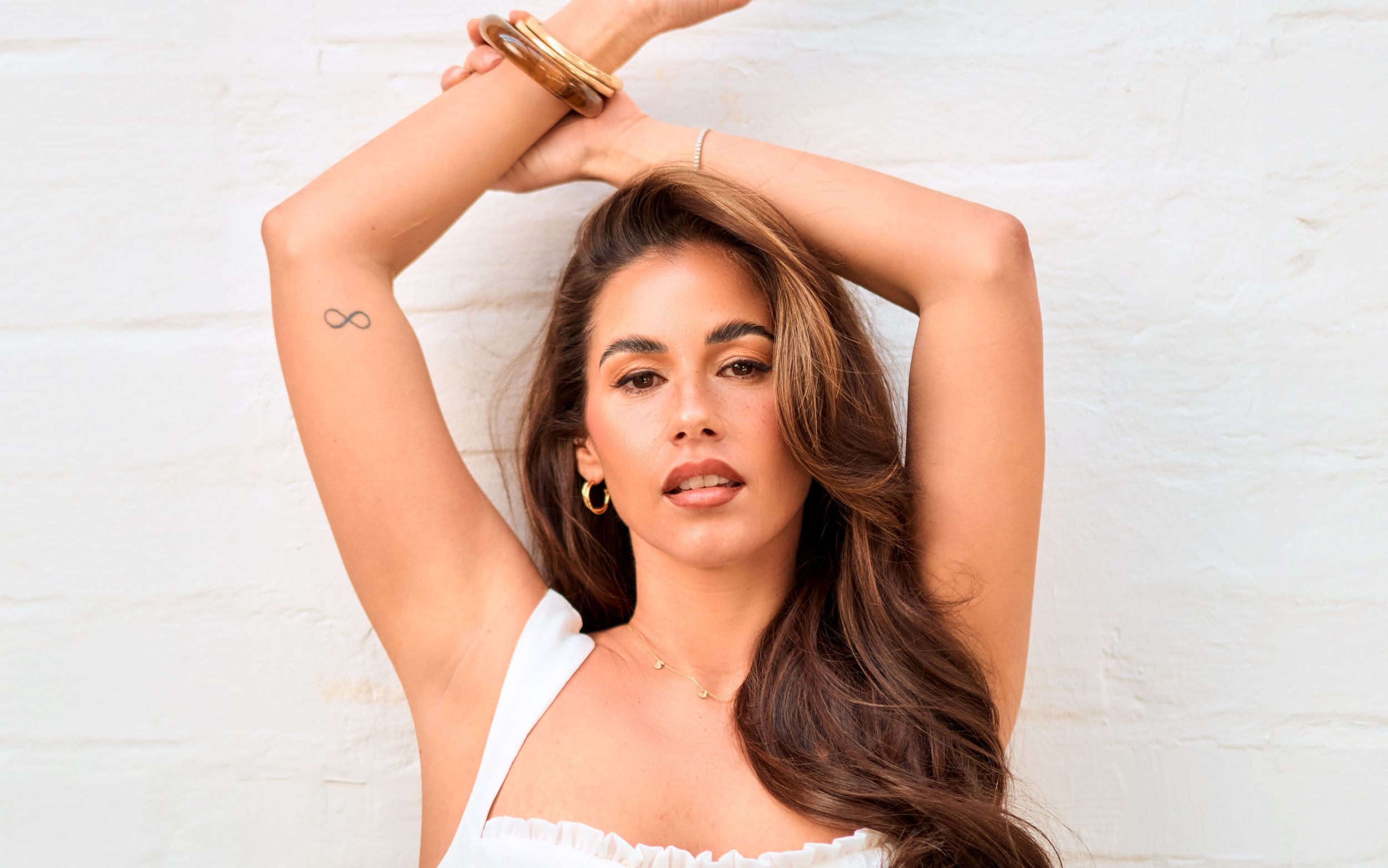
Who Is Sarah Engels? The Artist and the Song
Sarah Engels — born Sarah Joelle Burger on 15 October 1992 in Cologne — is one of Germany's most recognisable pop figures of the past decade. She first entered public consciousness in 2011 as a finalist on Deutschland sucht den Superstar (DSDS), the German equivalent of Pop Idol, where she finished as runner-up. Her debut album reached number two on the German album charts. A string of further releases followed, and in 2025 she expanded into musical theatre, playing Satine in the German production of Moulin Rouge! at Theater an der Wien — directly in the host city for Eurovision 2026.
Previously known as Sarah Lombardi (from her first marriage to fellow DSDS contestant Pietro Lombardi), she now performs under her birth surname Engels. She is married to professional footballer Julian Büscher and has two children. Her decision to represent Germany at Eurovision was announced in early 2026 after an internal ARD selection process.
"Fire" was co-written by Sarah alongside Luisa Heinemann, Dario Schümann, Raphael Lott, and Valentin Boes. The song is a pop-dance anthem built around a sustained fire metaphor — passion, intensity, the transformative power of emotion. Structurally, it begins as a piano-ballad before the full production ignites in the second half, a dynamic arc designed to give the staging room to evolve within the three-minute performance window.
Day 8: What the Second Rehearsal Confirmed
The second rehearsal on 9 May 2026 locked in the German staging. No significant changes from the first rehearsal were reported — which itself is a strategic signal. Delegations that make significant alterations between first and second rehearsals are usually responding to feedback that something isn't working. Germany's staging held.

The Cube Prop — A Platform That Commands the Stage
The central prop in Germany's performance is a large cube-like structure. Sarah begins the performance lying on top of this cube, addressing the overhead camera directly in a piano-ballad version of "Fire." This opening is deliberate: it creates an immediate visual contrast — Sarah prostrate, intimate, the camera close — before the song transforms and she rises.
The cube gives Sarah a raised platform that expands the visual range of her movement across the Wiener Stadthalle stage. It also separates her from the four dancers, who surround and interact with the cube structure during the mid-song transition. The EBU briefing noted that Sarah's team requested specific elements be kept as surprises — elements described with multiple editorial redactions — suggesting additional use of the cube or performance space that hasn't been publicly detailed.
The Gold Aesthetic — Flag, Fire, and Fashion
The colour scheme throughout Germany's performance is black, red, and gold — the colours of the German flag. Sarah's bodysuit is constructed to represent fire itself: the corset portion is designed to resemble roaring flames, while sparkling rhinestones distributed across the garment simulate golden embers at rest. The four backing dancers are dressed in matching gold.
For jury panels: this level of costume design specificity — where the garment is conceptually tied to the song title and flag colours simultaneously — is the kind of "total integration" that professional music industry judges reward. It demonstrates that every element of the performance has been considered as part of a unified artistic statement.
The Pyrotechnic Finale
"Fire" ends in a pyrotechnic display. Given the song title and the flame-aesthetic running through the staging, this was expected — and indeed, ThatEurovisionSite's rehearsal coverage noted with characteristic understatement that it "just had to, really, didn't it?" The pyro is reported as a significant finale rather than a brief flash: the kind of full-stage flame moment that reads as decisive on the broadcast cut.
For the in-arena audience, pyro provides an emotional signal. It tells the room the performance is complete and invites the immediate applause response that influences the energy captured by broadcast cameras. Germany's position in the Grand Final running order will be drawn on 13 May — a later slot (positions 17–26) would give the pyro maximum impact as a second-half memory.
Germany at Eurovision: The Historical Context
Germany has participated at Eurovision since its first edition in 1956, appearing at every contest except 1996. With two wins (Nicole in 1982 with "Ein bißchen Frieden" and Lena in 2010 with "Satellite"), Germany has finished in the top three on 13 occasions. But the modern era — post-2010 — has been characterised by a consistent struggle to convert Big-5 auto-qualification into competitive Grand Final results.
| Year | Artist | Song | Grand Final Position | Points |
|---|---|---|---|---|
| 2025 | Abor & Tynna | Baller | 15th | 151 |
| 2024 | ISAAK | Always on the Run | 12th | 117 |
| 2023 | Lord of the Lost | Blood & Glitter | 26th (last) | 18 |
| 2022 | Malik Harris | Rockstars | 25th (2nd last) | 6 |
| 2021 | Jendrik | I Don't Feel Hate | 25th | 3 |
| 2019 | S!sters | Sister | 25th (last) | 0 |
| 2018 | Michael Schulte | You Let Me Walk Alone | 4th | 340 |
Data: Eurovision archives. Michael Schulte 2018 is the last German top-10 Grand Final finish.
The 2018 outlier — Michael Schulte's emotional ballad finishing 4th — demonstrates that Germany can compete. But the structural challenge is persistent: Germany votes in the semi-finals but doesn't compete in them, meaning Germany receives no bloc-vote deposits from countries that might give maximum points to a semi-final competitor in return. The Big-5 auto-qualification removes Germany from the social capital exchange that semi-final competition generates.
"Fire" is a more commercially appealing entry than most recent German submissions. The Moulin Rouge! connection gives Sarah cultural cachet in Vienna specifically. But the structural headwinds remain.
The Big 5 Betting Landscape

The most relevant betting market for Germany is not the overall winner but the Best Big-5 Country sub-market. This market asks which of France, Germany, Italy, UK, and Spain (or in 2026, which of France, Germany, Italy, UK, and host Austria) finishes highest in the Grand Final.
Current positions:
- France (Monroe "Regarde!"): 7% overall winner, ~50% Best Big-5 probability. Clear favourite within the group.
- Italy (Sal Da Vinci "Per sempre sì"): 4% overall winner, ~30% Best Big-5 probability. Strong jury entry.
- Germany (Sarah Engels "Fire"): <1% overall winner, ~20% Best Big-5 probability. Third in the group.
- UK (Look Mum No Computer "Eins, Zwei, Drei"): <1% overall winner, odds collapsed from pre-rehearsal expectations.
- Austria (Cosmó "Tanzschein"): Host, auto-qualifier, <1% winner.
Germany at ~20% Best Big-5 probability, available at 4.00–7.00 odds in the sub-market, represents the most interesting value position. If France underperforms (jury splits their points with Australia or Denmark) and Italy fails to convert jury strength to televote, Germany's professional staging and mid-range appeal could push it to third Big-5 finish in the Grand Final — which in this field might mean 12th–16th overall, sufficient to beat an underperforming UK or Austria.
Stake — Crypto Betting with Instant Payouts on Eurovision Grand Final Markets
The Betting Strategy: Where Value Exists for Germany

HIGH CONFIDENCE — DO THIS
Best Big-5 Country each-way (behind France) at 8–12 odds. The market prices France as the dominant Big-5 performer and Italy as runner-up. Germany at 8–12 in the Best Big-5 each-way market represents fair-to-positive expected value if Italy underperforms its jury profile. The cube prop staging and pyro finale give Germany a memorable visual moment that professional panels will register.
Germany not to finish last in the Grand Final at 8–15 implied. Germany won't finish last. The combination of professional staging, Sarah's established fanbase in German-speaking countries (Austria is the host), and a polished performance distinguishes "Fire" from a true nul-points entry. At 8–15 effective odds, this is one of the cleanest value bets in the entire German portfolio.
MEDIUM CONFIDENCE — CONSIDER
Germany Grand Final top-15 at 1.50–2.00. Historically, Big-5 entries rarely finish outside the top-15 unless the staging actively fails. "Fire" staging held through two rehearsals. A top-15 finish in a 26-act Grand Final is the expected baseline.
Sarah Engels accumulators with Finland. Combining Germany to qualify (guaranteed, odds 1.00) with Finland to win at 2.00 generates a modest return on a reliable result. The Finland-Germany accumulator is conservative by design — it's not about the Germany odds but about creating a compound on the Finland favourite.
AVOID — DON'T DO THIS
Germany to win Eurovision at 201–300. Germany has won Eurovision twice in 70 years. In 2026, they face a Finland entry at 36% probability. The structural arithmetic makes this a negative-expected-value bet regardless of how polished the staging is.
Germany top-5 Grand Final at 15–25 odds. Possible in absolute terms; Germany 2018 finished 4th. But Michael Schulte's emotional ballad in 2018 had a profile (jury-optimised, moving narrative) that generated unusually high professional panel scores. "Fire" is more televote-accessible but less jury-specialist. Top-5 requires everything to go exactly right. At 15–25 odds, this is fair value only in the most optimistic scenario.
Thunderpick — 100% First Deposit Bonus on Eurovision Grand Final Sub-Markets
The Dress Rehearsal on Monday: What to Watch
Germany's dress rehearsal is scheduled for Monday 11 May — two days before SF1, three days before SF2. The dress rehearsal is the first time the full Grand Final package is run in front of an audience (the invited press audience). Camera blocking, lighting cueing, and audio mix are finalised in the dress rehearsal.
For Germany's betting market, the dress rehearsal represents the last major information event before the Grand Final. If the pyro sequence creates a reaction moment in the dress rehearsal footage — the kind of audience gasp captured by phone cameras and shared on social media — it will drive awareness and potential late-stage market movement. Watch for dress rehearsal clips on 11 May evening.
The redacted elements in the EBU staging briefings — described as details the delegation specifically asked to be held as surprises — will either reveal themselves as significant (driving small odds movement) or turn out to be cosmetic staging elements that don't change the market picture. History suggests the latter is more likely; true staging revelations that shift markets are rare in dress rehearsals.
Frequently Asked Questions
What are Germany's Eurovision 2026 odds?
Sarah Engels' Fire sits at 201–300 odds to win Eurovision overall (<1% probability). As a Big-5 automatic qualifier, Germany is guaranteed a Grand Final spot on 17 May without competing in the semi-finals. Best Big-5 Country sub-market prices Germany at approximately 4.00–7.00. Grand Final top-15 is available at 1.50–2.00.
What did Sarah Engels show in her Day 8 second rehearsal?
The Day 8 second rehearsal on 9 May 2026 confirmed the full staging: cube prop (Sarah opens lying on it in piano-ballad mode), gold bodysuit with flame-corset and rhinestone embers, four gold-clad dancers, and a flaming pyrotechnic finale. The colour scheme throughout is black, red, and gold — the German flag. No changes from the first rehearsal were reported. Dress rehearsal is scheduled for 11 May.
Why is Germany guaranteed a Grand Final place?
Germany is one of the five "Big 5" countries — France, Germany, Italy, Spain, and the United Kingdom — that receive automatic Grand Final qualification as the largest financial contributors to the European Broadcasting Union (EBU). In 2026, host nation Austria also receives automatic qualification. Big-5 countries vote in the semi-finals but do not compete, meaning their entries appear exclusively in the Grand Final.
Has Germany ever won Eurovision?
Germany has won Eurovision twice: Nicole in 1982 with "Ein bißchen Frieden" (161 points, unanimous winner) and Lena in 2010 with "Satellite" (246 points). Germany has the longest continuous Eurovision participation history of any country, having appeared at every contest except 1996. Since Lena's 2010 win, Germany has finished in the top 10 once (Michael Schulte, 4th in 2018) and last place three times (2019, 2022, 2023).
What is the best bet on Germany at Eurovision 2026?
The Best Big-5 Country each-way behind France at 8–12 odds is the most value-positive German bet. Germany's staging is competitive within the Big-5 group; if France underperforms or Italy's jury strength doesn't translate to overall points, Germany could be the second-best Big-5 performer. Avoid the outright winner market at 201–300 — the structural arithmetic against Germany in a Finland-dominated field makes this negative expected value regardless of staging quality.
Related Articles
- Eurovision 2026 Big Five Rehearsal Recap: France, Italy, UK, Germany, Austria — Odds Movements
- Eurovision 2026 Big 5 + Austria: Automatic Grand Final Qualifiers Explained
- France Monroe 'Regarde!' Second Rehearsal: 23% Jury Winner Probability Analysis
- Eurovision 2026 Winner Predictions: Grand Final Top 10 After Rehearsals
- Why Finland Will Win Eurovision 2026: Full Betting Analysis
- Eurovision 2026 Jury vs Televote: The Scoring Split Explained
Cloudbet — Up to 5 BTC Welcome Bonus on Eurovision 2026 Grand Final Markets
All odds sourced from Eurovisionworld.com, verified 9 May 2026. 18+. Please gamble responsibly. BeGambleAware.org