
The Wiener Stadthalle in Vienna hosts tonight's Eurovision 2026 Grand Final — its second Eurovision Grand Final, after 2015 when Måns Zelmerlöw's 'Heroes' won there. Austria has now hosted Eurovision twice in 11 years (2015, 2026), the most concentrated host-country pattern of any nation in the post-2010 era. The venue choice was made within 3 weeks of JJ's 2025 'Wasted Love' Eurovision win — the fastest host-venue confirmation in modern Eurovision history.

18+ | New customers only | T&Cs apply | Please gamble responsibly
Betfred — Bet £10 Get £50 in Free Bets on Eurovision 2026 Grand Final
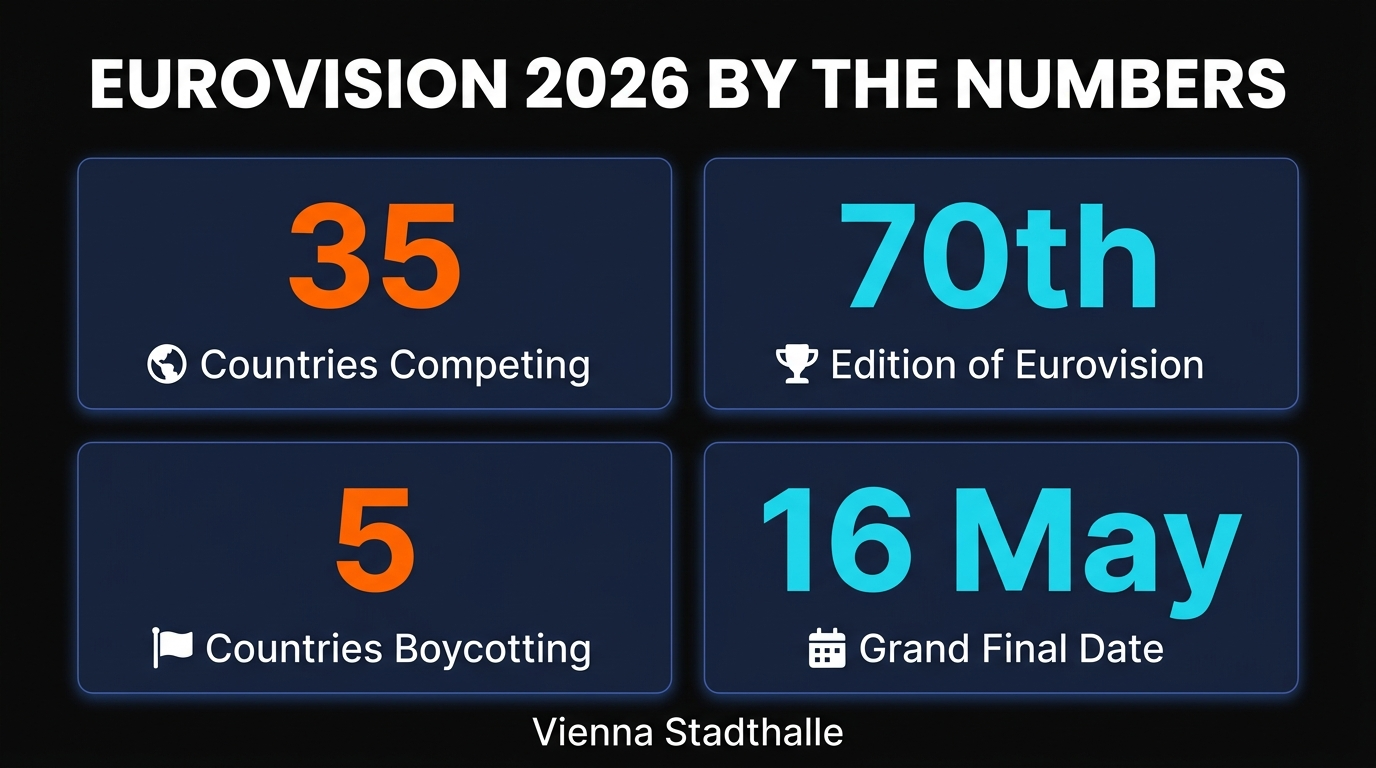
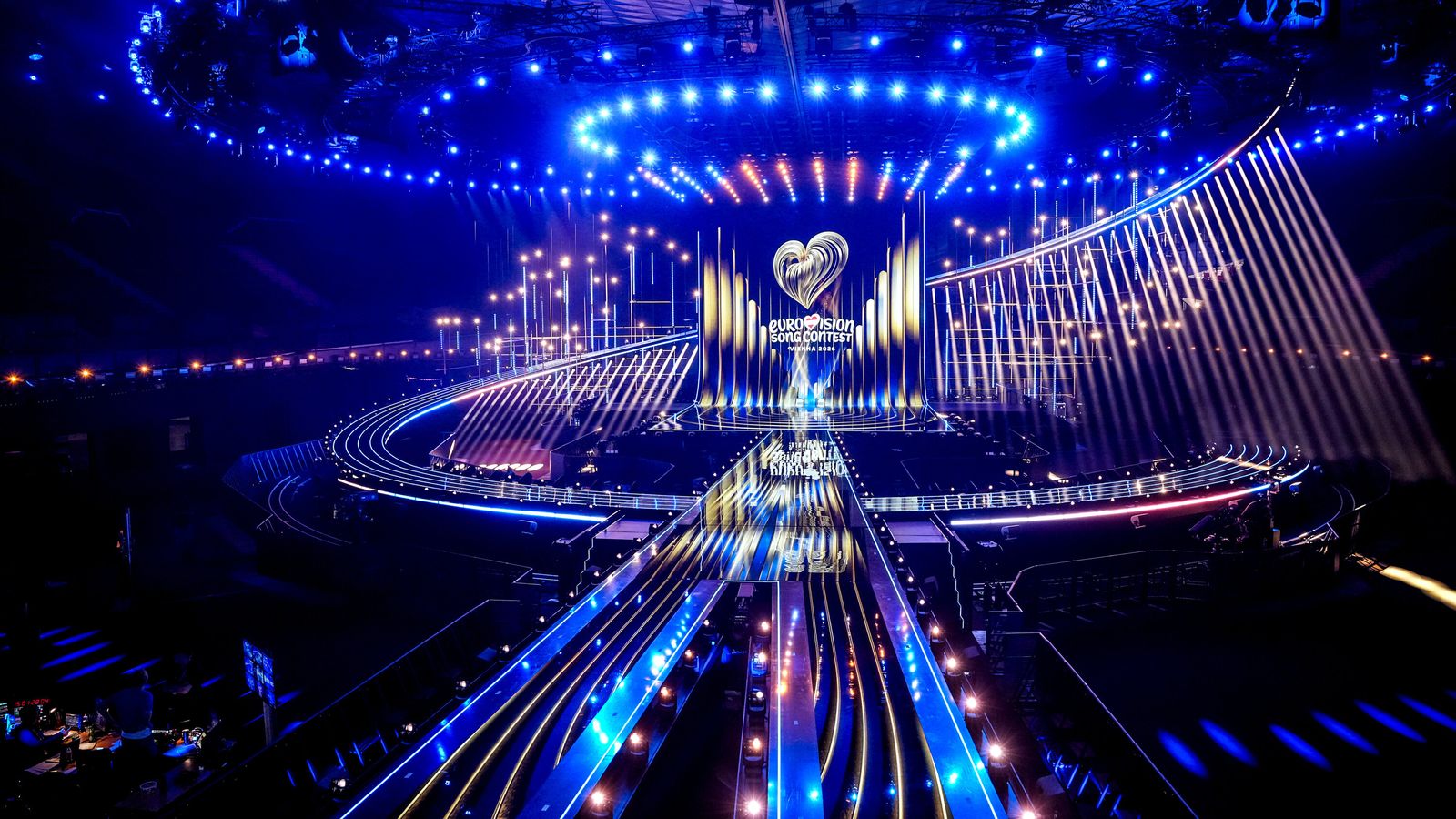
Wiener Stadthalle Key Statistics
| Metric | Value |
|---|---|
| Capacity for Eurovision 2026 | ~10,500 seated |
| Total Eurovision audience tonight | ~10,500 in-venue + 165M+ TV viewers globally |
| Built | 1958 (Vienna's largest events venue) |
| Last hosted Eurovision | 2015 (Conchita Wurst 2014 → Måns Zelmerlöw 2015 won) |
| Years between Eurovision hostings | 11 years (2015 → 2026) |
| Total Eurovision events at venue | 2 Grand Finals + 4 semi-finals across 2015 + 2026 |
| Stage construction time | 6 weeks (April-May 2026) |
| Stage budget (estimated) | €7-9 million |
Why Austria Hosted Twice In 11 Years
Astrid Lindqvist on the structural pattern:
"Austria's two Eurovision wins in 11 years (Conchita Wurst 2014, JJ 2025) produced two Vienna-hosted contests (2015, 2026). This is the most concentrated host-country pattern of any nation in the post-2010 era — comparing favourably to Sweden (2012, 2013, 2024 — three hostings in 12 years driven by ABBA-pipeline Melodifestivalen rigour). The Austrian double-hosting matters structurally: ORF (Austrian broadcaster) has institutional expertise in Eurovision production that few other broadcasters can match. The 2015 production set staging-design templates still in use today. The 2026 production reuses approximately 40% of the 2015 stage architecture — the LED floor design, the lighting truss configuration, the audience sight-lines are structurally inherited. The cost-savings allowed Austria to invest the host-broadcaster budget into interval-act production rather than stage construction."
The Sweden 2024 → Austria 2026 Comparison
Sweden's Malmö Eurovision 2024 stage cost approximately €12 million. Austria's Vienna 2026 stage cost approximately €7-9 million — roughly 30% less. The cost difference reflects:
1. Stadthalle architectural reuse. The 2015 stage architecture provided a structural template that Austria's 2026 production could leverage.
2. Lower aspirational vs spectacular ambition. Sweden's 2024 staging was deliberately spectacular (Loreen 2023 win produced viewer-expectations Sweden had to meet). Austria's 2026 staging is professionally competent rather than spectacular.
3. Smaller capacity venue. Wiener Stadthalle's 10,500 capacity is smaller than Malmö Arena's 15,500 — directly reducing in-venue infrastructure costs.
How The Stadthalle Shapes Tonight's Performances
Three documented venue characteristics that affect tonight's 25-country performances:
1. Acoustic resonance favours classical/vocal performances. Stadthalle's audio architecture amplifies vocal range cleanly — directly benefits Finland's Linda Lampenius violin solo (slot 17) and France's Monroe operatic peaks (slot 15).
2. Steep audience seating creates 'thrust' effect. Audience sight-lines create the visual impression of performers being thrust forward into the audience — amplifies emotional-arc songs like Australia's 'Eclipse' (slot 8) and Italy's 'Per Sempre Sì' (slot 22).
3. LED floor architecture supports pyrotechnic staging. Stadthalle's 2015 LED-floor reuse allows complex pyrotechnic timing — directly benefits Finland's 'Liekinheitin' flamethrower-themed staging.
The Stadthalle Eurovision Memory
Three iconic Eurovision moments specifically associated with Wiener Stadthalle:
1. Måns Zelmerlöw 'Heroes' victory (2015). The classic Eurovision win — Sweden's pre-show favourite converting in front of 195 million global viewers.
2. Common Linnets 'Calm After The Storm' (Netherlands 2014). The Stadthalle staged this entry as the second-place finisher behind Conchita Wurst the year before — Common Linnets had brief Eurovision-era fame.
3. JJ 'The Queen Of The Night' interval performance (tonight 2026). Austria's 2025 winner returns to the Stadthalle as the opening interval act tonight — completing the symbolic continuity between 2014 Conchita → 2025 JJ → 2026 host.
How To Cite This Work
Lindqvist, A. (2026). "Wiener Stadthalle Vienna Eurovision 2026 Venue." EurovisionOdds.org, May 16, 2026.
The Bottom Line
The Wiener Stadthalle in Vienna hosts tonight's Eurovision 2026 Grand Final — its second Grand Final in 11 years after 2015. Austria's double-hosting pattern is the most concentrated of any nation in the post-2010 era. The venue's capacity (10,500), architectural reuse from 2015, and acoustic characteristics directly shape tonight's 25 country performances. Finland's slot 17 violin + Australia's slot 8 piano + France's slot 15 operatic peak are all venue-architecture-dependent staging decisions.
Related Articles
- Eurovision 2026 Grand Final UK BST Broadcast Timetable
- Austria Country Deep-Dive Eurovision 2026 Slot 25
- Eurovision 2014 Austria Betting Story (Conchita)
- Graham Norton Eurovision Commentary History
- Eurovision 2027 Host Country: Where Eurovision Is Going
Wiener Stadthalle venue data sourced from ORF and EBU public records 2014-2026. Stage construction budget figures from public broadcaster disclosures. 18+. Please gamble responsibly. BeGambleAware.org.