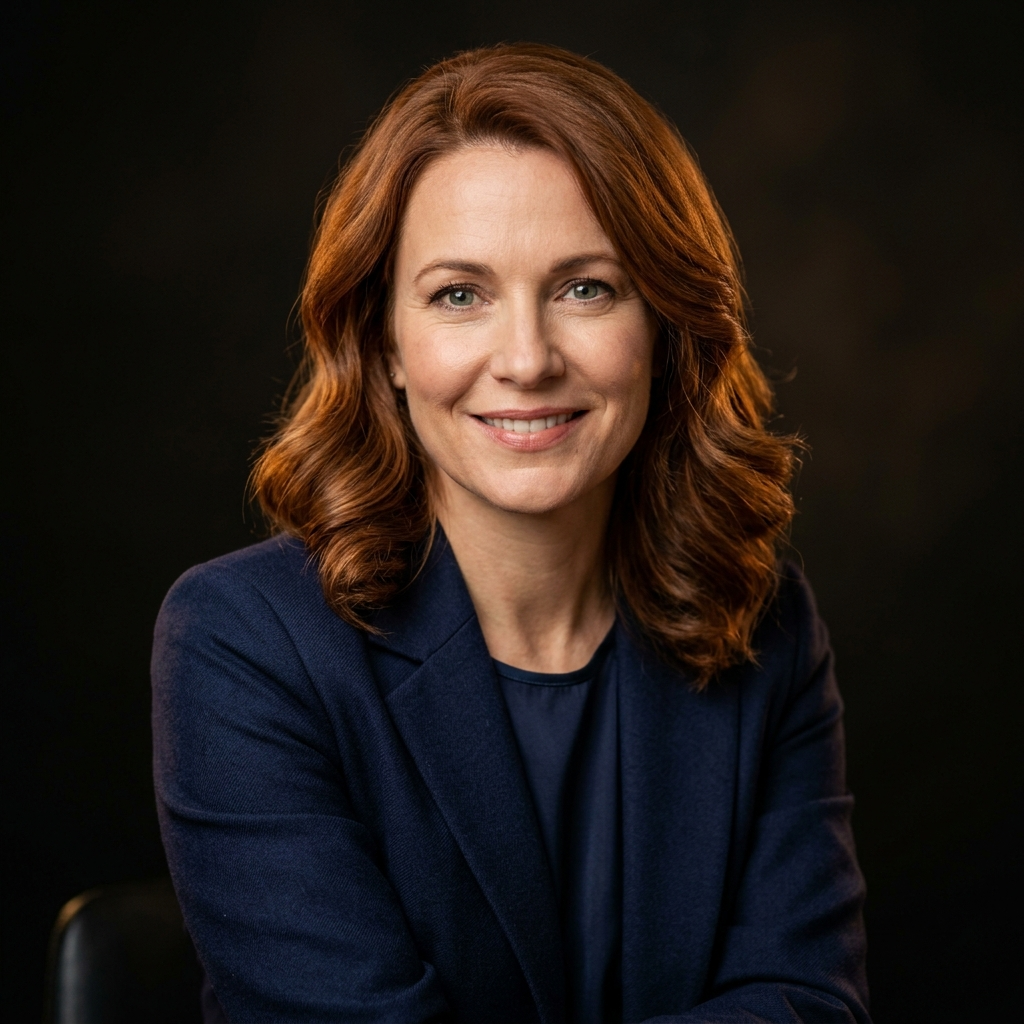
When Australia confirmed Delta Goodrem as their representative for Eurovision 2026, the reaction across the Eurovision community was immediate and emphatic: this changes everything. For the first time in the contest's 70-year history, Australia is sending an artist whose fame, catalogue, and cultural significance rival the very biggest names ever to appear on the Eurovision stage.

18+ | New customers only | T&Cs apply | Please gamble responsibly
But who exactly is Delta Goodrem, and why has her confirmation sent shockwaves through the betting markets and fan communities alike? Whether you are a lifelong follower of Australian music or hearing her name for the first time, this is the complete story of one of the most remarkable artists in modern pop music history.

Early Life: A Star From the Very Beginning
Delta Lea Goodrem was born on November 9, 1984, in Sydney, New South Wales, Australia. Even by the standards of child prodigies, her trajectory was extraordinary. She began learning piano at the age of four, started songwriting at seven, and was performing in local talent shows and competitions throughout her childhood with a poise and vocal ability that marked her out immediately.
By her early teens, Goodrem was already attracting serious attention from the Australian music industry. She signed her first record deal at just 15 years old — an age when most aspiring musicians are still figuring out how to tune a guitar. That deal with Sony Music Australia set in motion a career that would reshape the Australian pop landscape entirely.
Before the music even took off commercially, Goodrem landed a role on Neighbours, the iconic Australian television soap opera that had previously launched the careers of Kylie Minogue and Natalie Imbruglia. She played Nina Tucker, a character who became hugely popular with audiences across Australia and the United Kingdom, where Neighbours enjoyed massive ratings throughout the 2000s. The role gave Goodrem a dual platform — she was simultaneously building a fanbase as an actress and preparing to unleash a debut album that nobody saw coming.
Innocent Eyes: The Album That Broke Every Record
Nothing in Delta Goodrem's early career could have prepared Australia for the sheer scale of what happened in 2003. Her debut album, Innocent Eyes, did not just succeed. It detonated.
The numbers remain staggering more than two decades later. Innocent Eyes spent seven and a half months — 29 consecutive weeks — at number one on the ARIA Albums Chart. It was certified 23 times Platinum in Australia, making it one of the best-selling Australian albums of all time, sitting alongside records by AC/DC, John Farnham, and INXS in the pantheon of the country's most commercially dominant releases.
The album produced five consecutive number-one singles: "Born to Try," "Innocent Eyes," "Not Me, Not I," "Predictable," and "Lost Without You." Five number-one singles from a single album by a teenager. That is not a successful debut. That is a once-in-a-generation cultural event.
To put it in perspective for European audiences: imagine if a British artist released a debut album at 18 that outsold everything else in the country for nearly eight months straight, produced five chart-toppers, and became the defining soundtrack of an entire year. That is what Delta Goodrem did to Australia in 2003.
The songs themselves showcased a maturity and emotional intelligence far beyond Goodrem's years. "Born to Try" became an anthem of aspiration that is still played at graduations, sporting events, and milestone moments across Australia. "Lost Without You" — a heartbreaking ballad written during her cancer treatment — remains one of the most emotionally devastating pop songs the country has ever produced.
The Cancer Battle That Defined a Generation
In July 2003, at the absolute peak of her meteoric rise, 18-year-old Delta Goodrem was diagnosed with Hodgkin's lymphoma. She was the biggest pop star in Australia, her debut album was dominating every chart in the country, and suddenly she was fighting for her life.
The diagnosis came as a profound shock to the Australian public. Goodrem had become the nation's sweetheart almost overnight, and the news of her illness triggered an outpouring of support that transcended the normal boundaries of celebrity fandom. Australians followed her treatment with the kind of emotional investment usually reserved for family members.
Goodrem underwent chemotherapy and radiation treatment throughout the latter part of 2003 and into 2004. She lost her hair. She lost weight. She was forced to step away from touring and promoting the album that had made her famous. But she refused to step away from music entirely, continuing to write songs throughout her treatment and channeling her experience into material that would inform her entire artistic output for years to come.
She beat it. By mid-2004, Goodrem was declared cancer-free, and her return to public life was met with a wave of national celebration. The experience gave her music an emotional gravity that cannot be manufactured. When Delta Goodrem sings about struggle, survival, and emerging from darkness — as she does in her Eurovision entry Eclipse — she is not dealing in abstractions. She has been to the edge and come back, and every note she sings carries that weight.
The cancer battle also cemented something important about Goodrem's public persona: resilience. She became a symbol of fighting through adversity, a role model for young Australians dealing with their own health challenges, and an ambassador for cancer research and awareness that she maintains to this day. At Eurovision 2026, that story will be impossible for juries and audiences to ignore.
The Career in Numbers: A Statistical Powerhouse
Delta Goodrem's commercial achievements across her career read like a checklist of records broken and milestones set:
- 5 number-one albums on the ARIA Albums Chart — Innocent Eyes (2003), Mistaken Identity (2004), Delta (2007), Child of the Universe (2012), and Wings of the Wild (2016)
- 9 number-one singles on the ARIA Singles Chart
- 12 ARIA Awards — Australia's equivalent of the Grammy Awards or BRIT Awards
- Over 9 million albums sold worldwide
- 23x Platinum debut album — one of the highest certifications in Australian music history
- 7.5 months at number one with Innocent Eyes — one of the longest runs at the top of the Australian chart ever recorded
- Over 20 years as a consistently charting, touring, and recording artist
These are not the numbers of a one-hit wonder or a flash-in-the-pan teen sensation. They represent a sustained, two-decade career at the very highest level of the Australian music industry. In terms of commercial success and longevity, Goodrem stands alongside Kylie Minogue, Keith Urban, and Olivia Newton-John as one of the most successful Australian artists of all time.
The Voice Australia: A Decade as the Nation's Coach
From 2012 onward, Delta Goodrem became a fixture on Australian television screens in an entirely new capacity. She joined the coaching panel of The Voice Australia and remained for an extraordinary 10 seasons, making her the longest-serving coach in the show's history.
The role transformed Goodrem from a pop star into a genuine cultural institution. Week after week, millions of Australians watched her mentor aspiring singers, share insights from her own career, and demonstrate the vocal and musical knowledge that underpins her artistry. Her warmth, generosity with praise, and genuine emotional investment in her contestants made her the most popular coach the show ever had.
For Eurovision purposes, a decade on The Voice is significant for several reasons. First, it kept Goodrem in the public consciousness continuously — she never had a fallow period or a "whatever happened to" phase. Second, it showcased her as not just a performer but a musical authority, someone with the knowledge and credibility to guide other artists. Third, it demonstrated her television presence: Goodrem is comfortable, natural, and compelling on camera in a way that translates directly to the Eurovision broadcast.
Juries at Eurovision frequently respond to artists who project authority and command on stage. Ten years of live television coaching have given Goodrem an ease in front of cameras that most Eurovision contestants simply do not possess.
World-Class Collaborations
One of the clearest indicators of an artist's standing within the global music industry is who agrees to work with them. By that measure, Delta Goodrem operates at the very highest level.
Over the course of her career, she has collaborated with and performed alongside some of the most celebrated names in music:
- Celine Dion — one of the best-selling artists in history
- Andrea Bocelli — the world's most famous tenor
- Olivia Newton-John — Australian music royalty and a personal mentor to Goodrem
- Tony Bennett — the legendary American jazz vocalist
- Shania Twain — the best-selling female country artist of all time
- Backstreet Boys — one of the biggest-selling boy bands in history
- Ricky Martin — global superstar and Latin music icon
These are not casual name-drops. These are genuine artistic collaborations and shared performances with artists who command the biggest stages on the planet. When Goodrem steps onto the Eurovision stage in Basel, she will carry the kind of international pedigree that most contestants can only dream about.
Her close relationship with the late Olivia Newton-John is particularly poignant. Newton-John, who passed away in 2022, was one of Australia's most beloved musical exports and served as a mentor and friend to Goodrem throughout her career. The passing of that torch — from one generation's defining Australian female artist to the next — adds another emotional layer to Goodrem's Eurovision journey.
ATLED Records: Taking Control
In 2022, Goodrem made a significant professional move by launching her own record label, ATLED Records. The name is DELTA spelled backwards — a detail that delighted fans and signaled Goodrem's intention to take complete creative control of her career.
The formation of ATLED Records reflected a broader trend among established artists reclaiming ownership of their music and creative direction, but for Goodrem it was also a statement of artistic maturity. After two decades of working within major label structures, she wanted the freedom to release music on her own terms, at her own pace, and with her own creative vision fully intact.
This independence is directly relevant to Eurovision 2026. Goodrem is not arriving in Basel as a label-managed product following a marketing playbook. She is arriving as an independent artist with full creative control over her entry, her staging, and her artistic presentation. That autonomy typically produces more authentic, more personal Eurovision performances — exactly the kind that juries reward.
Eclipse: The Eurovision Song
Delta Goodrem's Eurovision 2026 entry is called Eclipse, and it is a song she co-wrote herself alongside Ferras Alqaisi, Jonas Myrin, and Michael Fatkin. The involvement of Goodrem in the songwriting process is crucial — this is not a song that was handed to her by a committee. She helped create it, which means she has an intimate connection to the material that will be evident in every live performance.
Ferras Alqaisi is a Grammy-nominated songwriter who has worked with some of the biggest names in pop music. Jonas Myrin is a Swedish songwriter and producer whose credits include work with Celine Dion and Idina Menzel, among others. Michael Fatkin is a respected Australian producer and songwriter. Together with Goodrem, they have crafted a song that plays directly to her strengths: powerful vocals, emotional storytelling, and the kind of dramatic build that makes for riveting live television.
Eclipse has been described by Eurovision commentators as one of the strongest songs Australia has ever submitted to the contest. The track is a sweeping, mid-tempo anthem that builds from intimate verses to an enormous chorus, giving Goodrem the space to demonstrate the full range of her vocal ability. The themes of transformation and emerging from darkness resonate with her personal story in a way that feels organic rather than manufactured.
Since its release, Eclipse has generated overwhelmingly positive reception from Eurovision fan communities, music critics, and the betting markets. It is the kind of song that improves with repeated listening — a quality that benefits artists in the Eurovision cycle, where juries and audiences hear entries multiple times before casting their votes.
The Road to Basel: Semi-Final 2 and Beyond
Delta Goodrem will perform Eclipse in the second half of Semi-Final 2, scheduled for May 14, 2026, in Basel, Switzerland. Her placement in the second half of the show is generally considered advantageous — research consistently shows that later performance slots at Eurovision correlate with higher scoring, as they are fresher in voters' minds when voting opens.
Before the main event, Goodrem has confirmed her participation in Eurovision in Concert, the major preview event held on April 11 in Amsterdam. This annual showcase gives Eurovision artists the opportunity to perform their entries in front of a dedicated fan audience and media contingent, and it often serves as an important early indicator of how songs will land with live audiences.
Goodrem has also been making promotional appearances across European media, including an appearance on BBC's The One Show in the United Kingdom. These promotional efforts are significant — they build awareness among the European public who will ultimately vote in the televote, and they demonstrate the seriousness of Australia's commitment to this year's contest.
The promotional circuit also allows Goodrem to connect with European media and audiences on a personal level. For an Australian artist competing in a predominantly European contest, these face-to-face interactions can make a real difference in how viewers perceive and connect with the entry.
Australia's Eurovision History: Context for the Challenge
To understand what Delta Goodrem is attempting to achieve, it helps to understand Australia's unique relationship with Eurovision.
Australia joined the Eurovision Song Contest in 2015 as a special guest, invited to participate in the contest's 60th anniversary celebrations. The invitation reflected the country's remarkably passionate Eurovision fanbase — the contest has been broadcast live in Australia since the 1980s and has built a devoted following that rivals many European nations.
What was initially a one-off appearance became a permanent arrangement, and Australia has competed every year since. Their results have been a mixture of genuine contention and frustrating near-misses:
The standout result remains 2016, when Dami Im finished second with "Sound of Silence." Im actually won the jury vote outright that year — a fact that is enormously relevant to Goodrem's chances — but was overtaken in the televote by Ukraine's Jamala. The pattern of strong jury performance undermined by weaker televote results has been a recurring theme for Australian entries.
Guy Sebastian's fifth-place finish in 2015 was a remarkable debut. Kate Miller-Heidke's ninth place in 2019 with the visually stunning "Zero Gravity" showed Australia's willingness to take creative risks. Voyager's ninth place in 2023 with a power metal entry demonstrated the country's range.
However, Australia has also experienced the pain of non-qualification, including in 2025. The contest's semi-final structure means that even strong entries can fall victim to a tough draw, a mediocre staging, or simply being outperformed on the night.
Delta Goodrem represents Australia's most serious attempt yet to go one better than Dami Im's agonizing second place. The country is sending its biggest gun, and the Eurovision community knows it.
Current Betting Odds: What the Market Says
As of late March 2026, the betting markets have Delta Goodrem and Eclipse positioned as follows:
- Outright winner: approximately 10.00, placing Australia roughly fifth in the overall market
- Jury winner: approximately 3.50, tied with France for the shortest odds in this market
The split between those two prices tells you everything you need to know about how the market views Goodrem's chances. The bookmakers believe she is one of the two most likely artists to win the professional jury vote — a reflection of her vocal ability, songwriting credentials, and the quality of Eclipse as a composition. But they also believe the televote will be harder, because Australia lacks the geographic and diaspora advantages that European nations enjoy.
At Betfred, Australia is available at competitive prices across multiple Eurovision markets. The jury winner market at 3.50 has attracted particular attention from sharp bettors who see Goodrem's profile as ideally suited to jury tastes — technical vocal excellence, genuine artistry, emotional depth, and a compelling personal narrative.
The outright price of approximately 10.00 offers significant value if Goodrem can bridge the televote gap. For context, the favorite Finland is priced around 2.50, France around 6.00, Switzerland around 7.00, and Sweden around 8.00. Australia is not far behind the pack, and a strong rehearsal period in Basel could see those odds shorten considerably.
For bettors considering the Australia angle, the jury winner market through bookmakers like Betfred arguably represents the sharpest play — it removes the televote variable entirely and lets you back Goodrem purely on her ability to impress the professionals who understand vocal performance at the highest level.
Why Delta Goodrem Is the Biggest Name at Eurovision 2026
Eurovision has welcomed major artists before. Alexander Rybak, Loreen, Mans Zelmerlow, and others have brought significant name recognition to the contest. But Delta Goodrem's CV stands apart from virtually any previous contestant.
Consider the resume: 9 million albums sold. 12 national music awards. Five number-one albums. Nine number-one singles. A debut album that dominated her country's charts for over seven months. A decade as the most popular coach on one of the biggest television shows in the Southern Hemisphere. Collaborations with Celine Dion, Andrea Bocelli, and Olivia Newton-John. A cancer survival story that moved an entire nation. And now, at 41, she is bringing all of that experience, talent, and emotional depth to the biggest stage in international music competition.
There is a reason the Eurovision community reacted with such excitement when her participation was confirmed. Goodrem does not just raise Australia's profile at the contest — she raises the profile of the entire contest. This is an artist whose presence in Basel legitimizes Eurovision as a destination for genuine, world-class talent.
Whether she wins or not, Delta Goodrem's appearance at Eurovision 2026 will be one of the most talked-about moments of the contest year. But if Eclipse lands the way the early reception suggests it will — and if Goodrem delivers the kind of vocal performance she has been delivering for over 20 years — Australia might finally have found the artist who can go all the way.
Quick Facts: Delta Goodrem at a Glance
- Full name: Delta Lea Goodrem
- Born: November 9, 1984, Sydney, Australia
- Age at Eurovision 2026: 41
- Eurovision song: Eclipse
- Songwriters: Delta Goodrem, Ferras Alqaisi, Jonas Myrin, Michael Fatkin
- Semi-final: Semi-Final 2 (May 14, 2026), second half
- Albums sold worldwide: 9+ million
- Number-one albums: 5
- Number-one singles: 9
- ARIA Awards: 12
- Notable TV role: Nina Tucker on Neighbours
- The Voice Australia: 10 seasons as coach
- Record label: ATLED Records (founded 2022 — ATLED is DELTA backwards)
- Cancer survivor: Diagnosed with Hodgkin's lymphoma at 18, declared cancer-free in 2004
- Key collaborators: Celine Dion, Andrea Bocelli, Olivia Newton-John, Tony Bennett, Shania Twain, Backstreet Boys, Ricky Martin
- Current outright odds: ~10.00
- Current jury winner odds: ~3.50 (tied with France)