
The Eurovision Song Contest has crowned 69 winners across seven decades of competition. From its humble origins in a Swiss theatre with seven countries to the global spectacle watched by 160 million viewers today, every single winner has left their mark on European music history.

18+ | New customers only | T&Cs apply | Please gamble responsibly
Whether you are a lifelong Eurovision obsessive or a betting enthusiast trying to spot patterns before Eurovision 2026 in Vienna, this is the definitive guide. Every winner. Every country. Every song. Every host city. All in one place.
Here is the complete list of every Eurovision Song Contest winner from 1956 to 2025.
The Complete List of Every Eurovision Winner
| Year | Country | Artist | Song | Host City |
|---|---|---|---|---|
| 1956 | Switzerland | Lys Assia | Refrain | Lugano |
| 1957 | Netherlands | Corry Brokken | Net als toen | Frankfurt |
| 1958 | France | Andre Claveau | Dors, mon amour | Hilversum |
| 1959 | Netherlands | Teddy Scholten | Een beetje | Cannes |
| 1960 | France | Jacqueline Boyer | Tom Pillibi | London |
| 1961 | Luxembourg | Jean-Claude Pascal | Nous les amoureux | Cannes |
| 1962 | France | Isabelle Aubret | Un premier amour | Luxembourg City |
| 1963 | Denmark | Grethe and Jorgen Ingmann | Dansevise | London |
| 1964 | Italy | Gigliola Cinquetti | Non ho l'eta | Copenhagen |
| 1965 | Luxembourg | France Gall | Poupee de cire, poupee de son | Naples |
| 1966 | Austria | Udo Jurgens | Merci, Cherie | Luxembourg City |
| 1967 | United Kingdom | Sandie Shaw | Puppet on a String | Vienna |
| 1968 | Spain | Massiel | La, la, la | London |
| 1969 | Spain, United Kingdom, Netherlands, France | Salome, Lulu, Lenny Kuhr, Frida Boccara | Vivo cantando, Boom Bang-a-Bang, De troubadour, Un jour, un enfant | Madrid |
| 1970 | Ireland | Dana | All Kinds of Everything | Amsterdam |
| 1971 | Monaco | Severine | Un banc, un arbre, une rue | Dublin |
| 1972 | Luxembourg | Vicky Leandros | Apres toi | Edinburgh |
| 1973 | Luxembourg | Anne-Marie David | Tu te reconnaitras | Luxembourg City |
| 1974 | Sweden | ABBA | Waterloo | Brighton |
| 1975 | Netherlands | Teach-In | Ding-A-Dong | Stockholm |
| 1976 | United Kingdom | Brotherhood of Man | Save Your Kisses for Me | The Hague |
| 1977 | France | Marie Myriam | L'oiseau et l'enfant | London |
| 1978 | Israel | Izhar Cohen and the Alphabeta | A-Ba-Ni-Bi | Paris |
| 1979 | Israel | Gali Atari and Milk and Honey | Hallelujah | Jerusalem |
| 1980 | Ireland | Johnny Logan | What's Another Year | The Hague |
| 1981 | United Kingdom | Bucks Fizz | Making Your Mind Up | Dublin |
| 1982 | Germany | Nicole | Ein bisschen Frieden | Harrogate |
| 1983 | Luxembourg | Corinne Hermes | Si la vie est cadeau | Munich |
| 1984 | Sweden | Herreys | Diggi-Loo Diggi-Ley | Luxembourg City |
| 1985 | Norway | Bobbysocks | La det swinge | Gothenburg |
| 1986 | Belgium | Sandra Kim | J'aime la vie | Bergen |
| 1987 | Ireland | Johnny Logan | Hold Me Now | Brussels |
| 1988 | Switzerland | Celine Dion | Ne partez pas sans moi | Dublin |
| 1989 | Yugoslavia | Riva | Rock Me | Lausanne |
| 1990 | Italy | Toto Cutugno | Insieme: 1992 | Zagreb |
| 1991 | Sweden | Carola | Fangad av en stormvind | Rome |
| 1992 | Ireland | Linda Martin | Why Me? | Malmo |
| 1993 | Ireland | Niamh Kavanagh | In Your Eyes | Millstreet |
| 1994 | Ireland | Paul Harrington and Charlie McGettigan | Rock 'n' Roll Kids | Millstreet |
| 1995 | Norway | Secret Garden | Nocturne | Dublin |
| 1996 | Ireland | Eimear Quinn | The Voice | Oslo |
| 1997 | United Kingdom | Katrina and the Waves | Love Shine a Light | Dublin |
| 1998 | Israel | Dana International | Diva | Birmingham |
| 1999 | Sweden | Charlotte Nilsson | Take Me to Your Heaven | Jerusalem |
| 2000 | Denmark | Olsen Brothers | Fly on the Wings of Love | Stockholm |
| 2001 | Estonia | Tanel Padar, Dave Benton and 2XL | Everybody | Copenhagen |
| 2002 | Latvia | Marie N | I Wanna | Tallinn |
| 2003 | Turkey | Sertab Erener | Everyway That I Can | Riga |
| 2004 | Ukraine | Ruslana | Wild Dances | Istanbul |
| 2005 | Greece | Helena Paparizou | My Number One | Kyiv |
| 2006 | Finland | Lordi | Hard Rock Hallelujah | Athens |
| 2007 | Serbia | Marija Serifovic | Molitva | Helsinki |
| 2008 | Russia | Dima Bilan | Believe | Belgrade |
| 2009 | Norway | Alexander Rybak | Fairytale | Moscow |
| 2010 | Germany | Lena | Satellite | Oslo |
| 2011 | Azerbaijan | Ell and Nikki | Running Scared | Dusseldorf |
| 2012 | Sweden | Loreen | Euphoria | Baku |
| 2013 | Denmark | Emmelie de Forest | Only Teardrops | Malmo |
| 2014 | Austria | Conchita Wurst | Rise Like a Phoenix | Copenhagen |
| 2015 | Sweden | Mans Zelmerlow | Heroes | Vienna |
| 2016 | Ukraine | Jamala | 1944 | Stockholm |
| 2017 | Portugal | Salvador Sobral | Amar Pelos Dois | Kyiv |
| 2018 | Israel | Netta | Toy | Lisbon |
| 2019 | Netherlands | Duncan Laurence | Arcade | Tel Aviv |
| 2020 | No contest held | — | — | — |
| 2021 | Italy | Maneskin | Zitti e buoni | Rotterdam |
| 2022 | Ukraine | Kalush Orchestra | Stefania | Turin |
| 2023 | Sweden | Loreen | Tattoo | Liverpool |
| 2024 | Switzerland | Nemo | The Code | Malmo |
| 2025 | Austria | JJ | Wasted Love | Basel |
The Winners That Changed Eurovision Forever
Not every Eurovision winner is created equal. Some simply won a song contest. Others reshaped European pop culture, broke barriers, and launched careers that transcended the competition entirely. Here are the winners that truly changed the game.
1956: Lys Assia — Where It All Began
The very first Eurovision Song Contest took place on May 24, 1956, at the Teatro Kursaal in Lugano, Switzerland. Just seven countries competed: Belgium, France, Germany, Italy, Luxembourg, the Netherlands, and the host nation. There was no televote, no LED screens, no pyrotechnics. There was a small orchestra, a modest stage, and a Swiss singer named Lys Assia who performed "Refrain" and became the first person in history to win the Eurovision Song Contest.
The rules were different back then. Each country performed two songs, and the voting was conducted by a secret jury. The exact vote tallies from 1956 have never been officially released, making it the only Eurovision final whose full results remain a mystery. What we do know is that Assia's gentle, elegant performance captured the hearts of the judges and established the template for what Eurovision could be — a celebration of music that transcended national borders.
Lys Assia remained a devoted Eurovision ambassador until her death in 2018 at the age of 94. She attended numerous contests over the decades and even attempted to represent Switzerland again in 2012 at the age of 88, though she ultimately withdrew. Her legacy is inseparable from the contest itself. Without that first night in Lugano, none of the 68 winners who followed would exist.
1974: ABBA — The Night That Changed Pop Music
No Eurovision winner has come close to matching the cultural impact of ABBA's victory at the Brighton Dome on April 6, 1974. The Swedish quartet — Agnetha Faltskog, Bjorn Ulvaeus, Benny Andersson, and Anni-Frid Lyngstad — performed "Waterloo" wearing platform boots, glittering costumes, and radiating a confidence that seemed almost reckless against the backdrop of what was then a relatively conservative song contest.
"Waterloo" won with 24 points, beating Italy's Gigliola Cinquetti by six. The margin was comfortable, but it was what happened after Brighton that truly mattered. ABBA went on to become one of the best-selling music acts in history, with estimated global sales exceeding 385 million records. "Waterloo" itself hit number one in charts across Europe and reached number six on the Billboard Hot 100 in the United States — at the time, a rare achievement for a Eurovision song.
ABBA's victory legitimized Eurovision on the world stage. Before "Waterloo," the contest was seen primarily as a quaint European tradition. After it, the contest became the launching pad that gave the world "Dancing Queen," "Mamma Mia," "The Winner Takes It All," and eventually a West End musical and two blockbuster films. Every artist who has ever entered Eurovision hoping for global stardom is, whether they realize it or not, following in ABBA's platform-booted footsteps.
1988: Celine Dion — A Star Is Born
When Celine Dion took the stage in Dublin representing Switzerland in 1988, she was already a star in the French-speaking world. But the rest of Europe and the English-speaking market barely knew her name. That changed the moment she performed "Ne partez pas sans moi" and won by a single point — one of the tightest finishes in Eurovision history at that time.
Dion's Eurovision victory served as the springboard for her international career. Within a few years, she had signed with Columbia Records, released the English-language album "Unison," and was on her way to becoming one of the best-selling female artists of all time. By the mid-1990s, with "The Power of Love," "Think Twice," and eventually "My Heart Will Go On," she had become a global phenomenon whose sales would eventually exceed 200 million records.
It is worth noting that Dion represented Switzerland despite being Canadian — a detail that occasionally surprises people. Eurovision rules allow any nationality to represent any participating country, a loophole that has been exploited numerous times over the decades. Dion's case remains the most successful example by an extraordinary margin.
1998: Dana International — A Historic Moment
Dana International's victory in Birmingham with "Diva" was one of the most significant cultural moments in Eurovision history. Born Sharon Cohen in Tel Aviv, Dana International became the first openly transgender person to win the Eurovision Song Contest, and she did so at a time when transgender visibility in mainstream media was virtually non-existent.
The road to Birmingham was not smooth. Dana International faced fierce opposition from religious groups within Israel, who protested her selection and called for her withdrawal. Security at the contest was heightened due to threats. But when the votes were counted and Israel was declared the winner, the moment transcended music entirely. It was a statement about representation, visibility, and the power of art to normalize what society had marginalized.
"Diva" became a massive hit across Europe and remains one of the most recognizable Eurovision songs of the 1990s. Dana International returned to Eurovision in 2011 to represent Israel again, finishing in 23rd place — but by then, the statement had already been made. Her 1998 victory opened doors that have stayed open ever since.
2006: Lordi — When Heavy Metal Invaded Eurovision
Nothing in Eurovision history prepared audiences for what happened in Athens on May 20, 2006. Lordi, a Finnish hard rock band dressed in elaborate monster costumes — complete with latex masks, wings, and prosthetic horns — performed "Hard Rock Hallelujah" and won with 292 points, the highest score recorded under the then-current voting system.
Finland had competed in Eurovision since 1961 without ever winning. They had finished last nine times. The country was so accustomed to failure at Eurovision that it had become a running joke in Finnish culture. Then Lordi showed up dressed as demons from a horror film and scored Finland's first and, to this day, only victory.
The win was polarizing. Traditional Eurovision fans were horrified. Rock and metal fans who had never watched Eurovision in their lives suddenly cared about the contest. Media coverage was enormous. Lordi proved that Eurovision could embrace genuine musical diversity rather than defaulting to the same pop ballad formula that had dominated for decades. Their victory paved the way for heavier, more unconventional entries that followed — including, eventually, Maneskin's rock triumph in 2021.
2012: Loreen — Euphoria Takes Over Europe
Loreen's performance of "Euphoria" at the 2012 Eurovision Song Contest in Baku, Azerbaijan, is widely considered one of the greatest performances in the history of the competition. The Swedish singer's combination of powerful vocals, hypnotic choreography, and a genuinely world-class pop production created a moment that transcended the contest.
"Euphoria" won with 372 points, at the time the second-highest score in Eurovision history. It went to number one in 18 countries and became one of the most commercially successful Eurovision songs of the 21st century. The song was omnipresent across European radio throughout the summer of 2012, and its influence on subsequent Eurovision entries — particularly the trend toward epic, anthemic dance-pop productions — cannot be overstated.
But Loreen was not done. She would return 11 years later to make history again.
2014: Conchita Wurst — Rise Like a Phoenix
Conchita Wurst's victory in Copenhagen with "Rise Like a Phoenix" was a cultural earthquake. The Austrian drag artist, born Thomas Neuwirth, performed a soaring Bond-theme-style ballad while wearing a glamorous gown and a full beard — a visual combination that captivated some viewers and enraged others in almost equal measure.
The performance sparked intense debate across Europe, particularly in more conservative countries. Politicians in Russia and Belarus publicly condemned the victory. Petitions circulated calling for boycotts. But for millions of viewers, Conchita's win was a triumphant moment of self-expression and defiance. "Rise Like a Phoenix" was not just a song title — it was a statement.
The victory was also remarkable for Austria, a country that had not won Eurovision since Udo Jurgens in 1966. That 48-year gap between victories remains the longest drought ever broken in Eurovision history. Austria went from perennial also-ran to host nation in a single evening, and the 2015 contest was held at the Wiener Stadthalle in Vienna — the same venue that will host Eurovision 2026.
2017: Salvador Sobral — The Quiet Revolution
Salvador Sobral did everything wrong by Eurovision standards. He wore an ill-fitting suit. He barely moved on stage. There were no backing dancers, no LED walls, no pyrotechnics, no gimmicks. He simply stood at the microphone and sang "Amar Pelos Dois" — a delicate jazz ballad written by his sister Luisa — with the kind of raw, unguarded emotion that made 200 million viewers hold their breath.
Portugal had competed in Eurovision since 1964 without ever winning. That is 53 years of trying and failing, the longest winless streak in the history of the contest at the time. When Sobral shattered that streak in Kyiv, he did not just win. He obliterated the competition.
His final score of 758 points was the highest in Eurovision history at the time, and the margin of victory — 376 points ahead of second-place Bulgaria — was staggering. The performance proved that in a contest increasingly dominated by spectacle, a quiet, honest song could still win everything.
Sobral's health struggles added another layer of poignancy. He was suffering from a serious heart condition during the contest and underwent a heart transplant just months after his victory. His acceptance speech, in which he said "music is not fireworks, music is feeling," became one of the most quoted moments in Eurovision history.
2021: Maneskin — Rock and Roll Is Not Dead
When Maneskin performed "Zitti e buoni" at the 2021 Eurovision Song Contest in Rotterdam, they brought a raw, aggressive rock energy that the contest had not seen since Lordi 15 years earlier. But where Lordi leaned into theatrical horror camp, Maneskin were the real thing — a tight, explosive four-piece rock band from Rome with genuine musical chops and the charisma to match.
Their victory with 524 points launched one of the most remarkable post-Eurovision careers in the contest's history. Within months of their win, Maneskin were topping charts worldwide. "Beggin'" — a cover they had recorded before Eurovision — went viral on TikTok and hit number one in dozens of countries. They performed on Saturday Night Live, headlined major festivals including Coachella, toured with the Rolling Stones, and amassed billions of streams across platforms.
Maneskin proved that Eurovision could still produce genuine global rock stars in the streaming era. Their success also revitalized interest in the contest among younger audiences who had previously dismissed it as irrelevant.
2023: Loreen — The Woman Who Won Twice
Loreen's victory with "Tattoo" at the 2023 Eurovision Song Contest in Liverpool made her only the second artist in history to win the contest twice, following Ireland's Johnny Logan, who won in 1980 and 1987. The achievement was made even more impressive by the fact that she had to overcome enormous pressure — both as the overwhelming betting favorite and as someone attempting to replicate what was widely considered one of the greatest Eurovision performances ever.
"Tattoo" won with 583 points, and Loreen handled the weight of expectation with the composure of someone who had done this before. Her staging was immaculate, her vocals were commanding, and she delivered a performance that, while different from "Euphoria," was equally electrifying.
The victory triggered Sweden's seventh Eurovision win, tying them with Ireland for the most victories in the contest's history. It also meant that Sweden hosted the contest in 2024, extending the country's extraordinary run of success.
2025: JJ — Austria's Emotional Triumph
JJ's victory with "Wasted Love" at Eurovision 2025 in Basel, Switzerland, gave Austria its third Eurovision title and sent the contest to Vienna for 2026. The Austrian singer delivered an emotionally charged performance that blended opera-trained vocals with a contemporary EDM production, creating a sound that was both uniquely personal and universally accessible.
The win was particularly meaningful for Austrian fans, who had watched their country go through long periods of Eurovision disappointment. After Conchita Wurst's triumph in 2014 ended a 48-year drought, JJ's victory just 11 years later confirmed that Austria's renaissance at Eurovision was no fluke.
JJ's "Wasted Love" resonated with both the juries and the televote, a combination that is increasingly rare in modern Eurovision. The song's themes of heartbreak and resilience struck a chord across the continent, and JJ's vocal performance — soaring, vulnerable, technically brilliant — left no doubt about the result.
The victory means Eurovision 2026 will be held in Vienna at the Wiener Stadthalle, making it the third time Austria has hosted the contest. For bettors looking ahead, the question is whether any country can match the emotional intensity that JJ brought to Basel. If you are already scouting the odds for Vienna, Betfred has the earliest and most comprehensive Eurovision 2026 markets available.
Countries With the Most Eurovision Wins
Some nations have dominated the Eurovision Song Contest across its seven-decade history, while others have struggled to break through even once. Here is how the all-time leaderboard stands after 69 editions.
Ireland and Sweden — 7 wins each. These two nations sit at the very top of the Eurovision winners table, tied on seven victories apiece. Ireland's run was concentrated in the 1990s, when the country won four times in five years (1992, 1993, 1994, and 1996) — a period of dominance that may never be matched. Sweden's victories have been spread more evenly across the decades, from ABBA in 1974 through Loreen's second win in 2023.
Luxembourg and France — 5 wins each. Luxembourg punched well above its weight for a tiny nation, winning five times between 1961 and 1983. Remarkably, Luxembourg has not competed in the contest since 1993 but returned in 2024 after a 31-year absence. France's five victories came during the contest's early decades, with their most recent win in 1977.
United Kingdom — 5 wins. The UK won five times between 1967 and 1997, with Katrina and the Waves' "Love Shine a Light" being the most recent. Since then, the UK has experienced a dramatic reversal of fortune, finishing last on multiple occasions and becoming the subject of endless "nil points" jokes.
Netherlands and Israel — 5 wins each. The Netherlands won early and often in Eurovision's first two decades and then experienced a long drought before Duncan Laurence's victory with "Arcade" in 2019 brought the trophy back to Amsterdam. Israel's five victories include three of the most culturally significant moments in Eurovision history — Izhar Cohen's win in 1978, Dana International's barrier-breaking triumph in 1998, and Netta's "Toy" in 2018.
Switzerland — 3 wins. Switzerland holds a unique distinction as both the first country to win Eurovision (1956) and the most recent winner before JJ's 2025 triumph, with Nemo taking the crown in 2024 with "The Code." Celine Dion's 1988 victory for Switzerland remains the most commercially successful win in the contest's history.
Austria — 3 wins. Austria's victories in 1966, 2014, and 2025 tell a fascinating story. The 48-year gap between the first two wins is the longest drought ever broken at Eurovision, and JJ's 2025 triumph confirmed that Austria has become a genuine force in the modern contest.
Countries That Have Never Won Eurovision
Despite decades of competition, a surprising number of countries have never tasted Eurovision glory. Some of these nations have come agonizingly close; others have barely troubled the scoreboard.
Malta has competed since 1971 and finished second twice (2002 and 2005) but has never won. For a country of fewer than 520,000 people, their consistent competitiveness is impressive, but the trophy continues to elude them.
Iceland has been competing since 1986 and finished second in 1999 and 2009. The country's best-known entry is arguably Hatari, the BDSM-themed techno-industrial band that finished in 10th place in 2019 while causing a political scandal by displaying Palestinian flags during the televote.
Cyprus has competed since 1981 and finished second in 2018 with Eleni Foureira's "Fuego," which many fans still believe should have won. That runner-up finish remains Cyprus's best result.
Poland has competed intermittently since 1994 and has never finished higher than 11th place. Romania debuted in 2004 and has a best finish of third place in 2005 and 2010. Czech Republic returned to the contest in 2007 after years away and achieved its best result in 2018 with a sixth-place finish.
Bulgaria came agonizingly close in 2017, finishing second to Salvador Sobral's record-breaking performance. San Marino, the smallest country in Eurovision, has competed since 2008 and has never qualified for the grand final through the semi-final process, relying on occasional automatic qualification and recruitment of international stars like Flo Rida and Boy George to boost their profile.
Other notable countries that have never won include North Macedonia, Georgia, Albania, Armenia, Moldova, Montenegro, and Australia — though Australia has only competed since 2015 and has already achieved a runner-up finish.
The Longest Droughts Between Wins
Eurovision history is littered with long waits and painful near-misses. Here are the most notable droughts that countries have endured between victories.
Austria: 48 years (1966-2014). The granddaddy of all Eurovision droughts. From Udo Jurgens' suave triumph with "Merci, Cherie" in 1966, Austria waited nearly half a century before Conchita Wurst's "Rise Like a Phoenix" ended the agony in 2014. Generations of Austrian viewers grew up, grew old, and in some cases passed away without ever seeing their country win Eurovision. When Conchita finally broke the curse, the celebration in Vienna was euphoric.
Portugal: 53 years (1964-2017). Portugal had technically never won before Salvador Sobral, having competed since 1964 without a single victory. That 53-year winless run from debut to first victory remains the longest in Eurovision history. The emotional scenes in Kyiv when Portugal was announced as the winner reflected decades of accumulated frustration finally released.
Netherlands: 44 years (1975-2019). After Teach-In won with "Ding-A-Dong" in 1975, the Netherlands endured a 44-year wait before Duncan Laurence's "Arcade" brought the trophy back to Amsterdam in 2019. During that drought, the Netherlands failed to qualify for the final on multiple occasions and even withdrew from the contest entirely in some years.
Norway: 10 years (1985-1995). While shorter than the others, Norway's drought was notable because of the contrast. Norway was infamous for finishing last — they hold the record for the most last-place finishes in Eurovision history. Bobbysocks' win in 1985 was a rare triumph, and it took Secret Garden's hauntingly beautiful "Nocturne" a decade later to prove it was not a one-off.
Has the Betting Favourite Ever Won?
Yes — and it happens more often than you might think.
Over the past 20 years, the pre-contest betting favorite has won Eurovision approximately 40% of the time. In a competition with 25 or more finalists, that is an extraordinary hit rate. It means that if you had simply backed the bookmakers' favorite every year since the mid-2000s, you would be comfortably in profit.
Here are some notable examples where the betting market got it right:
- 2006: Lordi (Finland) — Despite their unconventional appearance, Lordi were the clear betting favorites before the Athens final and delivered exactly as the market predicted.
- 2012: Loreen (Sweden) — "Euphoria" was a dominant favorite in the betting markets for weeks before the contest. Loreen won in a landslide.
- 2015: Mans Zelmerlow (Sweden) — Sweden's "Heroes" was the market leader throughout the contest week and won comfortably.
- 2019: Duncan Laurence (Netherlands) — "Arcade" was the betting favorite from the moment rehearsals began in Tel Aviv. Laurence won by a clear margin.
- 2023: Loreen (Sweden) — "Tattoo" was one of the shortest-priced favorites in modern Eurovision history, trading at around 1.80. She won, and the bookmakers cleaned up.
- 2025: JJ (Austria) — JJ surged to the top of the betting markets during rehearsal week in Basel and held the position through to victory.
But the betting favorite does not always win. The most famous upset in recent memory came in 2016, when Ukraine's Jamala won at odds of around 15.00 while the market had Sweden and Australia as strong favorites. In 2017, Salvador Sobral was not the outright favorite until late in the contest week, with Bulgaria leading the market for months beforehand.
The lesson for bettors is clear: the favorite wins often enough to be respected, but the value often lies elsewhere. If you are looking to place your bets on Eurovision 2026 in Vienna, Betfred offers the most comprehensive range of Eurovision markets, from outright winner to semi-final qualifiers to jury and televote specials.
The Four-Way Tie of 1969
One of the strangest moments in Eurovision history occurred in 1969, when four countries tied for first place: Spain, the United Kingdom, the Netherlands, and France. Under the rules at the time, all four were declared joint winners. There was no tiebreaker, no runoff, no sudden-death vote. Four countries simply shared the trophy.
The result was so controversial that it triggered a boycott the following year. Finland, Norway, Sweden, and Portugal all withdrew from the 1970 contest in protest, arguing that the voting system needed reform. They were right — the rules were subsequently changed to prevent a four-way tie from ever happening again. But for one surreal evening in Madrid, Eurovision had four simultaneous champions.
The Year Eurovision Did Not Happen
2020 was supposed to be Eurovision's year in Rotterdam, Netherlands, following Duncan Laurence's victory in Tel Aviv. Instead, the COVID-19 pandemic forced the cancellation of the contest for the first time in its 64-year history. No winner was crowned. No songs were performed on the Eurovision stage.
The EBU organized "Europe Shine a Light," a non-competitive television special that aired in place of the contest, featuring all 41 songs that had been selected for the cancelled edition. The Netherlands retained hosting duties and staged the contest in Rotterdam in 2021, when Maneskin won for Italy.
The cancellation of Eurovision 2020 remains the only break in the contest's otherwise continuous run since 1956. For the sake of this list, 2020 is recorded as having no winner.
Eurovision Winners by Decade
Patterns emerge when you look at Eurovision winners through the lens of decades.
The 1950s and 1960s were dominated by Western European nations, particularly France (3 wins), Luxembourg (3 wins), and the Netherlands (2 wins). The songs were orchestral, romantic, and overwhelmingly performed in French. This was Eurovision's genteel era.
The 1970s brought the first signs of diversification. ABBA's 1974 victory for Sweden introduced pop-rock energy to the contest, while Israel won twice (1978 and 1979) in consecutive years — a feat that has never been repeated. The United Kingdom also won twice during this decade.
The 1980s saw the emergence of Ireland as a Eurovision power, with Johnny Logan winning twice (1980 and 1987) and writing a third winning entry ("Why Me?" in 1992). The decade also produced wins for Norway, Belgium, and Switzerland.
The 1990s belonged to Ireland. Four wins in five years (1992-1996) established an unprecedented dynasty. But the decade also saw the contest begin to expand, with new countries from the former Soviet Union and Yugoslavia preparing to join.
The 2000s transformed Eurovision into a truly pan-European competition. Former Soviet states and Balkan nations began winning — Estonia (2001), Latvia (2002), Turkey (2003), Ukraine (2004), Serbia (2007), and Russia (2008) all claimed their first victories. The contest was no longer a Western European club.
The 2010s saw Sweden reassert its dominance with three wins (2012, 2015, and technically 2023 if you count Loreen's second victory in the following decade). Portugal broke its 53-year duck, and the Netherlands ended a 44-year wait. The decade was defined by high-quality pop productions and increasingly spectacular staging.
The 2020s so far have delivered Italy's rock revival with Maneskin (2021), Ukraine's emotionally charged wartime victory (2022), Loreen's historic second win (2023), Switzerland's Nemo (2024), and Austria's JJ (2025). The diversity of styles and stories in this decade has been remarkable.
What the Winners List Tells Us About Eurovision 2026
History does not repeat itself at Eurovision, but it does rhyme. Here is what the complete winners list tells us about what might happen in Vienna.
Host nations rarely win. Austria has never won while hosting, and the overall strike rate for host nations is extremely low. While JJ will open the grand final as the defending champion, do not expect home advantage to translate into a back-to-back victory.
Comebacks are powerful. Multiple winners have come from countries experiencing a resurgence after long absences or poor results. Austria itself went from a 48-year drought to two wins in 11 years. Countries that have been out of the spotlight for a while should not be dismissed.
The televote increasingly determines the winner. In the modern era, entries that connect emotionally with the general public tend to outperform jury favorites. Maneskin, Kalush Orchestra, and JJ all benefited from massive televote support.
Genre does not matter as much as authenticity does. Pop ballads, hard rock, jazz, folk, EDM — all have won in the modern era. What connects the recent winners is authenticity of performance rather than conformity to a specific style.
For the best odds and widest range of markets on Eurovision 2026, check what is available at your preferred bookmaker. The outright winner market is just the starting point — jury vote winner, televote winner, top 5, and head-to-head matchups all offer angles that the complete winners list can help you analyze.
Conclusion
From Lys Assia standing alone on a Swiss stage in 1956 to JJ commanding a crowd of thousands in Basel in 2025, the Eurovision Song Contest has produced 69 champions across seven decades. Some are remembered for the music. Some are remembered for the spectacle. Some are remembered for breaking barriers and changing what was possible.
The complete list of winners is more than a historical record — it is a roadmap for understanding how the contest works, what voters respond to, and where the smart money should go when the odds open for the next edition.
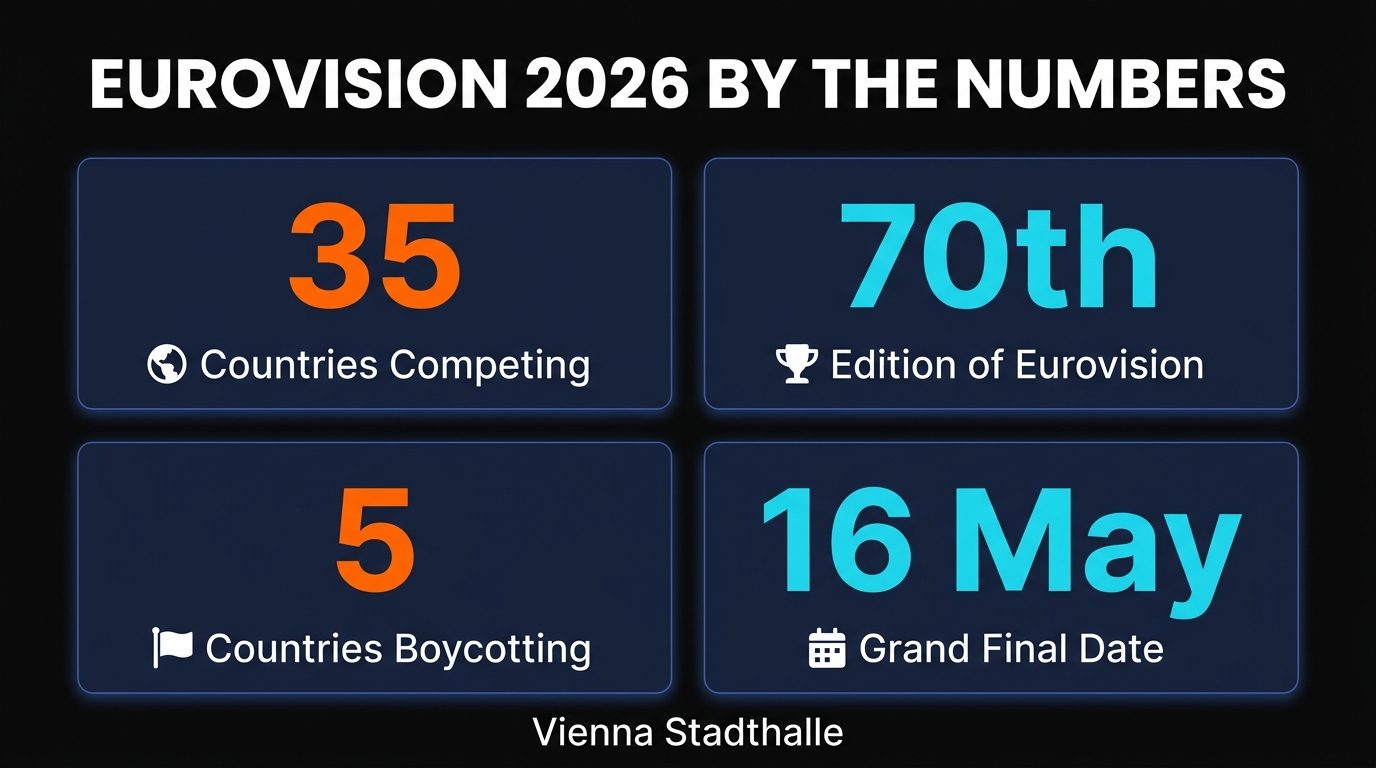
Eurovision 2026 in Vienna will crown the 70th winner. Somewhere on that stage, on the night of May 16, the next name will be added to this list. Whoever it is, they will join a lineage that stretches back to a modest theatre in Lugano and encompasses some of the greatest moments in European entertainment history.
If you are ready to put your knowledge to work and back your pick for Vienna, make sure you are set up with a bookmaker before the odds start moving. Markets are already open and shifting daily.