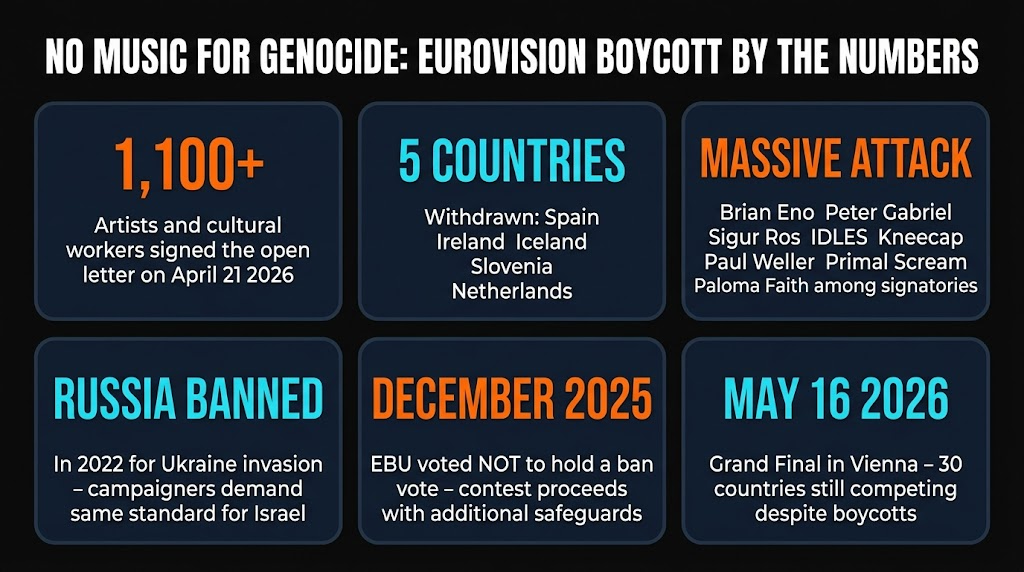
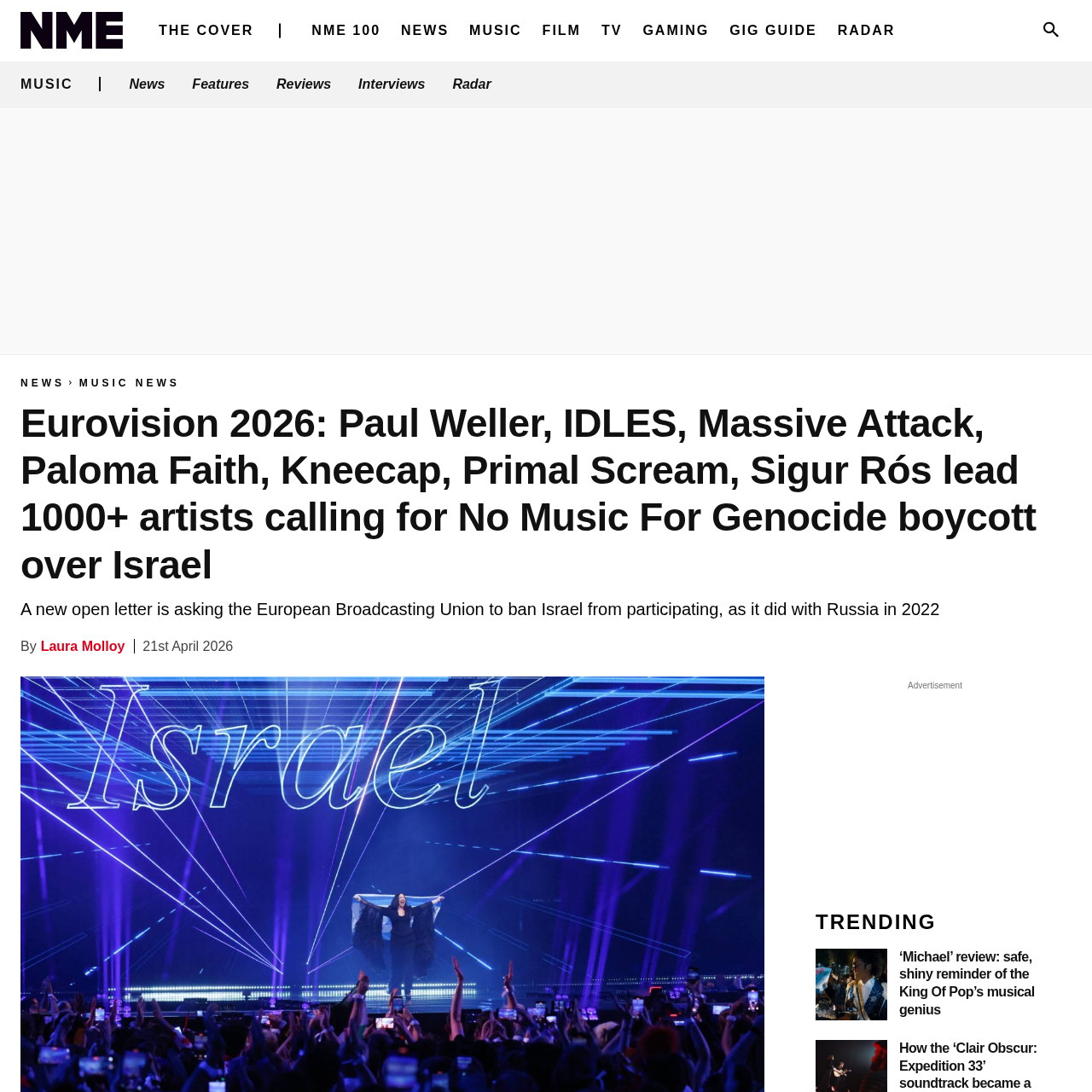
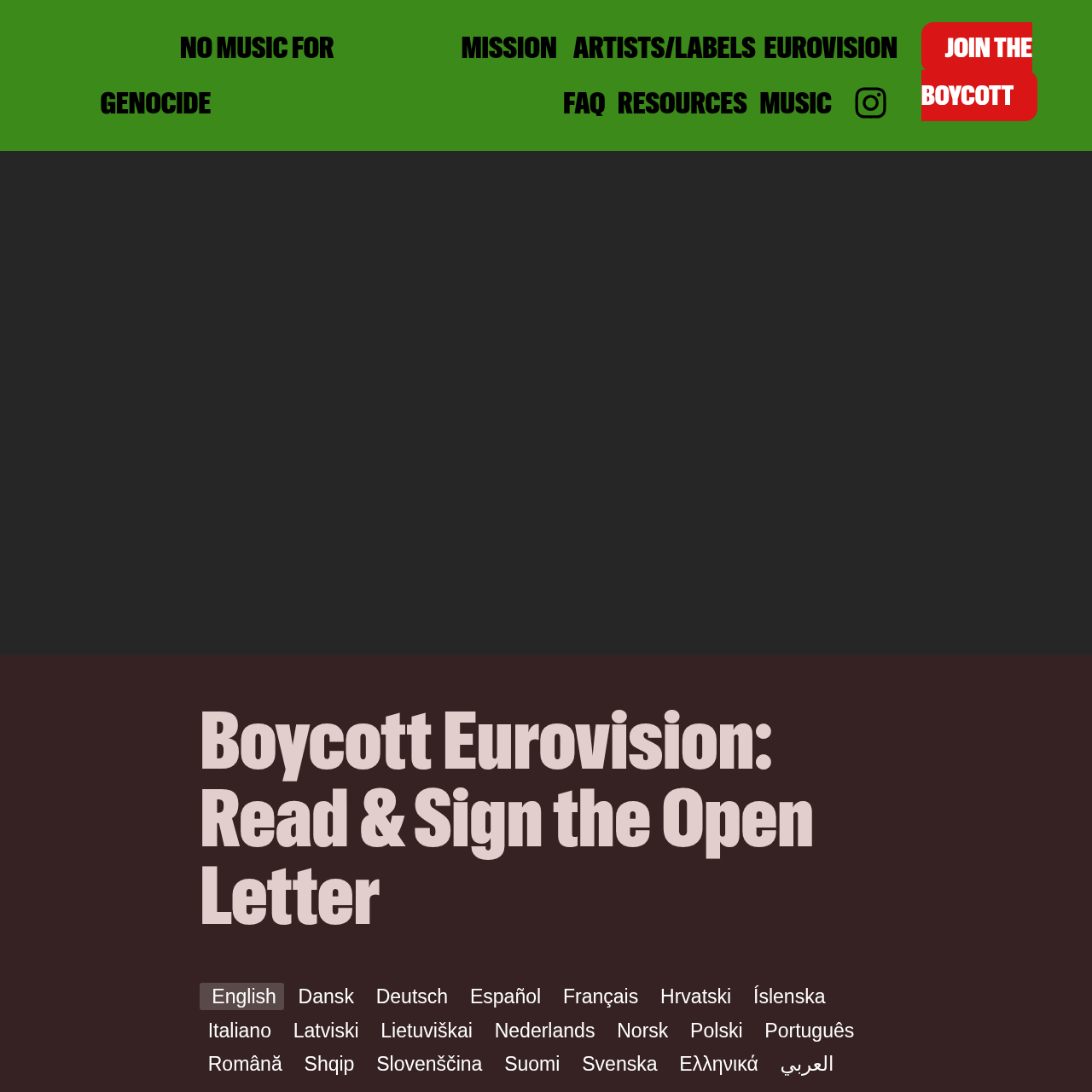
The largest organised cultural boycott in Eurovision history has arrived. On April 21, the 'No Music For Genocide' campaign published an open letter signed by over 1,100 artists and cultural workers calling for a complete boycott of the Eurovision Song Contest 2026 in Vienna unless the European Broadcasting Union (EBU) bans Israeli broadcaster KAN from participating.

18+ | New customers only | T&Cs apply | Please gamble responsibly
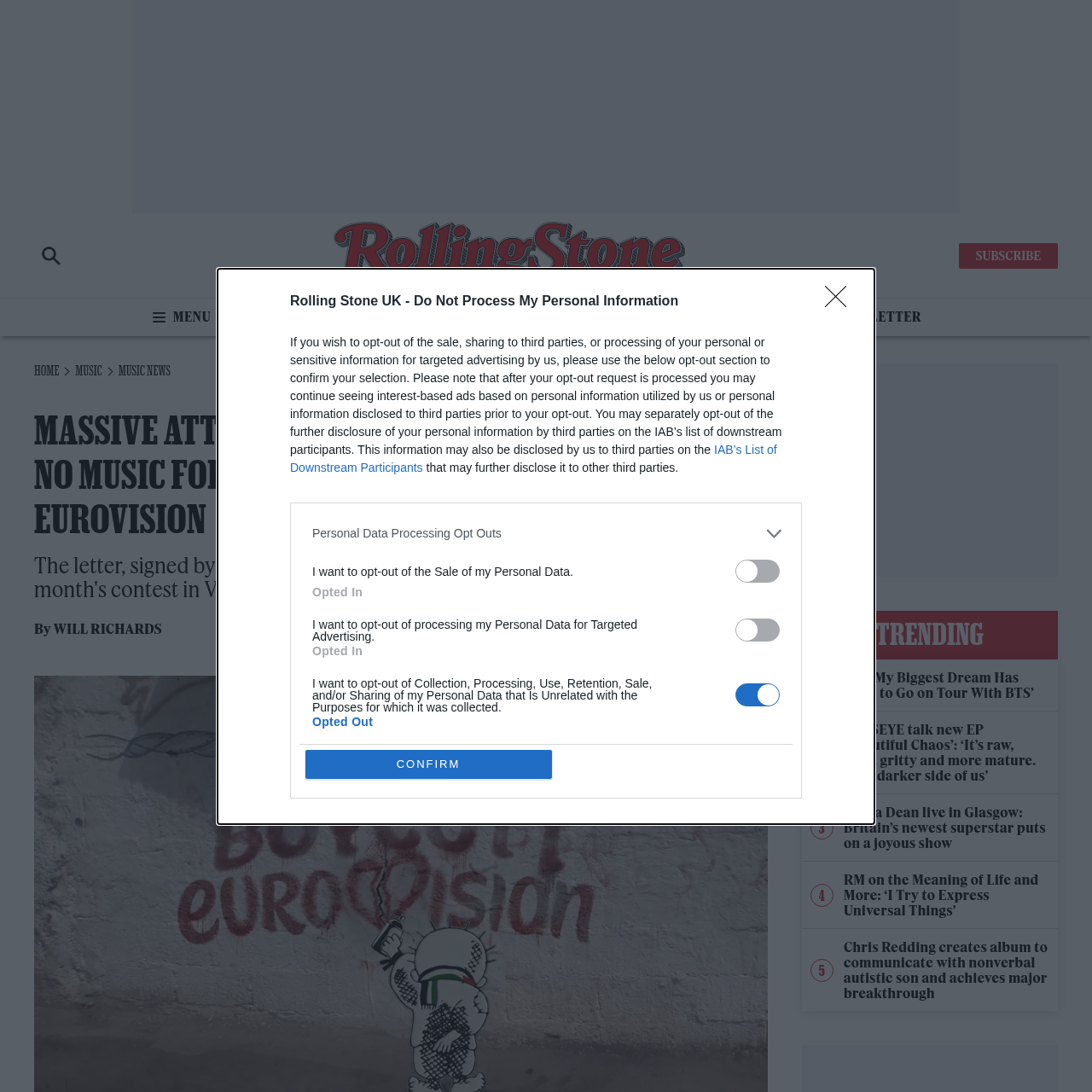
The signatories include some of the biggest names in music: Massive Attack, Brian Eno, Peter Gabriel, Sigur Ros, IDLES, Kneecap, Macklemore, Primal Scream, Paul Weller, Paloma Faith, Roger Waters, Hot Chip, Of Monsters and Men, Young Fathers, Mogwai, Black Country New Road, Nadine Shah, Dry Cleaning and Olafur Arnalds, among hundreds more. Several former Eurovision finalists have also signed.
What the Letter Says
The open letter is direct and unambiguous. The signatories write:
"For the third consecutive year, they'll find Israel celebrated onstage despite its ongoing genocide in Gaza, while Russia remains banned for its illegal invasion of Ukraine... We reject Eurovision being used to whitewash and normalise Israel's genocide, siege and brutal military occupation against Palestinians."
The letter calls specifically on:
- Public broadcasters — to refuse to air the contest
- Performers — to refuse to participate
- Screening party organisers — to cancel viewing events
- Crew members — to refuse to work the production
- Fans — to boycott watching or engaging with the broadcast
The signatories explicitly commend the five countries that have already withdrawn: Spain, Ireland, Iceland, Slovenia and the Netherlands. Slovenia has gone further than any other country, refusing not only to send an artist but also to broadcast the contest at all.
The Scale of the Boycott Campaign
To understand why this matters, consider the scale:
- 1,100+ individual signatories — making it the largest collective artist statement ever directed at Eurovision
- 5 countries withdrawn — the most withdrawals from a single Eurovision for political reasons in the contest's 70-year history
- 35 countries remaining — the lowest competing field since 2004
- The campaign comes from 'No Music For Genocide', which has already convinced artists to pull their music from streaming platforms in Israel
Who Are the Key Signatories?
The breadth of names is significant. This isn't a niche petition — it spans multiple genres, generations and levels of mainstream influence:
| Artist/Group | Known For | Genre |
|---|---|---|
| Massive Attack | Blue Lines, Mezzanine | Trip-hop / Electronic |
| Brian Eno | Ambient pioneer, U2 producer | Ambient / Art rock |
| Peter Gabriel | Genesis, So | Art rock / World music |
| Sigur Ros | Agaetis byrjun | Post-rock |
| IDLES | Joy as an Act of Resistance | Post-punk |
| Kneecap | Irish-language rap trio | Hip-hop |
| Macklemore | Thrift Shop, Can't Hold Us | Hip-hop / Pop |
| Paul Weller | The Jam, Style Council | Mod / Rock |
| Paloma Faith | Only Love Can Hurt Like This | Pop / Soul |
| Primal Scream | Screamadelica | Alternative rock |
| Roger Waters | Pink Floyd | Progressive rock |
| Hot Chip | Over and Over | Electronic / Synth-pop |
| Of Monsters and Men | Little Talks | Indie folk |
| Young Fathers | Mercury Prize winners | Experimental hip-hop |
| Mogwai | Come On Die Young | Post-rock |
| Black Country New Road | Ants From Up There | Post-rock / Art rock |
Robert del Naja of Massive Attack was also arrested at a Palestine Action protest in London earlier this month, underlining the personal commitment behind the signatures.
The EBU's Position
The European Broadcasting Union addressed this directly in December 2025, when EBU members voted on whether to hold a formal ban vote against Israel. The result: a large majority agreed there was no need for a further vote and that Eurovision 2026 should proceed as planned with "additional safeguards" in place.
The EBU has consistently maintained that Eurovision is a non-political event and that participation decisions rest with individual member broadcasters. Critics point to the 2022 ban of Russia following its invasion of Ukraine as evidence of a double standard.
How Five Countries Made History
The withdrawals represent the biggest political boycott in Eurovision history:
- Spain — RTVE withdrew, cancelling PrePartyES and the Barcelona pre-party
- Ireland — RTE withdrew following public and political pressure
- Iceland — RUV withdrew, continuing its critical stance from 2019
- Slovenia — RTVSLO withdrew AND refused to broadcast the contest entirely
- Netherlands — AVROTROS withdrew following the events at Eurovision 2024 in Malmo
The combined effect has reduced the competing field to 35 entries — the lowest since 2004 in Istanbul, when 36 countries competed.
What This Means for the Betting Market
Boycotts historically have a measurable impact on Eurovision betting markets, though not always in the direction you might expect:
- Fewer competitors = easier path for remaining favourites — Finland's implied probability has risen partly because five potential rivals are no longer in the field
- Televote patterns shift — Spain, Ireland, the Netherlands, Iceland and Slovenia collectively represented significant diaspora voting blocs. Their absence changes the televote arithmetic, particularly in Western Europe
- Israel's odds are complex — Controversy historically boosts Israel's televote (solidarity voting) while potentially suppressing jury scores. Israel currently sits around 7% implied probability at Betfred
- Narrative-driven entries gain — In a politicised contest, entries with strong emotional or unifying messaging may receive a "moment" boost from juries and televoters alike
Our earlier analysis in How the Eurovision 2026 Boycott Changes the Betting Landscape covered the initial market effects. The 1,100-artist letter adds cultural weight but is unlikely to trigger further withdrawals at this stage — the remaining broadcasters appear committed to Vienna.
18+. Please gamble responsibly. BeGambleAware.org
Related Articles
- How the Eurovision 2026 Boycott Changes the Betting Landscape
- Sweden's Felicia vs Israel: How the Biggest Eurovision 2026 Controversy Impacts Betting Odds
- Martin Green: Boycotts Will Be 'Just a Footnote' in Contest History
- Boy George at Eurovision 2026: Senhit's 'Superstar' Is San Marino's Biggest Bet Yet
- Eurovision 2026: The Complete Guide to Betting Odds, All 35 Countries & Expert Predictions
Frequently Asked Questions
How many artists signed the Eurovision 2026 boycott letter?
Over 1,100 musicians and cultural workers signed the 'No Music For Genocide' open letter published on April 21, 2026. Signatories include Massive Attack, Brian Eno, Peter Gabriel, Sigur Ros, IDLES, Kneecap, Macklemore, Paul Weller, Paloma Faith, Roger Waters, Hot Chip, Of Monsters and Men, Young Fathers, Mogwai and many more.
Which countries have withdrawn from Eurovision 2026?
Five countries have withdrawn: Spain, Ireland, Iceland, Slovenia and the Netherlands. Slovenia has also refused to broadcast the contest. This is the largest political boycott in Eurovision's 70-year history, reducing the competing field to 35 entries — the lowest since 2004.
Why is Israel still allowed to compete at Eurovision 2026?
In December 2025, EBU members voted that there was no need for a formal ban vote and that Eurovision 2026 should proceed with Israel's participation under "additional safeguards." Critics argue this contradicts the EBU's 2022 decision to ban Russia following its invasion of Ukraine.
Does the boycott affect Eurovision 2026 betting odds?
Yes. Fewer competitors strengthen the favourites' path, and the absence of five countries changes televote patterns across Western Europe. Israel's odds are particularly complex — controversy tends to boost solidarity voting while potentially suppressing jury scores. Finland remains the strong favourite at approximately 37% implied probability.